

Two-minute read
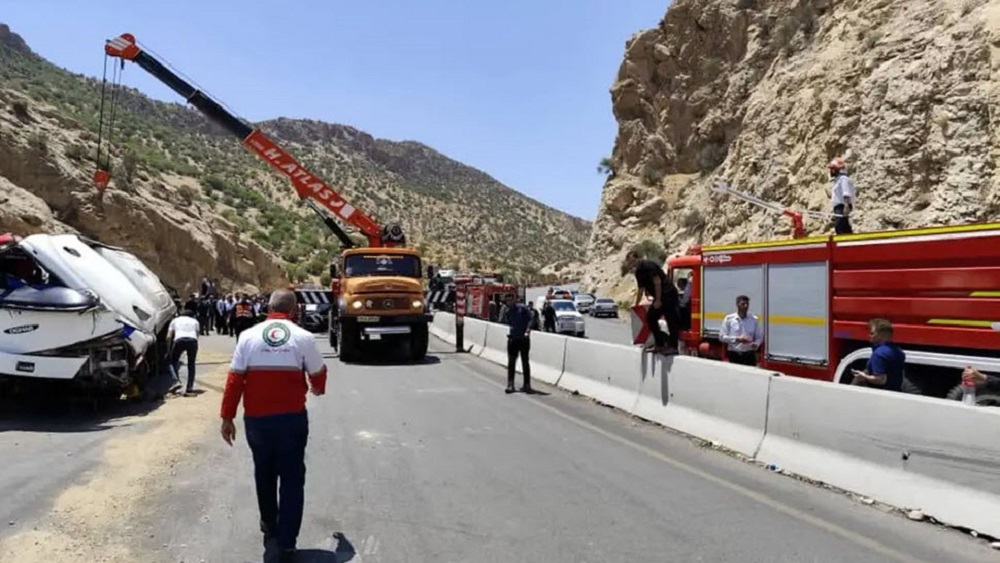
On the morning of Saturday, July 19, a devastating bus accident on the Firuzabad-Kavar highway in southern Iran left 21 people dead and 25 others injured. The scale of the tragedy, which once again plunged the country into mourning, has reignited outrage over Iran’s crumbling infrastructure and the systemic corruption and nepotism that continue to cost innocent lives.
The incident is far more than a traffic accident—it is a tragic symbol of the structural failures that plague Iran’s transportation sector. For years, the country has ranked among the world’s deadliest in terms of road fatalities. Authorities often blame human error or chance, but the reality is rooted in two deeper, man-made crises: deteriorating road conditions and deeply entrenched corruption within Iran’s transportation and construction sectors.
Deadly Roads, Neglected Safety
Many of Iran’s highways and regional roads are in a dangerous state of disrepair. Poor maintenance, lack of clear signage, unresolved accident black spots, and underdeveloped safety infrastructure have all contributed to making these roads death traps. Projects meant to upgrade road networks are frequently left incomplete or executed with dangerously low standards due to embezzlement, budget mismanagement, or political favoritism.
The Firuzabad-Kavar route has seen multiple fatal accidents in recent years, making it a known danger zone. Yet calls for basic safety measures have gone unanswered. Families now grieve loved ones whose deaths were both predictable and preventable.
#Iran News: Road Accidents Kill 20,000 in a Year, with 3,000 Suffering Spinal Cord Injurieshttps://t.co/EKaV6mako4
— NCRI-FAC (@iran_policy) March 15, 2025
A Web of Corruption in Transport Infrastructure
Behind the dangerous roads lies a powerful and corrupt network of insiders that manipulate Iran’s transport and construction sectors for personal gain. From importing substandard parts for vehicles, to awarding road construction contracts through political favoritism rather than public tenders, the result is the same: inflated profits for a privileged few, and daily risks for millions of ordinary citizens.
This “transport mafia,” deeply embedded in the ruling elite and the broader power structure of the Iranian regime, not only resists reform but actively undermines any effort to introduce oversight or standards. Safety regulations are bypassed or ignored, and whistleblowers are silenced. As profits soar for well-connected contractors and importers, the average citizen is left to gamble their life on Iran’s hazardous roads.
The silence of officials after such disasters has become routine. When they do speak, their responses are often perfunctory and void of meaningful commitment to reform. Despite repeated tragedies, there are no sweeping investigations, no accountability for those responsible for subpar infrastructure, and no systematic improvements to prevent future carnage.
Instead, the narrative is often reframed as misfortune or attributed to driver error, masking the far more troubling reality of structural negligence.
The tragic bus crash on the Firouzabad–Kavar road, which left dozens dead and injured, has deeply shaken the nation.
Our hearts go out to the grieving families, and we extend our sincerest wishes for a full and swift recovery to all those injured. Meanwhile, the regime—despite…— Maryam Rajavi (@Maryam_Rajavi) July 19, 2025
A Nation in Mourning, A Society in Anger
Each new fatal accident intensifies the public’s sense of injustice and disillusionment. The families of victims, like those who perished in Saturday’s crash, are not just grieving—they are asking why a government that extracts billions in fuel exports cannot maintain safe roads for its own citizens.
The answer, tragically, lies in a governance model where human lives are secondary to political patronage and profit extraction. In such a system, public safety is not a priority—it is a casualty.
As Iran grapples with simultaneous crises in the economy, environment, and healthcare, the Firuzabad-Kavar tragedy adds to the long and growing list of failures that highlight the regime’s inability—or unwillingness—to protect the Iranian people.