

Two-minute read
As parts of Iran face unprecedented heatwaves with temperatures soaring above 50°C, the water and power crisis has reached a point where even regime officials can no longer conceal it or justify it with tired slogans. This time, warnings are coming from the highest levels of government—not out of accountability, but as a desperate attempt to contain the fallout from decades of destructive policies that have pushed daily life to the brink.
On July 20, 2025, Masoud Pezeshkian, the regime’s president, warned that the water crisis is “far more serious than what is being publicly discussed,” and added that without urgent action, the country will face a situation “for which no remedy can be found.” Yet, like previous statements, this acknowledgment was followed not by solutions but by hollow rhetoric.
https://twitter.com/iran_policy/status/1899120057277464751
According to the regime’s meteorological organization, cities like Ahvaz, Shush, Ramhormoz, Omidiyeh, and Shadegan have recorded temperatures above 50°C, with Omidiyeh peaking at 51.7°C. Alongside this unbearable heat, frequent blackouts and water cuts have turned life in Khuzestan, Ilam, Bushehr, and other southern provinces into a living hell.
Hashem Khanfari, a regime parliament member from Shadegan, sharply rebuked the Energy Ministry, exclaiming, “You’ve turned Khuzestan into hell!” He attributed the crisis not to resource shortages but to “imbalanced management and the incompetence of your officials.”
The mounting social pressure has prompted rare confessions from other members of the regime’s parliament. Mohammad-Reza Sabaghian described widespread power outages as having “taken people to their breaking point,” adding, “Farmers, workers, patients—everyone is angry. And the energy minister hasn’t even shown up in parliament to answer for it.”
#IranProtests Continue Over Regime's Systemic Failure to Provide Water, Power, and Safetyhttps://t.co/v1Hn1R3a2b
— NCRI-FAC (@iran_policy) July 25, 2025
Ahmad Moradi, representing Hormozgan province, said that in areas enduring temperatures above 50°C, power outages are “a blatant injustice.” Meanwhile, Mohammad Sadat Ebrahimi and Mousa Ahmadi joined the calls for immediate accountability, questioning the Energy Ministry’s priorities and failure to present a clear strategy.
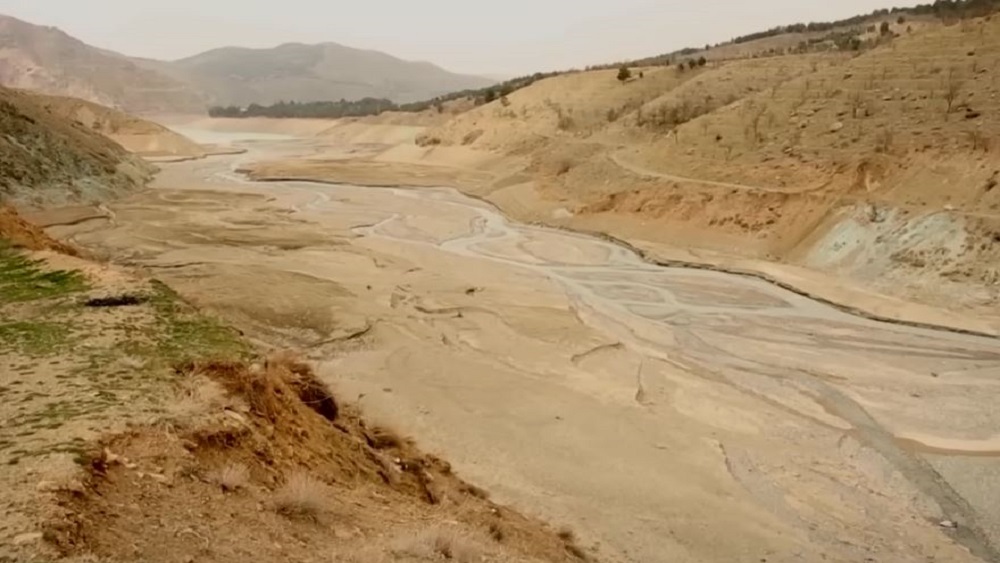
The crisis isn’t limited to the south. In Tehran, the head of the water utility for the southeast region announced that 90% of the province’s reservoir capacity has dried up. Out of 250 million cubic meters of designed capacity, only 23 million remain. “If we don’t take serious action today,” he warned, “tomorrow will be too late.”
Even Isa Kalantari, the former head of the regime’s Environmental Protection Agency, admitted that Iran is only seeing “the beginning of a catastrophe,” warning that no one is paying attention to the looming disaster.
#IranProtests Erupt Across the Country Over Executions, Water Crisis, Poverty, and Repressionhttps://t.co/AGksQjzJEV
— NCRI-FAC (@iran_policy) April 30, 2025
What Iran is experiencing today is no longer merely an environmental or economic crisis—it has become a political and existential threat to the regime itself. The mounting confessions, emergency shutdowns, and systemic inability to address even the most basic needs of the population reveal a regime in deep managerial and moral decline.
As discontent surges across the country, the current trajectory is unsustainable. Not only are Iran’s infrastructure and environment collapsing, but so is public trust and political stability. What appears today as scattered protests and internal warnings could soon ignite into a nationwide uprising. A nation deprived of water, electricity, and dignity will inevitably raise its voice—and that voice is growing louder.