

Three-minute read
Iran is running out of water—and out of excuses. As nineteen major dams approach total depletion and three have already run dry, the country faces a crisis that is not merely environmental but political: the outcome of decades of corruption, mismanagement, and neglect under the clerical regime. The statistics, reluctantly released by the regime’s own news agency IRNA on October 5, 2025, amount to an admission that what remains of Iran’s vital water system is collapsing.
Dams turned to dust
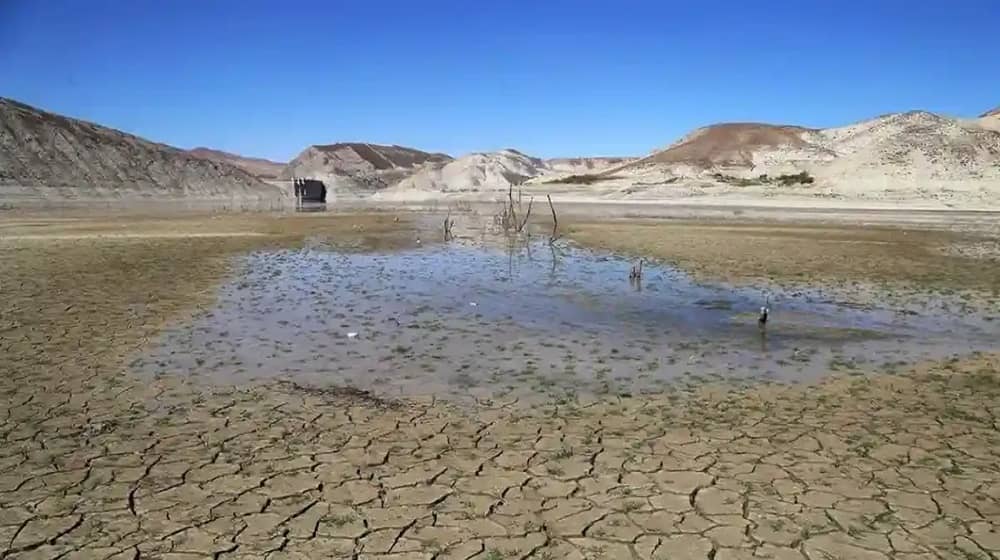
Once symbols of industrial progress, Iran’s dams have become monuments to failure. IRNA’s report described an “unprecedented deterioration” in water reserves across the country, warning that nineteen large reservoirs are on the verge of complete dryness. Three—unnamed even in the official report—have reached zero percent capacity. Even Fars Province, historically home to some of Iran’s most important irrigation networks, has seen several major dams reduced to dead pools of cracked clay.
For a government that has long brandished dam construction as a hallmark of self-sufficiency, the reality is devastating. Behind the statistics lies the human story: farmers abandoning their lands in Isfahan, Kerman, and Khuzestan; whole villages relying on trucked-in water; city taps running on rationed hours. Rivers like the Zayandeh Rud—once the heart of Persian agriculture—now flow only in memory.
Why #Iran Is Running Out of Water, Power — and Patiencehttps://t.co/9ZghlJCNpO
— NCRI-FAC (@iran_policy) August 13, 2025
The capital’s thirst
The crisis has now reached Tehran itself. On September 29, the regime’s own water industry spokesperson, Isa Bozorgzadeh, warned that “Tehran stands at the frontline of the national water crisis.” Apart from the Talaghan reservoir, he admitted, all dams supplying the capital have either reached or are near their dead volume.
“Tehran’s reservoirs contain only 258 million cubic meters of water,” he said, “down from 485 million cubic meters last year and far below the long-term average of 618 million.” In other words, half the capital’s water reserves have vanished in a single year.
Bozorgzadeh’s list of drought-stricken cities reads like a national map: Mashhad, Isfahan, Tabriz, Arak, Saqqez, Baneh, Bandar Abbas—each with shrinking reservoirs and growing discontent. Officials cite the “12-day war” and “special conditions” to justify shortages, yet the data exposes a far older truth: Iran’s water disaster is man-made.
More footage of the protest rally by farmers of Isfahan.#Iran #IranProtests pic.twitter.com/BylfWZebrE
— People's Mojahedin Organization of Iran (PMOI/MEK) (@Mojahedineng) April 1, 2025
Mismanagement by decree
Experts and even regime technocrats concede what the public has long known. Years of uncontrolled dam building, unregulated groundwater extraction, and political patronage have gutted Iran’s hydrological balance. Successive governments diverted rivers to feed regime-affiliated industries or ideological vanity projects, ignoring ecological limits. The regime’s centralized control over water allocation turned a natural resource into a political weapon—rewarding loyal regions, punishing restive ones, and enriching contractors linked to the Revolutionary Guards.
The result is what environmentalists call a “hydro-political collapse.” Aquifers across central and eastern Iran are sinking irreversibly. Deserts advance where once orchards stood. Lake Urmia—once a vast inland sea and emblem of ecological endurance—has now fallen to unmeasurable levels, with most of its basin reduced to salt flats visible from space. Each crisis produces the same response from the authorities: denial, propaganda, and the invocation of divine fate.
#IranProtests: Isfahan Farmers Clash with Security Forces Over Water Crisis, Sabotage Yazd Pipelinehttps://t.co/D6r4lE6eft
— NCRI-FAC (@iran_policy) March 30, 2025
A regime without a plan
Even as officials sound alarms, their solutions remain cosmetic. The Ministry of Energy proposes transferring water from the Caspian Sea or the Persian Gulf, projects requiring billions of dollars and years of infrastructure the regime cannot afford. Others promote cloud seeding, a pseudo-scientific distraction from institutional rot. Meanwhile, corruption ensures that whatever investment exists is siphoned off before a single drop reaches the ground.
Iran’s theocratic rulers frame scarcity as a natural disaster, but their own documents betray them. When government newspapers use the word “famine” for reservoirs, it is no longer a warning—it is a verdict.
Protests in Khuzestan province over water shortages and the Iranian regime’s destructive policies.#Iran #IranProtests pic.twitter.com/kXfFt912lY
— NCRI-FAC (@iran_policy) July 23, 2021
The political drought
The water crisis is more than a technical failure; it mirrors the moral and administrative bankruptcy of the state itself. A government that survives on repression and external confrontation cannot sustain cooperation, transparency, or local empowerment—the very ingredients of responsible resource management. Water, like truth, demands circulation; under dictatorship, both stagnate and vanish.
The same regime that spends billions arming proxies across the Middle East cannot keep taps running in Tehran. While missiles roll across parade grounds, the country’s reservoirs turn to dust. As the clerical elite quarrels over ceasefires abroad, ordinary Iranians queue for water rations at home.
July 2021-Thursday marked the 8th consecutive day of protests in Khuzestan province over water shortages and the Iranian regime’s destructive policies.#Iran #IranProtests pic.twitter.com/aFs7SS4Hxy
— NCRI-FAC (@iran_policy) July 23, 2021
Dry land, dry promises
The current drought is not Iran’s first, but it may be its breaking point. Nineteen empty dams are not just statistics—they are symbols of a drained nation, one whose lifeblood has been traded for power, propaganda, and profit. Environmental collapse is now inseparable from political decay, and history shows where such scarcity leads. When rivers have run dry before—whether in Isfahan, Khuzestan, or Yazd—protesters have filled the streets, shouting for water and justice alike.
The same anger now simmers beneath the cracked earth. As wells fail and cities ration every drop, people no longer see drought as fate but as the regime’s failure. A government that cannot provide water cannot contain dissent for long.
Until Iran’s rulers are held accountable for turning rivers into rhetoric and policies into wastelands, the country will continue to thirst—not just for water, but for the competent governance that could make renewal possible.