

THIS PAGE WILL BE UPDATED WITH THE LATEST NEWS
UPDATE: 10:30 PM CET
With Assad’s Fall, Iran’s ‘Axis of Resistance’ Unravels

Over the past four decades, Iran devoted its best military minds, billions of dollars and sophisticated weapons to a grand project — countering U.S. and Israeli power in the Middle East through what it called the “axis of resistance.”
The alliance, made up of like-minded armed groups or governments in five Middle Eastern countries, allowed Iran to project power as far west as the Mediterranean and south to the Arabian Sea.
But in a breathtakingly short time, it has largely unraveled.
Syrian rebel groups ousted the country’s longtime dictator, Bashar al-Assad, in less than two weeks as government forces put up little resistance. The Lebanese militant and political group Hezbollah and the Palestinian faction Hamas in Gaza are both weakened by more than a year of warfare with Israel.
Analysis: Collapse Of Syria’s Assad Is A Blow To Iran’s ‘Axis Of Resistance’
Associated Press (AP) – MANAMA, Bahrain — For Iran’s theocratic government, it keeps getting worse.
Its decadeslong strategy of building an “Axis of Resistance” supporting militant groups and proxies around the region is falling apart. First came the crushing Israeli campaign in Gaza triggered by the Oct. 7, 2023, attack on Israel by Iranian-backed Hamas.
That war spawned another in Lebanon, where Israel has mauled Iran’s most powerful ally, Hezbollah, even as Israel has launched successful airstrikes openly inside of Iran for the first time.
And now Iran’s longtime stalwart ally and client in Syria, President Bashar Assad, is gone. As dawn broke Sunday, rebel forces completed a lightning offensive by seizing the ancient capital of Damascus and tearing down symbols of more than 50 years of Assad’s rule over the Mideast crossroads.
UPDATE: 10:30 AM CET
Conference: The Solution to the Iran Crisis and the Role of the Democratic Alternative
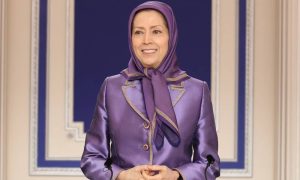
Mrs. Maryam Rajavi’s speech: “The Middle East is in turmoil, and our nation is navigating extraordinary circumstances. In recent months, significant and successive changes, both within Iran and beyond its borders, have plunged the regime into a state of instability and rendered its future untenable. Two years ago, during the widespread uprisings that erupted in more than 280 cities across Iran, the Iranian people demonstrated their determination to overthrow the regime. It became evident that the religious dictatorship had entered its final phase.
“In an attempt to prevent future uprisings, the mullahs’ regime turned to war in the Middle East. Yet, after 14 months, it stands as the strategic loser in the conflict, as Massoud Rajavi, the Leader of the Iranian Resistance had foreseen. This is particularly noteworthy as the clerical regime’s stronghold in Syria has now crumbled. The recent developments in Syria reveal the eruption of a volcano of fury among the innocent people of that nation.”
PMOI Resistance Units Commemorate Student Day and Honor the Martyrs of Freedom in Iran

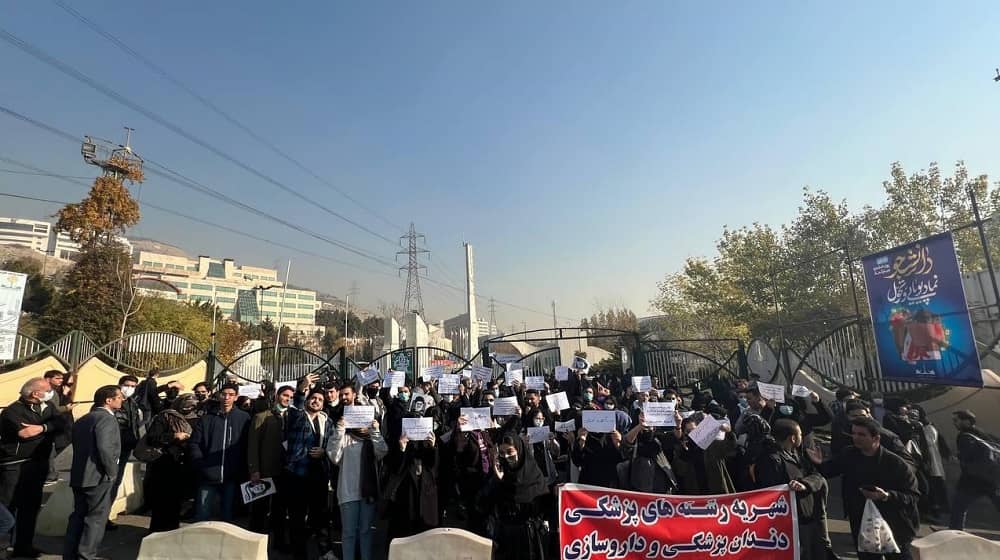
On December 7, 1953, the Shah regime murdered three student activists in Tehran University to stifle the voice of protests for freedom. The students were killed during protests that emerged a few months after the Shah—aided by his foreign supporters—carried out a coup against the democratically elected government of Mohammad Mossadegh. Seven decades after the murder of students in Tehran University, the people of Iran continued to honor their memory and December 7 has become Iran’s Student Day, in which the people commemorate the role of Iran’s young generation in shaping the country’s future and freedom.
On the anniversary of Student Day, Resistance Units, the network of PMOI supporters inside Iran, held activities across the country. They reiterated their commitment to continue the path of the students who have laid down their lives for freedom and the martyrs of Iran’s uprisings for overthrowing the mullahs’ rule.
The Shadow of the Gallows Looms Over Iran

The barbarism of the Iranian regime appears to know no bounds. A total of 562 prisoners, including 20 women, have been executed since the so-called ‘moderate’ Masoud Pezeshkian became president in August this year. The death toll at the hands of the mullahs’ hangmen rises daily. Now, the theocratic regime has sentenced six political prisoners—Abolhassan Montazer (65), Pouya Ghobadi (32), Vahid Bani-Amrian (32), Babak Alipour (33), Ali Akbar Daneshvarkar (57), and Mohammad Taghavi (58) —to execution following months of interrogation and torture. The fictitious charges against them include “membership of the People’s Mojahedin Organization of Iran (PMOI/MEK),” “collusion and conspiracy against national security,” “armed rebellion against the government,” “forming a group to disrupt national security,” and “destruction of public property using a (rocket) launcher.”
How Corruption Permeates Iran’s Ruling System

For years, the fabric of the mullahs’ regime ruling Iran has been intertwined with corruption and plunder. Even regime supreme leader Ali Khamenei admitted during the anniversary of the anti-monarchical revolution in 2018: “Corruption is like the mythical seven-headed dragon; when you cut off one head, the other six continue to move.” However, this dragon has not only persisted but has grown larger and more monstrous each year, continuing to steal the wealth of the people. The agents of the clerical regime themselves admit that “corruption has struck at the roots of the system.”
On September 1, 2016, the state-run Mardomsalari news website wrote, “Not a day goes by without news of financial abuse, embezzlement, or massive bribery being heard. The figures have numbed the minds of the people, to the point where even mathematics cannot express them anymore.”
The Collapse of Iran’s Strategic Depth in Syria: A Nightmare for Khamenei’s Regime

For decades, the Iranian regime has treated Syria as a linchpin of its regional influence, famously dubbing it the “35th province” of Iran. However, this once-critical strategic asset has become a glaring symbol of failure for Tehran’s expansionist ambitions.
To understand the significance of Syria in Iran’s foreign policy, one must revisit a revealing statement by Mehdi Taeb, head of the Ammar Strategic Base, a regime-affiliated political and cultural organization. In 2013, Taeb declared: “If the enemy attacks us and wants to take Syria or Khuzestan, the priority is that we keep Syria. Because if we keep Syria, we can also take back Khuzestan. But if we lose Syria, we cannot even keep Tehran.”
This statement, published by the state-controlled Asr-e Iran website, highlights the centrality of Syria in Tehran’s regional strategy.
Iran’s Energy Crisis: Mismanagement and Looming Social Unrest

In a recent live television interview, Masoud Pezeshkian, the president of Iran’s regime, issued a stark warning: Iran is teetering on the edge of a significant crisis due to pervasive inefficiencies across various sectors. Pezeshkian acknowledged that the government might fail to fulfill its obligations to pensioners unless fuel prices are raised. This admission comes amid speculation about new U.S. sanctions targeting Iran’s oil exports and a deepening domestic energy crisis. Iranians are grappling with recurring power outages, fuel shortages at gas stations, and insufficient natural gas supplies—a critical resource for heating homes in winter.
Iran, which spent $2 billion on gasoline imports in 2023, is projected to double this figure in the coming year. The government may also spend additional funds importing heavy fuel oil to sustain electricity production.
Withered Buds in the Whirlwind of Fate

Child marriage is universally regarded as unacceptable by any modern human being. Yet, it is often viewed through a cultural lens, with little consideration given to its profound effects on the fate of humanity. Child marriage is one of the most serious examples of violence against women and girls. According to experts and government-controlled media, including the newspaper Donya-e Eqtesad (August 13, 2024), child marriage in Iran is driven by factors beyond cultural norms. The most prominent causes are “low per capita income, high inflation, and income inequality.” Naturally, the regime’s role—being the medieval clerical government with its misogynistic laws—is rarely acknowledged in the government-run media.
In Iran, the forced marriage of girls is legal. According to Article 1040 of Iran’s Civil Code, the father, paternal grandfather, or even a judge can decide the fate of a young girl without facing any legal barriers. In such marriages, girls are often sold.
Strategic Retreat in Syria: Khamenei’s Policies and Their Regional Impact
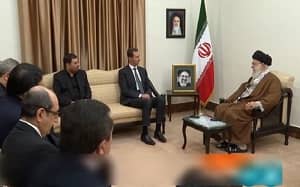
Iran’s regime once considered Syria as its” thirty-fifth province,” as described by Mehdi Taeb, a commander at the Ammar Base. But it has now become a field indicating Iran’s strategic defeat. Taeb’s statement on February 15, 2013, underscores Tehran’s significance on Syria: “If the enemy attacks us and decides to take Ahvaz or Syria, our priority is to keep Syria because if we keep Syria, we can recover Ahvaz. But if we lose Syria, we can’t even keep Tehran” (Asr Iran newspaper). These statements affirm Syria’s role not just as land, but as a cornerstone in Iran’s regional strategy.
Syria plays a vital role in the strategic depth of Iran’s regime. However, this depth is now more threatened than ever due to political shifts and domestic and international pressures against Bashar al-Assad’s regime, representing a significant strategic blow to Khamenei’s regime.
Political Prisoner Saeed Masouri Urges Students to Join Campaign Against Executions

In an open letter dated December 5, Saeed Masouri, a political prisoner in Iran, has called on students to actively participate in the growing campaign against the Iranian authorities’ escalating use of executions. Masouri’s appeal coincides with the observance of Iran’s “Student Day” on December 6, a day historically linked to student activism. “It may not be an exaggeration to say that today in our country, Iran, countless individuals are directly killed and deprived of life, while countless others are indirectly subjected to this killing and deprivation—not with atomic bombs, but with execution ropes and hangings,” Masouri wrote in his letter.
Masouri argues that the Iranian regime is using executions not to prevent crime, as officially claimed, but as a means of instilling fear and suppressing dissent. He described the practice as “massacres carried out under the guise of legality,” emphasizing that institutionalized executions facilitate arbitrary and mass killings.
Manchester Exhibition Stands in Solidarity with Iranian Political Prisoners and Protests Human Rights Violations in Iran

UK, December 5, 2024: Freedom-loving Iranians and academics in England supporting the People’s Mojahedin Organization of Iran (PMOI/MEK) organized an exhibition in Manchester to condemn human rights violations in Iran and express solidarity with the Iranian Revolution.
Chur, Switzerland—December 5, 2024: Supporters of the MEK Held an Exhibition to Protest Death Sentences for Six Political Prisoners Associated with the PMOI

Chur, Switzerland—December 5, 2024: Freedom-loving Iranians and supporters of the People’s Mojahedin Organization of Iran (PMOI/MEK) held an exhibition to protest the death sentences of six political prisoners associated with the PMOI. The event also condemned the Iranian regime’s ongoing crimes against the Iranian people and expressed solidarity with the ongoing Iranian Revolution.
Copenhagen, December 5, 2024: Supporters of the MEK Held a Rally to Protest Death Sentences for Six Political Prisoners Associated with the PMOI

Copenhagen, Denmark—December 5, 2024: Freedom-loving Iranians and supporters of the People’s Mojahedin Organization of Iran (PMOI/MEK) held an exhibition to protest the death sentences of six political prisoners associated with the PMOI. The event also condemned the Iranian regime’s ongoing crimes against the Iranian people and expressed solidarity with the ongoing Iranian Revolution.