

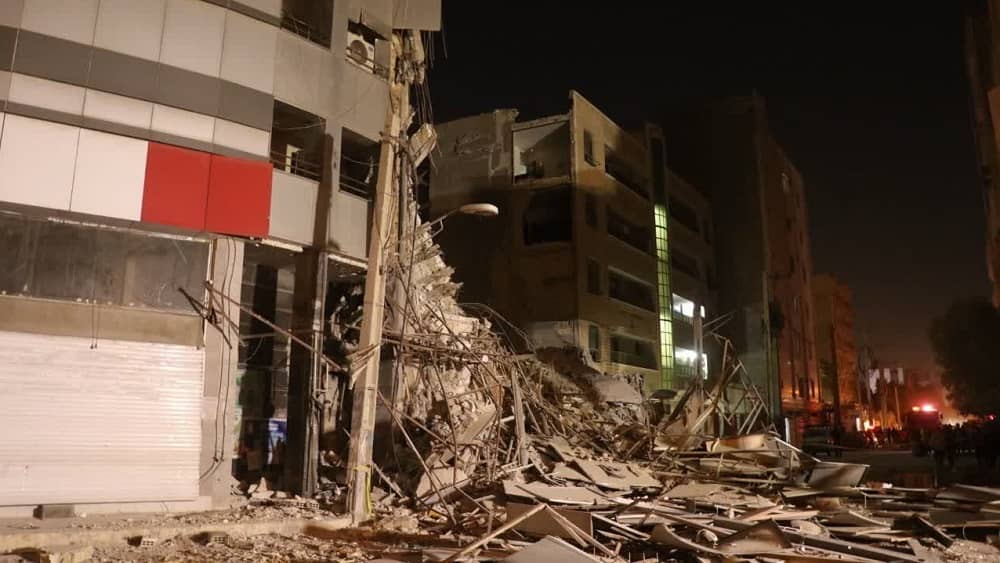
A six-story residential building in Ahvaz’s Zeytoon-e Karmandi neighborhood collapsed early on Monday, December 26, due to severe structural deficiencies. Officials claimed no casualties occurred as the building had been evacuated after warnings of instability, but this incident is yet another tragic example of negligence, corruption, and failure by Iran’s ruling regime to address critical safety concerns.
State media and officials have focused on the evacuation, attempting to frame the absence of fatalities as a success story, but this ignores the underlying causes of the collapse. The building had suffered significant damage during a 5.6-magnitude earthquake 10 days earlier. Warnings from inspectors about its compromised integrity were ignored, leaving residents vulnerable until the structure was finally evacuated. This is not a testament to competent governance but rather a last-minute scramble to avoid a larger catastrophe.
The collapse follows a grim pattern of preventable disasters across Iran, most notably the Metropol Complex tragedy in Abadan in 2022, which killed 43 people and injured dozens more. Both incidents stem from the same root causes: pervasive corruption, cronyism, and a total disregard for public safety. The regime prioritizes loyalty and profit over accountability, enabling unsafe construction practices and turning a blind eye to warnings from experts. In Ahvaz, as in Abadan, officials ignored red flags until the situation became critical, endangering lives and livelihoods in the process.
Everything the Collapse of the Metropol Building In Abadan Brought to Lighthttps://t.co/dRRiLuBilX pic.twitter.com/XySFQDQ79o
— NCRI-FAC (@iran_policy) June 3, 2022
The regime’s attempts to shift attention to its so-called rescue efforts mask a deeper, systemic issue. The collapse of the Metropol Complex in Abadan exposed how regime-linked developers, such as Hossein Abdolbaghi, secured lucrative projects through ties to Revolutionary Guard commanders while ignoring basic safety standards. Similar dynamics are at play in Ahvaz, where oversight agencies and local officials once again failed to enforce regulations or act on early warnings.
Despite promises following the Metropol disaster to inspect and address unsafe buildings, little has changed. In Tehran alone, thousands of structures have been identified as unsafe, yet efforts to publish a list of these buildings were blocked by city officials, who claimed it would cause widespread panic. Mayor Alireza Zakani even admitted, “If we release it, no one will stay in the city.” This lack of transparency leaves millions of Iranians living in dangerous conditions, their safety sacrificed to protect the regime’s image.
#Iran News in Brief
In an article that was published today, the state-run Aftab-e-Yazd acknowledged how #construction companies and #realestate brokers are robbing people's money while building unsafe houses and offices.https://t.co/UC49CMzRZK pic.twitter.com/lLgs6D3VUi
— NCRI-FAC (@iran_policy) June 15, 2022
Public outrage over these incidents continues to grow. Social media users have condemned the government’s failure to prioritize human lives over corruption and profit. This latest collapse in Ahvaz underscores the regime’s inability—and unwillingness—to address the root causes of such preventable disasters. The Iranian people deserve accountability, but under this regime, they are met only with evasion, incompetence, and empty promises. Until these systemic failures are addressed, tragedies like Ahvaz and Abadan will remain inevitable reminders of the human cost of the regime’s corruption and neglect.