

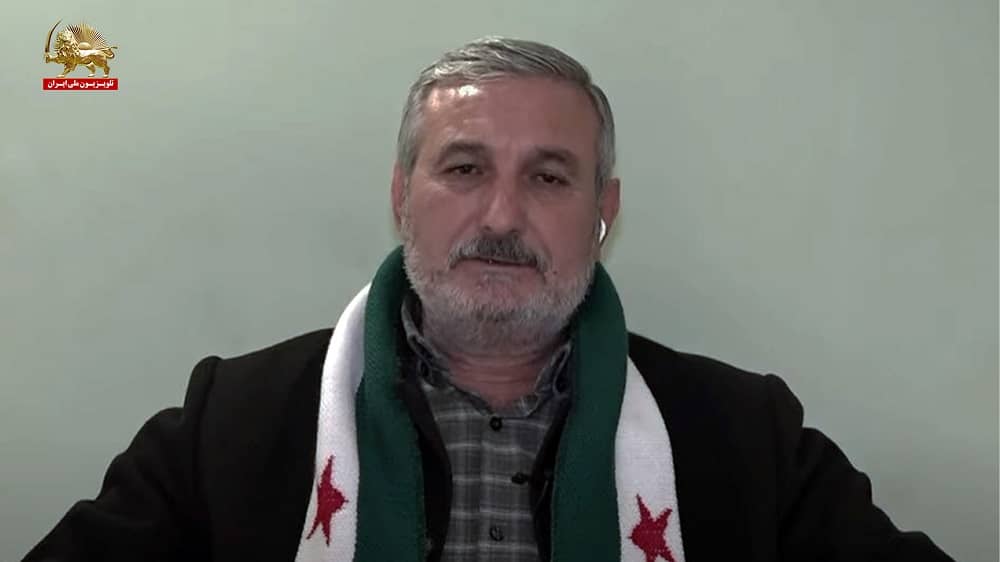
Protests erupted in Syria’s coastal cities last week, with allegations surfacing that the Iranian regime and Hezbollah are orchestrating unrest through remnants of the former Assad regime. Colonel Riyad al-Asaad, founder of the Free Syrian Army, accused Tehran and its Lebanese ally of inciting chaos to disrupt the country’s fragile stability. “Our intelligence confirms that Hezbollah is sending agents to Syria to create disturbances,” al-Asaad stated in an interview with Al-Hadath TV. The escalating tensions, marked by armed clashes and sectarian rhetoric, have raised concerns about the clerical regime’s continued interference in Syria’s post-Assad transition.
The protests allegedly began as a reaction to a resurfaced video showing an attack on an Alawite religious shrine in Aleppo. However, analysts suggest the demonstrations are part of a coordinated effort involving Iranian proxies and Hezbollah operatives.
Reports indicate that Hezbollah has mobilized its operatives from Lebanon to fuel unrest and re-establish its influence in key Syrian regions. In the town of Talkalakh near the Lebanese border, Hezbollah-affiliated forces have engaged in fierce clashes with local opposition groups. The death of Shuja al-Ali, a prominent pro-regime militia leader linked to Hezbollah, marked a turning point in these clashes. Colonel Riyad al-Asaad commented on this development: “The elimination of Shuja al-Ali dealt a significant blow to Hezbollah. His removal will restore calm to Homs and surrounding areas.”
#Iran News: Clerical Regime Behind #WestBank Unrest, Palestinian Official Tells Al Arabiyahttps://t.co/QOKje6g9ie
— NCRI-FAC (@iran_policy) December 26, 2024
The demonstrations, initially peaceful, escalated into violent confrontations following reports of live fire by regime-aligned forces. Local sources claim that remnants of the Assad regime, emboldened by Iranian support, launched surprise attacks on Syrian military units aligned with the new administration. The clashes have led to intensified security measures in areas like Talkalakh and Tartus, where Hezbollah operatives are reportedly being pursued.
Military sources report progress in containing the unrest. Arrests of high-ranking regime loyalists in Tartus, combined with the neutralization of key figures like Shuja al-Ali, have bolstered efforts to restore stability. In Homs, several groups formerly loyal to Assad have issued statements aligning themselves with the new Syrian administration.
The timing of the protests coincided with statements from Iranian officials, raising suspicions about Tehran’s role in orchestrating the unrest. Iranian influence in the region has long been tied to its reliance on militias and proxy networks to maintain a foothold in Syria. Observers suggest that these recent events could represent Iran’s “last card” in an attempt to reshape the evolving political and military dynamics in post-Assad Syria.
#Iran News: Syrian Foreign Minister Warns #Tehran Against Spreading Chaos Amid Regional Shiftshttps://t.co/yKGvwihqeB
— NCRI-FAC (@iran_policy) December 25, 2024
These developments come as the regime’s Supreme Leader Ali Khamenei, in a speech earlier this week, predicted the rise of a “strong and honorable group” in Syria, asserting that “brave Syrian youth, with nothing left to lose,” would resist and overcome forces responsible for insecurity in their homeland. Echoing this sentiment, Mohsen Rezaee, former commander of the IRGC, claimed on social media that “the resilient Syrian youth and people will revive resistance in a new form within a year.”
The Arab League, in a statement released Thursday, condemned recent remarks by Iranian officials regarding Syria, accusing Tehran of “stoking discord among the Syrian people” in the aftermath of Assad’s fall. The statement warned Iran not to “fan the flames of conflict” and called for an end to external meddling that could destabilize Syria further.
As long as the clerical regime in Tehran remains in power, peace in the Middle East will remain an elusive goal. Desperate to avoid the fate of their long-time ally Bashar al-Assad, the world’s leading state sponsor of terrorism seeks to demonstrate to the Iranian people that regime change would plunge the country into chaos and failure.