

THIS PAGE WILL BE UPDATED WITH THE LATEST NEWS
UPDATE: 1:00 PM CET
Record Number of Executions in Iran in 2024

A grim record was set by the Iranian regime last year, one that speaks volumes about its state of affairs.
In 2024, the dictatorial regime in Iran carried out the highest number of executions in three decades. According to Amnesty International and Iranian opposition media, 997 people were executed. This figure represents only the official count; human rights organizations believe the actual number is much higher due to the notorious lack of transparency and executions in remote prisons.
The official tally marks a 16% increase compared to the previous year. October 2024 alone saw the regime execute 170 individuals. Of the 997 documented executions, 941 men were killed in prisons, 4 men publicly, 34 women in prisons, 9 juveniles, and 9 political prisoners.
The staggering numbers highlight the regime’s reliance on violence and repression to maintain control.
UPDATE: 11:30 AM CET
Paranoid Iran ‘Slaughtering Its Own People Every 2 Hours’ Accounting for 75% Of Executions

Iran is executing “unprecedented” numbers of its own people with state-sanctioned killings every two hours, according to reports.
There were at least 1,000 executions last year, including 34 women and seven young people, according to the National Council of Resistance of Iran (NCRI).
It reports that Tehran started the new year with a fresh wave of killings, with 12 people hanged on New Year’s Day alone.
But the real number is reported to be “significantly” higher by NCRI, which said 2024’s figure marks a 16% increase on 2023’s 864 executions.
UPDATE: 9:00 AM CET
France’s Macron Warns of Iran Nuclear Program Nearing Point of No Return

On Monday, French President Emmanuel Macron expressed serious concerns regarding the progression of Iran’s nuclear program, stating it is approaching a potentially irreversible point. During his address to French ambassadors in Paris, he highlighted the acceleration of the program, suggesting it is nearing a critical juncture.
Iran has amassed enough nuclear material to create several warheads if the government decides to pursue nuclear weapons. This development follows Iran’s decision to enhance its nuclear fuel production as a counteraction to criticism from the United Nations’ International Atomic Energy Agency (IAEA). The IAEA had reprimanded Iran for not clarifying issues related to the discovery of uranium particles at sites not declared by Tehran. The Iranian government has consistently argued that its nuclear ambitions are solely for energy generation.
The IAEA is in the process of preparing a detailed report that could lead to the reinstatement of UN sanctions on Iran before the current sanctions expire in October 2025. These sanctions could be reinstated through a “snap back” mechanism, a part of the previous nuclear agreement that was discarded in 2018 by then-President Donald Trump. The agreement had initially limited Iran’s nuclear activities in return for the lifting of sanctions.
UPDATE: 8:00 AM CET
How 2024 Became The Year of The Failure of The Iranian Regime’s Expansionist Projects

The year 2024 will be remembered as a year of significant and consecutive defeats for the Iranian regime. The widespread boycott of parliamentary and presidential elections by the people challenged the regime’s legitimacy. The death of former president Ebrahim Raisi, on whom Supreme Leader Ali Khamenei’s had invested for the future of the regime, destabilized the power structure. Regionally, the fall of Bashar al-Assad in Syria blocked the route for arms transfers to Tehran’s terrorist proxies, leading to the collapse of the so-called “Axis of Resistance.” The death of Hassan Nasrallah and his deputy dealt a severe blow to the regime in Lebanon, while its proxies elsewhere were also weakened.
Now, 16 months after the regime’s warmongering in Gaza, many observers, particularly in Arab countries, echo the same explanation for Khamenei’s series of defeats as articulated by Iranian Resistance after October 7, 2023, identifying the main loser.
Pezeshkian’s Praise for Soleimani and Criminal Forces Reveals Tehran’s Fear of Public Uprisings

Masoud Pezeshkian, the new president of the Iranian regime, who has seized every opportunity to flatter Ali Khamenei since taking office, has recently set new records in his servility and praise for the regime’s enforcers, showcasing behaviors that are far removed from public interests. On the anniversary of the death of Qassem Soleimani, the former IRGC Quds Force commander responsible for atrocities in the region, Pezeshkian stated, “The existence of Soleimani and his path can serve as a lasting model for the path we must follow,” and added, “I have always been and will always be proud of General Soleimani with all my heart.”
Pezeshkian, who described the perpetrator of the killings of innocents inside Iran and across the Middle East as “obedient and loyal to his leader,” added with distortions, “Today, five years after this dear one, you see the enthusiasm to continue this great man’s path growing more and more in this country and the region.”
Iran Faces Looming Energy and Water Crisis Ahead of Summer 2025

Tehran, January 2025 – Abbas Ali Abadi, Iran’s Minister of Energy, sounded the alarm during a recent meeting with the Energy Commission of the Iranian Parliament. In the presence of Parliament Speaker Mohammad Baqer Qalibaf, Abadi warned of an impending electricity deficit set to worsen from 20,000 megawatts to 25,000 megawatts this summer. Expressing his concern, he urged the parliament to authorize measures for mitigating the crisis, stating, “In the cold winter, you can wear a coat and warm clothes, but passing through the summer will not be so easy.”
The Minister hinted that the proposed solutions may involve increasing energy prices, underscoring the urgency of addressing the “big concern of the summer.” His plea reflects growing anxiety within the regime over potential public unrest stemming from widespread power and water shortages.
Iran’s Fading Influence and Iraq’s Path to Sovereignty
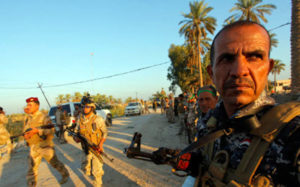
Iran’s religious-dictatorial regime appears to be entering an irreversible stage of collapse, losing its grip not only domestically but also among its regional allies. Recent developments in the Middle East since July have dealt significant blows to the regime’s standing, marking a pivotal moment in the region’s geopolitical landscape. The so-called “Axis of Resistance,” crafted by Iran to counterbalance Israel, has faced severe setbacks over the past six months. Hamas, a key player in this alliance, has suffered devastating losses in the Gaza Strip. Meanwhile, Hezbollah—once a dominant force in Lebanon—has been substantially weakened. Compounding these challenges, the fall of Bashar al-Assad’s regime in Syria has dismantled Tehran’s most critical regional partnership. Without allies on Israel’s borders, the Iranian regime faces an uphill battle to rebuild its faltering coalition.
Russia Denied Iran Permission to Use Its Airbase for Troop Transfers
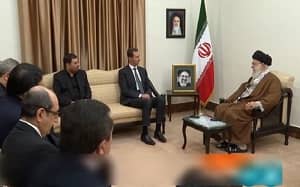
Kamel Saqar, former head of the media office at the Syrian presidency, stated that Russia ignored Bashar al-Assad’s request to use the Hmeimim airbase for transferring Iranian military aid to the Syrian army following the fall of Aleppo.
In an interview with the Al-Mazij podcast, Kamel Saqar revealed that Iranian officials informed Assad they had not received any guarantees allowing Iranian aircraft to land at Hmeimim Airbase or to transit through Iraqi and Syrian airspace.
According to Kamel Saqar, after this, Assad formally requested permission from Russian authorities to allow Iranian planes to land at Hmeimim, but the request went unanswered.
Iran’s Energy Minister Warns of a “Difficult Summer” Ahead

As the Iranian regime officials face multiple crises—including energy shortages, severe air pollution, and the daily rise in the U.S. dollar exchange rate, which has led to prolonged shutdowns across the country—Iran’s Minister of Energy announced that the government is preparing for a “difficult summer,” warning that overcoming it “won’t be easy.”
Abbas Ali-Abadi, Iran’s Minister of Energy, stated that last summer, Iran faced a 20,000-megawatt energy shortfall and predicted: “This figure will rise to 25,000 megawatts in the upcoming summer. God willing, it won’t!”
He added: “The reality is that there is an energy imbalance. The reality is that there is not enough gas in winter. The Ministry of Oil cannot compensate for it within two months. It’s simply not possible.”
Iran’s Health Minister Claims Drug Price Hikes Due to Currency Fluctuations

As reports emerge of a renewed shortage of medications for chronic illnesses, Mohammad-Reza Zafarghandi, the Iranian regime’s Minister of Health, announced that drug prices are rising due to currency fluctuations, stating that exchange rate instability directly impacts medication costs. On Sunday, January 5, the health minister also promised that to prevent further price hikes, the government would compensate insurance companies for the currency fluctuations so that the public would not have to bear the extra costs.
This pledge comes as Mehdi Pirsalahi, head of the Food and Drug Administration, revealed that the government owes 360 trillion rials (approximately $444.5 million) in pharmaceutical debts.
Heidelberg, January 4, 2025: MEK Supporters Host Exhibition Condemning Crimes of Iran’s Regime

Heidelberg, Germany—January 4, 2025: Freedom-loving Iranians and supporters of the People’s Mojahedin Organization of Iran (PMOI/MEK) organized an exhibition to express solidarity with the Iranian Revolution. They also strongly condemned the severe human rights violations in Iran, particularly the increasing executions by the mullahs’ regime, and called for the immediate release of all political prisoners held in the regime’s prisons in Iran.
Gothenburg Rally on January 4, 2025, Demands Regime Change in Iran and Supports MEK Resistance Units

Gothenburg, Sweden — January 4, 2025: Freedom-loving Iranians and supporters of the People’s Mojahedin Organization of Iran (PMOI/MEK) gathered for their first rally of the new year to oppose the regime of the mullahs. They expressed their support for the Iranian Resistance, led by Mrs. Maryam Rajavi, the President-elect of the NCRI, and her Ten-Point Plan for the future of Iran.
Paris Exhibition on January 4, 2025, Backs Iranian Revolution and Denounces Regime’s Human Rights Abuses

Paris, France—January 4, 2025: At the start of the new year, supporters of the People’s Mojahedin Organization of Iran (PMOI/MEK) organized an exhibition featuring photographs and books. The event aimed to express solidarity with the Iranian Revolution and denounce the regime’s escalating use of executions.