


THIS PAGE WILL BE UPDATED WITH THE LATEST NEWS
UPDATE: 11:00 AM CEST
Iran Ranks Among World’s Worst Countries for Press Freedom, Reporters Without Borders Warns

Iran has been ranked 176th out of 180 countries in the 2025 World Press Freedom Index, published on Friday by Reporters Without Borders (RSF), cementing its place as one of the most repressive nations in the world for journalists.
According to RSF, Iran remains near the bottom of the global index, falling below Afghanistan under Taliban rule, which ranks 175th. The report paints a grim picture: “The reign of fear continues, with relentless arrests of journalists keeping independent media under constant pressure.”
Iran’s press freedom score deteriorated across all indicators, with particularly dismal marks in political (175th) and social (177th) contexts. The report highlights a hostile environment where journalists face arbitrary arrests, unfair trials in revolutionary courts, and harsh sentences, often for covering sensitive topics such as protests, women’s rights, or corruption.
The repression of journalists in Iran has worsened since the 2022 uprising. According to the report, “journalists and independent media in Iran are constantly persecuted by means of arbitrary arrests and very heavy sentences handed down after grossly unfair trials before revolutionary courts.”
RSF notes the political pressures facing the media, stating: “Supreme Leader Ali Khamenei often accuses the independent media of being manipulated by foreign forces. As the head of the country’s main political, military, and judicial institutions, he can order the arrests of journalists and sentence them to long prison terms, and even the death penalty.”
The report explains: “Article 24 of the constitution guarantees press freedom, but the 1986 press law (amended in 2000 and 2009 to take account of online publications) allows the authorities to ensure that journalists do not ‘endanger the Islamic Republic’, ‘do not offend the clergy and the Supreme Leader’ and do not ‘spread false information’.”
Economically, journalists are under severe strain. As RSF describes: “The target of unprecedented sanctions and plagued by corruption, Iran is in an alarming economic situation that has had a major impact on the media and journalists. Several media outlets have been closed in recent years, and around 100 journalists have lost their jobs.”
UPDATE: 7:00 AM CEST
Deadly Bandar Abbas Port Explosion Traced Back to IRGC Activities and Khamenei-Supervised Entities

While numerous eyewitness reports following the explosion in Bandar Abbas suggest a cover-up regarding violations and the storage of missile fuel shipments at the port, the Associated Press reported on May 1, 2025: “The explosion that rocked an Iranian port, killing at least 70 people and injuring more than 1,000 others, had its epicenter at a facility ultimately owned by a charitable foundation overseen by Supreme Leader Ayatollah Ali Khamenei’s office… The port reportedly took in a chemical component needed for solid fuel for ballistic missiles.”
In this regard, according to a report by the Bahar news Telegram channel on April 29, 2025, a veteran employee of the Bandar Abbas dock, in the presence of Sara Fallahi, a member of the Majlis (parliament) National Security and Foreign Policy Commission, revealed the organized movement of radioactive materials, explosives, and the shipment of weapons to Yemen under the guise of “food exports.” He stated: “These containers, labeled as food items, are moved without our knowledge and without any inspection.”
Imprisoned Journalist Nasrin Hassani Detained in Harsh Conditions

Nasrin Hassani, a journalist and media activist, is currently serving her prison sentence in Bojnourd Prison under harsh and unlawful conditions, without the legally mandated separation of prisoners based on the nature of their offenses.
Facing three separate legal cases, Mrs. Hassani has been sentenced to a total of 25 months in prison and is being held alongside inmates convicted of non-political crimes.
In recent weeks, authorities have denied her request for conditional release. The consolidation of her legal cases remains unresolved, casting uncertainty over her judicial status and subjecting her to additional psychological pressure.
U.S.-Iran Nuclear Talks: Between Past Agreements and Future Uncertainties
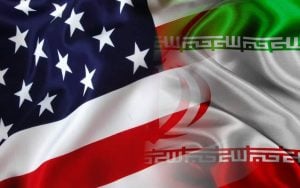
The United States and Iran’s regime have resumed negotiations aimed at curbing Iran’s nuclear program, marking the first significant diplomatic engagement between the two countries in years. These preliminary and mostly indirect talks, mediated by Oman, come amid renewed global attention on the future of Iran regime’s nuclear ambitions and the U.S. approach to containing them.
The talks are taking place under the administration of President Donald Trump, who returned to office after having withdrawn the U.S. from the 2015 Joint Comprehensive Plan of Action (JCPOA) during his first term. At the time, Trump criticized the JCPOA — a multilateral agreement between Iran and six world powers — as inadequate and promised a stronger, more comprehensive replacement. However, no new deal materialized before he left office in 2021.
Concerns Over the Health Condition of Reza Ramazanzadeh in Greater Tehran Prison

According to received reports, Reza Ramazanzadeh, a Kurdish political activist imprisoned in Greater Tehran Prison, is in critical health condition due to severe gastrointestinal problems and stomach pain. Reports indicate that this political prisoner, who had previously suffered from digestive issues as a result of a hunger strike, has recently experienced worsening stomach pain. However, prison authorities and the facility’s medical center have refused to provide necessary medical care. This has raised serious concerns about his well-being.
According to the information received, Reza Ramazanzadeh is being held in the violent crimes ward of Greater Tehran Prison, where the principle of separation based on charges has not been observed. He has been denied access to necessary medications and appropriate treatment, and the poor prison conditions — including lack of basic facilities and medical attention — have further deteriorated his physical health. Sources close to the prisoner reported that his previous hunger strikes, carried out in protest against his detention conditions and rights violations, have resulted in chronic digestive issues.
Cybersecurity Expert Mohsen Langar-Neshin Executed in Ghezel Hesar Prison

On the morning of Wednesday, April 30, 2025, Mohsen Langar-Neshin, a 34-year-old cybersecurity expert, was executed in Qezel-Hesar Prison in Karaj. Mizan News Agency, affiliated with Iran’s judiciary, confirmed the execution and accused him of “waging war against God (moharebeh) and corruption on earth” through espionage for Israel. His family and legal team, however, rejected these allegations, stating that his confessions were extracted under severe physical and psychological torture.
Langar-Neshin was arrested on July 3, 2023, by Iran’s Ministry of Intelligence and held in solitary confinement for 43 days under harsh interrogation. He was later transferred to Evin Prison, where he spent about 20 months in detention—most of it in the notorious Ward 209, run by the Ministry of Intelligence.
Protests by Families of Death Row Political Prisoners and Young Activists

During the 66th week of the “No to Executions Tuesdays” campaign, families of political prisoners sentenced to death, along with groups of young protesters, staged demonstrations in Tehran, Rasht, Bukan, and Shahriar, expressing their opposition to death sentences. The protests were marked by placards and handwritten signs bearing slogans such as “No to Executions.”
In Tehran, the families of ten political prisoners sentenced to death gathered outside Evin Prison. Holding up photos of their loved ones — Vahid Bani-Amarian, Pouya Ghobadi, Mohammad Taghavi Sangdehi, Abolhassan Montazer, Babak Alipour, Akbar (Shahrokh) Daneshvarkar, Mehdi Hassani, Behrouz Ehsani Eslamloo, Mohammad Javad Vafaei Sani, and Manouchehr Fallah — they chanted slogans such as “No to Executions” and “Immediate Annulment of Death Sentences.” Their handwritten signs clearly demanded the abolition of the death penalty.
At Least 48 Prisoners Executed in Iran Since Mid-April 2025

Since mid-April 2025, at least 48 prisoners have been executed across various prisons in Iran. On average, more than four prisoners have been executed each day, amounting to approximately one execution every six hours.
In the early hours of Wednesday, April 30, 2025, four prisoners were executed at Qezel-Hesar Prison in Karaj. Two of those executed were identified as Asghar Vatanparast, from Shiraz, and Hamid Fazeli, from Tehran. Vatanparast had been arrested in 2018 on drug-related charges, while Fazeli had been detained four years ago on charges of murder. The identities of the two other prisoners have not been confirmed; however, reports indicate that one of them had been sentenced for murder. Previously, the execution of Mohsen Langar-Neshin had also been reported by the Iran Human Rights Society.
May 1, 2025 – Iranian Resistance Supporters Rally Worldwide on International Workers’ Day

May 1, 2025 – On the occasion of International Workers’ Day, supporters of the Iranian Resistance held rallies in various cities around the world, including The Hague, Stockholm, Hamburg, Sydney, Brussels, Cologne, Aarhus, Heidelberg, Madrid, Oslo, Copenhagen, Gothenburg, and Geneva.
Iranians in The Hague Rally in Solidarity with Bandar Abbas Victims, Condemn Iran’s Regime

The Hague, Netherlands — April 30, 2025 – Supporters of the People’s Mojahedin Organization of Iran (PMOI/MEK) gathered in The Hague to express solidarity with the victims of the recent explosion in Bandar Abbas, Iran. Holding signs and chanting slogans, participants mourned the loss of innocent lives and extended their heartfelt condolences to the families affected by the tragedy.