

THIS PAGE WILL BE UPDATED WITH THE LATEST NEWS
UPDATE: 10:00 PM CEST
UK MP Blames Iranian Regime for Middle East Instability, Urges Government Action
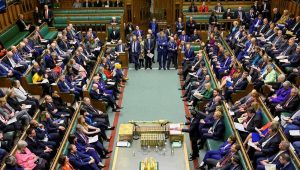
In a debate at the House of Commons on May 6, 2025, a lawmaker sharply criticized the Iranian regime’s role in fueling violence and instability across the Middle East, urging the British government to adopt a clear and robust strategy to counter Tehran’s malign influence.
Conservative MP Priti Patel declared: “The root cause of so much bloodshed and misery in the Middle East is the regime in Iran.” She called on the government to develop a plan to “deter Iran and undermine its regime and its awful approach, which is to sow destruction and export repression around the world, including to the UK.”
Patel further warned: “How many more militants and terrorists will be bankrolled by Iran, threatening lives, before the Government has a clear strategy in place?”
Highlighting Tehran’s backing of proxy groups, Patel condemned the regime’s support for various proxy groups, citing the recent Houthi missile attack near Israel’s Ben Gurion Airport that injured civilians. She pressed the government to clarify its response to “Iran’s destructive influence” and to work closely with allies to ensure Iran “never becomes a nuclear state.”
The government’s representative, Hamish Falconer, Parliamentary Under-Secretary of State for Foreign, Commonwealth and Development Affairs, reiterated condemnation of Iranian-backed Houthi attacks and affirmed ongoing diplomatic engagements in the region but stopped short of outlining a specific strategy targeting the Iranian regime’s activities.
We Are Sleepwalking into an Iranian Terror Attack

It takes some doing to be aware of a serious national security threat, but to decide that it would be better not to properly address it. For years, there have been widespread demands for Iran’s Islamic Revolutionary Guards Corps – a shadowy organisation that manages to combine Islamic fanaticism and terrorist ambitions with all the training, equipment, and support of a modern nation-state – to be booted out of Britain. Yet the Government has turned a deaf ear.
Last week, Iran came as close as it has ever been to carrying out a mass atrocity on British soil, with its agents only thwarted within hours of the attack in a major counter-terror operation. Still, there are no serious moves to ban the organisation on our shores. What are we waiting for?
Britain Must Finally Proscribe The IRGC
The arrest of eight people allegedly associated with an Iranian-directed terror plot is further evidence of the malign intentions of Tehran. Police feared that a potential attack was just hours away when they moved in on homes in London, Manchester and Swindon.
While their inquiries continue, it is not yet known what was being planned or whether others were involved. But what we do know is that Iran is involved in targeting dissidents and critics around the world, with even Donald Trump reportedly on the list of its assassins. Matt Jukes, the head of Counter Terror Policing, warned in August that Iranian diaspora communities were “clearly at risk of kidnapping or assassination”. He disclosed that since 2020, police and MI5 have responded to 15 plots backed by Iran.
UPDATE: 9:00 PM CEST
Family of American Hostage Tortured in Lebanon Wins Landmark Case against Iran

After a nearly four-year search for justice, a U.S. court has found in favor of the family of a Lebanese American man held hostage in Lebanon, finding that the Islamic Republic of Iran, working through its proxy Hezbollah, should be held liable for their father’s kidnapping and torture.
Two of Amer Fakhoury’s daughters, Guila and Zoya Fakhoury, told Fox News Digital that on May 1, a U.S. District Court judge found Iran responsible for Fakhoury’s imprisonment.
“This is the first lawsuit to prove Iran’s influence over Lebanon,” Guila said. “We were very happy about the judgment.”
Amer Fakhoury was arrested a week after traveling to Lebanon with his family in September 2019. After his arrest, a newspaper linked with Hezbollah alleged that Fakhoury, formerly a member of the South Lebanon Army, had been the “butcher” of Khiam, a detention center where grave human rights abuses were reported to have taken place.
FCDO Summons Iranian Chargé d’Affaires Over Transfer of Ballistic Missiles to Russia

The Foreign, Commonwealth and Development Office has today summoned the Iranian Chargé d’Affaires in London in response to Iran’s transfer of Ballistic Missiles to Russia. An FCDO spokesperson said: “Today, in coordination with European partners and upon instruction from the Foreign Secretary, the Chargé d’Affaires of the Iranian Embassy in London was summoned to the Foreign, Commonwealth & Development Office. Mr. Ali Matinfar was summoned over Iran’s transfer of ballistic missiles to Russia for use in Ukraine.
“The UK Government was clear that any transfer of Ballistic Missiles to Russia would be seen as a dangerous escalation and would face a significant response.”
UPDATE: 7:00 AM CEST
Iranian Regime Attempts Cover-Up after Devastating Bandar Abbas Port Explosion
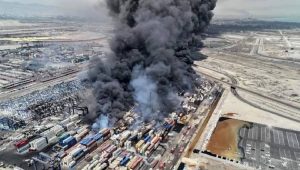
The massive explosion in Bandar Abbas, which regime outlets stated reached temperatures of “up to 1400 degrees Celsius” and The Washington Post estimated its power as equivalent to the detonation of 50 tons of TNT, not only claimed the lives of hundreds of Iranians but also further exposed the anti-people nature of the mullahs’ regime ruling Iran. This explosion demonstrated that Iranian regime supreme leader Ali Khamenei, in order to continue his sinister policy of “warmongering”—essential for the regime’s survival—not only wastes the nation’s resources on missiles and nuclear programs but also turns various parts of Iran into killing fields by stockpiling explosive materials and missile fuel.
Now, after the explosion, Khamenei, terrified of public anger fueled by the exposure of this reality, shamelessly dismissed the catastrophe as “an incident that happens everywhere” and tried to downplay its scale by urging people to “be patient.” However, this cover-up is futile against the stark reality and the nation’s fury.
Families of Political Prisoners Continue Their Protests Against the Death Penalty

On Tuesday, May 6, 2025, on the 67th week of the nationwide campaign “No to Executions Tuesdays,” families of political prisoners sentenced to death, along with protesting youth in several Iranian cities, once again raised their voices in defiance of the regime’s use of capital punishment as a tool of repression.
In Tehran, the families of political prisoners gathered once again in front of Evin Prison, holding up photos of their loved ones and placards with slogans such as “No to Execution” and “Immediate Reversal of Death Sentences.”
The families held up the images of prisoners, including Vahid Bani-Amerian, Pouya Ghobadi, Mohammad Taghavi Sangdehi, Abolhassan Montazer, Babak Alipour, Akbar Daneshvarkar, Mehdi Hassani, Behrouz Ehsani Eslamlou, Mohammad-Javad Vafaee Sani, and Manouchehr Fallah.
Explosion in Bandar Abbas Reveals Deep Vulnerabilities in Iran’s Economic Infrastructure

The devastating explosion at Rajaee Port in Bandar Abbas has laid bare the Iranian regime’s critical vulnerabilities in its economic and logistical infrastructure. The blast, which took place amid growing domestic unrest, has had sweeping political and economic consequences, particularly given Rajaee Port’s role as a central hub for Iran’s maritime exports and imports—especially oil, industrial metals, and cargo shipments.
The Iranian regime has been accused of concealing the true scale of the disaster. According to the National Council of Resistance of Iran (NCRI), the government has restricted access to information and blocked independent reporting in an effort to prevent public outrage. Eyewitnesses have reported that the fires triggered by the explosion may continue burning for up to 20 days.
Tehran Stock Index Plunges and Dollar Rate Rises Following “Postponement of Nuclear Talks” with Iran’s Regime

The postponement of the fourth round of nuclear talks between the Iranian regime and the United States, along with the impact of this news, led to a plunge in the Tehran Stock Exchange index and a rise in the dollar-to-rial exchange rate. Some analysts suggest the talks may have “failed” rather than merely been “postponed.”
The delay of the fourth round of nuclear negotiations between the regime and the United States and the resulting market reaction at the start of the trading week caused a sharp decline in the Tehran Stock Exchange index and an increase in the dollar rate.
According to domestic Iranian media, the price of one US dollar in Tehran’s unofficial currency market on Saturday, May 3, rose to around 870,000 rials — a roughly 5% increase compared to the previous week. In addition, the Tehran Stock Exchange index dropped by 61,116 points on Saturday, ending in the red once again.
168% Increase in Food Prices During the First Eight Months of Iran’s New Administration

As the economic situation continues to deteriorate and public dissatisfaction over declining purchasing power grows, data from state-run centers shows that food prices have increased by as much as 168% during the first eight months of the administration of Masoud Pezeshkian, president of the Iranian regime.
Reports indicate that the price of potatoes rose by 168%, pinto beans by 124%, and pasteurized butter by 80%.
The state-run Shargh newspaper reported that the legume market has reached a “crisis point” due to the elimination of preferential currency rates, temporary policies, and lack of planning, stating that in recent weeks, the market has experienced one of its sharpest price shocks.
The Silent Land: A Tide of Executions

The Baluch, a predominantly Sunni Muslim ethnic and religious minority residing primarily in Iran’s Sistan and Baluchestan province, have faced systematic suppression, mass arrests, widespread executions, and enforced disappearances over the past three years. For instance, in March 2025, at least 20 young Baluch individuals were detained by police forces in Zahedan and transferred to an undisclosed location. Reports from the United Nations (UN) and human rights organizations, including the Office of the High Commissioner for Human Rights (OHCHR), have raised concerns about “enforced disappearance operations” targeting ethnic minorities, including the Baluch. The Baluch frequently face arbitrary arrests, torture, and unfair trials, often leading to transfers to unknown locations and the risk of execution.
Over the past three years, executions of Baluch individuals have surged at an unprecedented rate. Despite constituting only about 5% of Iran’s population, Baluch account for 11–20% of all executions. The wave of executions, particularly targeting young Baluch protesters, has intensified since 2022.