


THIS PAGE WILL BE UPDATED WITH THE LATEST NEWS
UPDATE: 2:00 PM CEST
State-Sanctioned Murder in Iran

In Iran—a land where more than 26 centuries ago the first human rights charter was declared in the Cyrus Cylinder—people today endure a nightmare of persecution, torture, and state-sanctioned killings that cries out to the heavens and demands urgent international action. The theocratic regime ruling the country has turned execution into a daily tool of power and fear. There is no legality, no justice, no guarantees—only repression.
Reports emerging from Iranian prisons expose a systematized machinery of death. Political prisoner Saeed Masouri, incarcerated for 25 years, recently addressed a letter to the world from Ghezel Hesar Prison. In it, he lays bare how thousands are executed—both literally and symbolically—in Iran: sham trials, no defense, no evidence, no right to appeal. Confessions are extracted through coercion and torture, then broadcast on state television as cautionary examples. Families are emotionally blackmailed into forcing “repentance” statements that never save the prisoner’s life.
What is called “justice” is nothing more than a façade. In cases involving national security—usually political charges—case files are not compiled by judges or prosecutors but by the Revolutionary Guard or the Ministry of Intelligence. There is no due process, no access to legal defense. Execution is the predetermined outcome. Between June and July 2025 alone, over 170 executions were reported. Each one is, in truth, a state murder.
UPDATE: 8:00 AM CEST
Breaking the stalemate: Why Iran’s future lies beyond the false choice of war or appeasement

For decades, the international community has been paralyzed by a false choice when confronting the clerical regime in Iran: engage in a devastating foreign war or pursue a fruitless policy of appeasement. This stalemate has allowed tyranny to fester, threatening global peace and subjecting the Iranian people to untold suffering. But at the Free Iran World Summit 2025 in Rome, a powerful consensus emerged around a genuine path forward—a “Third Option” that champions regime change led by the Iranian people and their organized Resistance.
This solution, long the cornerstone of the National Council of Resistance of Iran (NCRI), is now gaining unprecedented international traction. As dignitaries from across the globe gathered in the Italian capital, they affirmed that the only legitimate and lasting solution must come from within Iran. As NCRI President-elect Maryam Rajavi declared, encapsulating over two decades of the Resistance’s core message: “Appeasement? No! War? No! Is this regime reformable? No! Then what is the solution? The solution is regime change—by the Iranian people and their organized resistance.”
Where Is Arghavan Fallahi? Regime Demands 2-Billion-Toman Bail While Family Remains in the Dark

More than six months after the arrest of 24-year-old political prisoner Arghavan Fallahi, her family still has no information about her whereabouts or health condition. Despite this total lack of communication, the Iranian regime’s judiciary has set an exorbitant bail of 2 billion tomans (approximately $40,000 USD) for her temporary release. The demand for such a high bail—while Arghavan is held incommunicado and denied all phone calls or visits—has only deepened the family’s concerns.
Nasrollah Fallahi, Arghavan’s father, is himself a political prisoner currently held in Ward 2 of the Greater Tehran Penitentiary (Fashafouyeh Prison). On Sunday, August 3, 2025, he released an audio message addressed to the Iranian public and the international community, highlighting the cruel uncertainty and abuse surrounding his daughter’s detention. In it, he describes a desperate, months-long struggle for information and justice.
Exhibition in Langenthal, Switzerland Condemned Executions in Iran and Demand Release of Political Prisoners

Langenthal, Switzerland – August 1, 2025 – Freedom-loving Iranians and supporters the People’s Mojahedin Organization of Iran (PMOI/MEK) held an exhibition to denounce the execution of Iranian political prisoners by the Mullahs’ regime. They specifically condemned the recent state-sanctioned executions of Mehdi Hassani and Behrouz Ehsani, both members of the PMOI.
MEK Supporters Rally in Oslo to Condemn Executions in Iran and Demand Release of Political Prisoners

Oslo, Norway – August 2, 2025 – Despite rainy weather, supporters of the People’s Mojahedin Organization of Iran (PMOI/MEK) gathered in Oslo to denounce the execution of Iranian political prisoners by the Mullahs’ regime. They specifically condemned the recent state-sanctioned executions of Mehdi Hassani and Behrouz Ehsani, both members of the PMOI.
Iran Sets Up Defense Council to Oversee Military and Security Policies

The Secretariat of Iran’s Supreme National Security Council officially announced the establishment of the “National Defense Council” based on Article 176 of Iran’s constitution. This council is intended to focus on reviewing defense plans and enhancing the capabilities of the armed forces, with the president serving as its head. According to the Secretariat, members of the Defense Council will include the heads of the three branches of government, senior military commanders, the minister of intelligence, and other relevant ministers. The council’s secretary will be selected from the armed forces and appointed by the president.
Under Iran’s constitution, the Defense Council operates as a subsidiary body of the Supreme National Security Council, and its formation and structure must be approved by the Supreme Leader. Ali Nikzad, deputy speaker of parliament, stated: “The formation of the Defense Council requires the Supreme Leader’s approval, and parliament has no role in this process,” citing Article 110 of the constitution.
The Snapback Mechanism Increases Likelihood of Global Consensus Against Iran’s Regime

The state-run daily Farhikhtegan, in an article about escalating tensions, warned of the possibility of military conflict and the formation of global consensus against Iran’s regime if the European countries potentially activate the so-called “snapback mechanism.”
On Monday, August 3, Farhikhtegan reported that if sanctions are reimposed, measures such as a ban on arms sales to Iran, freezing assets linked to sanctioned entities such as the Islamic Revolutionary Guard Corps (IRGC) and Iran Shipping Lines, mandatory inspections of suspicious cargo, and a ban on financial and insurance services in the nuclear field will be on the international community’s agenda.
The newspaper wrote: “Oil sales are not directly subject to UN Security Council sanctions. Although the scope of UN sanctions is narrower compared to the unilateral sanctions imposed by the U.S. and Europe, they carry greater psychological and diplomatic weight due to their multilateral nature. Moreover, because of the interpretability of the sanctions language, member states can implement these sanctions strictly or leniently based on their political will.”
Iranian Regime’s FM: Government Remains Committed to Legislation Suspending Cooperation With IAEA
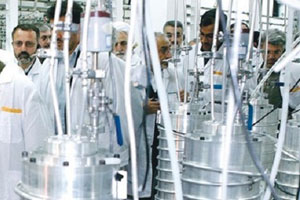
Kazem Gharibabadi, deputy foreign minister of the Iranian regime, stated during a session of the National Security and Foreign Policy Commission of the parliament that the government is committed to the law suspending cooperation with the International Atomic Energy Agency (IAEA). Ebrahim Rezaei, spokesperson for the Majlis (Parliament) National Security Commission, said on Sunday, August 3, that Gharibabadi presented a report to the commission about the Istanbul meeting with the three European countries, as well as his recent trip to New York. Rezaei quoted the deputy foreign minister as emphasizing that the law passed by parliament regarding the suspension of cooperation with the IAEA is “mandatory and enforceable.”
Strategic Disarray and Erosion of Legitimacy in the Iranian Regime

From Distrust in Russia to Threats Against Trump: The Regime’s Confused War Narrative, Diplomatic Deadlock, and Internal Crisis
A review of today’s Iranian state-affiliated newspapers reveals severe contradictions and escalating crises within the regime, both domestically and internationally. Key developments include growing distrust toward Russia, diplomatic isolation, the collapse of regime propaganda, and open incitement to violence—underscoring a deepening strategic vacuum.
Ham-Mihan reports that the European Troika has made a new proposal to delay the activation of the UN sanctions “snapback” mechanism, but warns: “If Iran exits the NPT, talks with the U.S. will collapse.”
The Myth of Popular Legitimacy in Iran: When Power Is Claimed from Hearts but Enforced with Guns

Despite lofty rhetoric about popular support, Iran’s ruling regime clings to power through repression, surveillance, and fear. On July 23, 2025, during a session of the Iranian regime parliament, Speaker Mohammad Bagher Ghalibaf made a statement that captured headlines for its lofty idealism and sharp disconnect from reality. He declared: “The foundation of the power of the Velayat-e Faqih [Guardianship of the Islamic Jurist] is not missiles—it is the heart of each and every citizen.” This rhetorical flourish might suggest a regime grounded in popular support. But beneath the surface of such poetic claims lies a far more troubling truth: the Iranian regime rules not by affection or consent, but by coercion and control. Ghalibaf’s words, rather than revealing national unity, expose the regime’s need to manufacture legitimacy where none exists.