

THIS PAGE WILL BE UPDATED WITH THE LATEST NEWS
UPDATE: 10:30 PM CEST
Detained Sailors Reveal Houthi Smuggling Routes from Iran to Yemen

Confessions by detained sailors have revealed the smuggling routes used by the Houthi militants in Yemen to smuggle weapons from Iran. Yemeni forces arrested in July seven people on board a ship they intercepted in the Red Sea. The sailors revealed the details of a significant smuggling network run by Iran’s Revolutionary Guards Corps (IRGC) that ran routes through Beirut, Damascus, Somalia and Djibouti to reach the Houthi-held ports of Hodeidah.
The confessions were aired by al-Joumhouriya television that is run by the Yemeni national resistance that is based on the western Yemeni coast.
Four sailors confessed to smuggling arms shipments from Iran’s Bandar Abbas port to Hodeidah. They have been identified as Amer Masawa, Ali Qassir, Issa Qassir and Abdullah Afifi.
UPDATE: 5:30 PM CEST
Robert Ward: Britain Must Recognise Iran’s Democratic Opposition

In the late 1970s, as an occasional visitor to Shiraz, it was clear to me that the Shah was very much in command – a command maintained by the quiet menace of the Savak, his secret police. The mandatory portrait of the Shah in every meeting room bore more resemblance to Orwell than to that of Her Majesty back home. Rather than a polite nod to tradition, in Iran, it was a warning: Big Brother was watching, always.
Mention of the Shah brought any conversation with local people to a swift close. The risk you might be a Savak informant was too high. The mood only began to change, astonishingly quickly, in late 1978. On what turned out to be my final visit, a taxi driver said bluntly: “The Shah is a very bad man.”
It was my turn to worry that the other person in the conversation was a Savak informer. He wasn’t; he was, as it turned out, simply reflecting the mood on the street. People were no longer afraid.
UPDATE: 1:00 PM CEST
U.S. Envoy Accuses the Iranian Regime of Threatening Global Maritime Security Through Houthi Support and Vessel Seizures

In an August 11 address to the United Nations Security Council, Acting U.S. Representative Ambassador Dorothy Shea accused the Iranian regime of posing a direct threat to global maritime security through its backing of Yemen’s Houthi militia and its seizure of commercial vessels in international waters.
Shea called on Tehran to immediately release ships it still holds, including the MSC Aries, and urged all UN member states to fully implement the arms embargo against the Houthis. “Iran and other countries continue to violate this embargo, providing the Houthis with rockets and munitions, as well as the components and chemicals they use to rain attacks on commercial shipping in the Red Sea,” she said.
The U.S. envoy condemned last month’s Houthi attacks that sank two commercial ships, killed crew members, and resulted in hostage-taking. She accused Tehran of fueling such violence and pressed for “meaningful consequences for sanctions violations” alongside stronger efforts to cut off funding and material support for the Houthis’ weapons programs.
Iran’s Execution Rate Soars Amid Unprecedented Crackdown Against Dissent

Iran’s rulers are carrying out one of the most visible and deadly crackdowns in decades, with mass arrests, political trials, and executions surging at an alarming pace.
Stephen Rapp, former U.S. Ambassador-at-Large in the office of Global Criminal Justice, tells CBN News the Iranian regime isn’t just cracking down with arrests or beatings. It’s using executions to silence dissent, with the numbers rising fast after the recent war with Israel.
“There are thousands of political prisoners, and they could charge them with these phony charges and begin mass executions, really, judicial murders of peaceful opponents,” Rapp told CBN News.
Human rights advocates say the scale is staggering. In 2023, Iran executed more than 850 people. The following year, the toll rose to 975. Now, just seven months into 2025, over 700 executions have already been recorded, putting the country on track to shatter previous records.
Iran’s Death Machine: Why The World Must Stop the Next Massacre

In the summer of 1988, behind prison walls across Iran, thousands of political prisoners were summoned, asked a few questions about their political beliefs, and sent to the gallows. Within a few weeks, at least 30,000 people – most of them affiliated with the People’s Mojahedin Organization of Iran (PMOI/MEK) – were executed. The world looked away. Despite urgent appeals, nothing was done, and to this day the massacre has not been officially recognised by the UN and the regime has yet to be held to account. The Mullahs learned that mass killings could be carried out with impunity.
Today, 37 years later, that lesson is being put into practice again – and the signals from Tehran could not be clearer.
UPDATE: 7:30 AM CEST
The Iranian Regime’s Brutality Against Dissidents Is a Sign of Its Weakness
 While the Iranian regime attempts to project an image of stability and power, the grim reality within its prisons tells a different story. The regime is orchestrating a vicious and systematic escalation of suppression against political prisoners. This campaign of cruelty, which targets the nation’s brightest students, its most resilient women, and its elderly activists, is not a sign of strength but a clear admission of the theocracy’s profound fear of an unstoppable popular uprising.
The recent cases of four political prisoners—Ali Younesi, Amirhossein Moradi, Fatemeh Ziaei Azad, and Arghavan Fallahi—are not isolated incidents but damning evidence of a regime in its death throes, lashing out at the very people who represent Iran’s future.
Pezeshkian’s Confession: Iran’s Economy in Freefall, Society on the Brink of Eruption

In a stunning admission of systemic failure, the Iranian regime’s president, Masoud Pezeshkian, has publicly conceded that his government has lost control over the nation’s most basic services and economic stability.
Speaking on Sunday, August 10, Pezeshkian painted a grim picture of a regime cornered by its own incompetence, stating that its actions are now dictated by “obligation,” not choice. His words are not merely a political statement but a confession that the ruling mullahs are presiding over a complete collapse, pushing Iranian society toward a social explosion.
The World Must Not Look Away as Iran Prepares for a New Wave of Executions

A few weeks ago marked the 37th anniversary of one of the darkest chapters in modern Iranian history: the 1988 prison massacre. Acting on a fatwa issued by Ayatollah Ruhollah Khomeini, the regime executed more than 30,000 political prisoners — most of them affiliated with the People’s Mojahedin Organization of Iran (PMOI/MEK). These executions were carried out in secret, without trial, and with the explicit goal of eliminating political dissent. For decades, the world remained largely silent. Only recently has the United Nations begun to acknowledge the massacre for what it was: a crime against humanity, and, in the words of former U.N. Special Rapporteur on Iran, amounted to genocide. But the crime did not end in 1988. The Iranian regime continues to deny justice to the victims, persecute their families, and glorify the massacre as a “historic success.” Under international law, this makes the massacre an ongoing crime.
International Youth Day: Young Iranian Women Carry the Torch of Freedom

Across the world, August 12—International Youth Day—celebrates the potential of the next generation to shape a better future. But in Iran, the date carries a weight far beyond celebration. It is a day that speaks to defiance, sacrifice, and a relentless pursuit of freedom. From the Constitutional Revolution to the anti-monarchic uprising, from the protest waves of the past decade to the nationwide uprising of 2022, Iranian youth have been the driving force behind every major transformation. And in more recent decades, time and again, it has been young women who have stood at the front lines—organizing, leading, and paying the ultimate price for defying dictatorship.
Under the mullahs’ regime, tens of thousands of young Iranian women and girls have been imprisoned, tortured, and executed for demanding freedom and equality. Their courage is not just a chapter in Iran’s history—it is the living engine of its future.
Iran Regime’s IRGC Exposed in Major Yemen Arms Smuggling Network
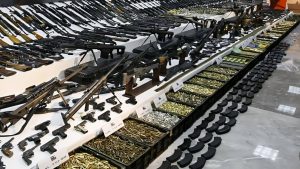
Confessions of detained sailors uncover routes and operations linking Iran to Houthi weapons shipments via regional hubs.
Confessions from detained sailors have revealed detailed smuggling routes used by Yemen’s Houthi militants to receive weapons from the Iranian regime, underscoring the central role of the Islamic Revolutionary Guard Corps (IRGC) in sustaining the group’s military capabilities.
According to Asharq Al-Awsat, Yemeni forces intercepted a vessel in the Red Sea in July and arrested seven sailors on board. The detainees described a large-scale weapons trafficking network coordinated by the IRGC, with routes passing through Beirut, Damascus, Somalia, and Djibouti before reaching Houthi-controlled ports such as Hodeidah. The confessions, broadcast by Yemen’s al-Joumhouriya television, showed four sailors—identified as Amer Masawa, Ali Qassir, Issa Qassir, and Abdullah Afifi—admitting to transporting arms shipments from Iran’s Bandar Abbas port to Hodeidah.
Iranian Political Prisoners Expose “Bloody Saturday of Ghezel Hesar” — Two Executed After Brutal Raid

Survivors of the July 26 assault recount unprecedented violence, torture, and extrajudicial executions inside Ghezel Hesar Prison.
Political prisoners held in Unit 4 of Ghezel Hesar Prison have issued a harrowing testimony describing what they call “Bloody Saturday of Ghezel Hesar” — the July 26, 2025 attack that left two of their cellmates executed and many others injured.
The statement, signed by the survivors, details an unprecedented and deliberate act of state violence. The prisoners state that all fundamental rights — from the right to life to the right to dignity, health, and fair trial — were “openly and violently trampled” in a single morning operation.
Iran’s Judiciary Chief Denies Political Prisoners While Regime Erases Evidence of Past Mass Executions

Eje’i claims “no political prisoners” exist, as Khamenei’s regime destroys graves of thousands executed in the 1980s to wipe out evidence of genocide and crimes against humanity.
On August 10, 2025, Iranian Judiciary Chief Gholam-Hossein Mohseni Eje’i publicly denied the existence of political prisoners in the country, framing the issue as a matter of “definition” and claiming no credible list had ever been provided to him.
Speaking through the judiciary’s official media outlet, Eje’i asserted that “sometimes all security detainees are called political prisoners” and that there is “no uniform definition” of the term. He said that after the recent 12-day war — his term for the conflict with Israel — various figures, including some inside the government, urged him to release political prisoners as a gesture of national unity.
Iran’s Floating Oil Stockpile Surges Amid Tighter Sanctions Enforcement

Satellite data shows Iranian crude oil stored at sea has surged to record levels as sanctions tighten and buyers retreat.
New satellite-based data reveals that Iran’s stock of crude oil stored at sea has surged dramatically this year, reflecting both shrinking markets for its sanctioned exports and growing pressure from global enforcement measures. According to commodities and data analysis firm Kpler, the amount of Iranian crude held afloat increased from 5 million barrels in January to 35 million barrels by July. The firm now estimates that 40 million barrels are stored aboard tankers, primarily in Southeast Asia and off China’s coast.
Frequent Power Outages Have Reduced Iranian Farmers’ Access to Water By 25%

Ataollah Hashemi, head of the National Wheat Farmers Foundation, announced that due to frequent power outages, farmers’ access to water has decreased by one-quarter.
In a video interview with the state-run news outlet Khaneh Eghtesad, Hashemi reported a decline in wheat production due to the effects of drought and factors such as prolonged power outages. He said: “Six hours of daily power cuts have eliminated 25% of farmers’ access to water. In my opinion, the damage to farmers is even greater than this.”
Hashemi added: “This year, we will reach 7.5 million tons of wheat production. Under these circumstances, the country needs to import 5 million tons of wheat, which is a terrifying figure.”
Complete Drying of Lake Urmia by the End of Summer Is Certain

Ahmadreza Lahijanzadeh, deputy for marine and wetland affairs at the Department of Environment of Iran’s regime, warned that with the current trend, the complete drying of Lake Urmia by the end of summer is “certain,” citing the low water level in the lake.
On Sunday, August 10, Lahijanzadeh said: “The water level of the lake on August 2 reached 1,269.74 meters, its area has shrunk to 581 square kilometers, and the water volume has been reduced to about half a billion cubic meters; a figure that shows a significant and unprecedented decline compared to last year.”
He warned that if the current trend continues, the complete drying of the lake will occur by the end of summer, and due to the “lack of water inflow,” this situation will not change in autumn.
Bloody Summer of 1988: A Crime Against Humanity – 1

In the summer of 1988, prisons across Iran witnessed one of the most horrific atrocities in modern history. Khomeini, through a secret fatwa, ordered the mass execution of thousands of political prisoners. Many of these prisoners had been arrested and tried years earlier; some had already completed their sentences or were on the verge of release. These extrajudicial executions, carried out nationwide, aimed to completely eliminate political opponents and “purge” prisons of every dissenting voice. The majority of victims were members and supporters of the People’s Mojahedin Organization of Iran (PMOI/MEK), but other political opposition groups were also targeted.
Iran-Linked Clerics Respond to Moves to Disarm Hezbollah and PMF
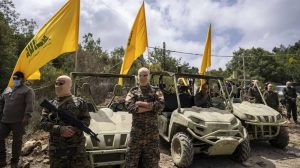
In recent days, two influential religious and political figures in Iran — Ahmad Alamolhoda, Supreme Leader Ali Khamenei’s representative and Friday Prayer Leader in Mashhad (northeast Iran), and Ghorbanali Dorri-Najafabadi, Khamenei’s representative and Friday Prayer Leader in Arak (central Iran) — have openly expressed concerns about regional developments and the weakening of Iran’s proxy forces. These remarks, reported in state-affiliated media, reflect what Iranian political observers describe as growing challenges for Iran’s regional influence.
On August 7, 2025, during Friday prayers in Mashhad, Alamolhoda strongly criticized factions in Iran advocating negotiations with the West. He stated: “Recent experiences, especially in the context of ongoing wars and conflicts, have shown that dialogue and agreements with the United States and its allies are not only fruitless but also harmful.” He added: “Some Western-oriented groups told us to reconcile with America; didn’t we negotiate? During the negotiations, they bombed us. So, handshakes, smiles, and talks are useless. The enemy will be satisfied with nothing less than our destruction, and their goal is to break up the country.”
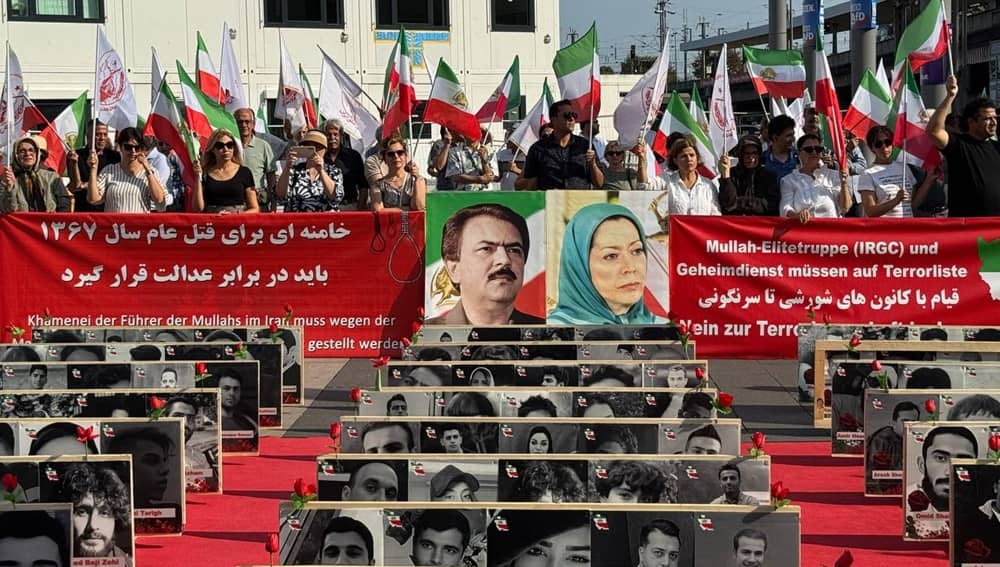
MEK Supporters in Heidelberg Protest Executions in Iran, Urge Freedom for Political Prisoners

Heidelberg, Germany – August 9, 2025 – Freedom-loving Iranians and supporters the People’s Mojahedin Organization of Iran (PMOI/MEK) held rally and exhibition to sound the alarm over the imminent execution of five political prisoners in Iran: Vahid Bani-Amerian, Pouya Ghobadi, Shahrokh Daneshvarkar, Mohammad Taghavi, and Babak Alipour. The Iranian regime has transferred them to Ghezel Hesar Prison, notorious as an execution site, placing their lives in immediate danger.
MEK Supporters in Cologne Protest Executions in Iran, Urge Freedom for Political Prisoners

Cologne, Germany – August 9, 2025 – Freedom-loving Iranians and supporters the People’s Mojahedin Organization of Iran (PMOI/MEK) held rally and exhibition to sound the alarm over the imminent execution of five political prisoners in Iran: Vahid Bani-Amerian, Pouya Ghobadi, Shahrokh Daneshvarkar, Mohammad Taghavi, and Babak Alipour. The Iranian regime has transferred them to Ghezel Hesar Prison, notorious as an execution site, placing their lives in immediate danger.
Iranian Terrorism Exposed: NCRI Calls for Urgent Sanctions
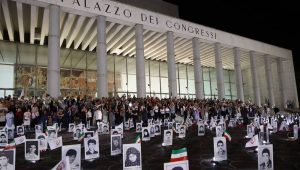
Iranian terrorism has once again taken center stage as the National Council of Resistance of Iran (NCRI) warns of increasing executions, espionage, and global attacks orchestrated by the regime. In a recent press briefing, the NCRI revealed alarming evidence that underscores the urgent need for renewed international sanctions. On Wednesday morning, the Iranian regime executed Roozbeh Vadi, a nuclear scientist accused of spying for Israel. Convicted of espionage, Vadi was hanged following a swift judicial process.
This case mirrors previous executions in Iran, and more are expected. The Ministry of Intelligence recently announced the arrest of 20 additional spies linked to Israel.