

Two-minute read
Iran is hurtling toward a historic upheaval in 2025, as a nationwide wave of resistance links the voices of political prisoners with the overwhelming majority of citizens exhausted by decades of tyranny. Under the unifying slogan “No to executions,” this connection has become a rallying point for a nation determined to seek justice and reclaim its future.
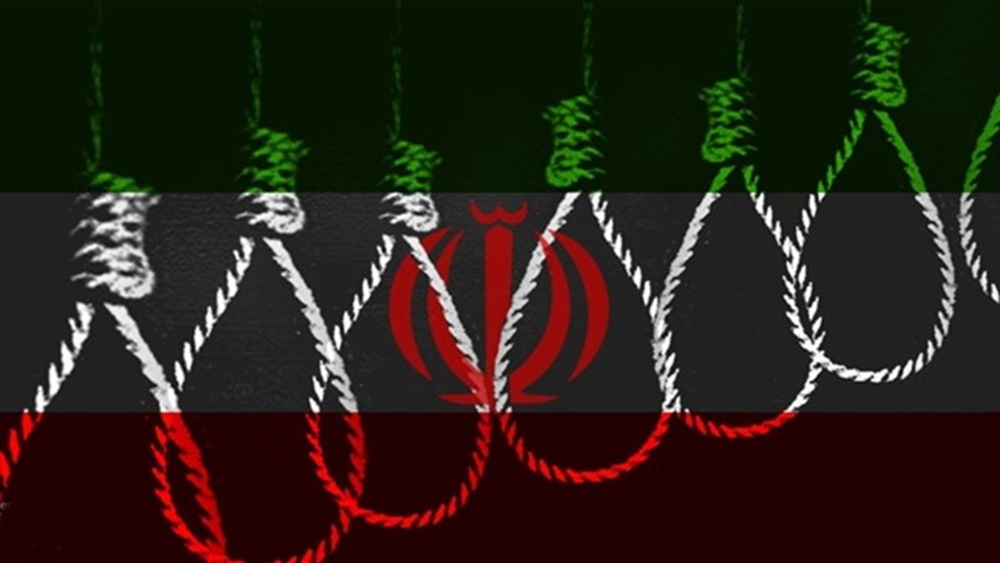
Executions have been a constant under the rule of the mullahs, but their current scale exposes an unmistakable reality: fear is consuming the highest levels of power. In the Persian calendar year 1403 (March 2024–March 2025) alone, the regime carried out 1,106 executions—an average of three people per day. The pace has accelerated in the current year amid mounting political, social, and economic crises.
On June 28, 2025, UN High Commissioner for Human Rights Volker Türk announced that in just the first half of 2025, at least 612 executions had been recorded—more than double the number during the same period in 2024. This shocking figure underscores not only the scope of the crime but also the regime’s desperation.
#Iran's Political Prisoners Launch Nationwide Hunger Strike in 81st Week of “No to Execution Tuesdays”https://t.co/mOeXFxfYQB
— NCRI-FAC (@iran_policy) August 12, 2025
The aim is clear: to preserve the regime’s grip on power through the death penalty, fostering a climate of fear and submission. Yet the surge in executions is not a sign of strength—it is an admission of weakness. It reflects the leadership’s acute fear of a social explosion, fueled by domestic unrest, regional tensions, and international isolation.
Each execution, particularly of political prisoners, acts as a spark that feeds the flames of public outrage. Far from quelling dissent, these killings strengthen the resolve of both prisoners and the public. From behind the walls of Evin, Qarchak, Fashafuyeh, Ghezel Hesar, and other notorious prisons, the voices of resistance are breaking through, reaching the streets and echoing across the world.
At the heart of this defiance is the “No to Execution Tuesdays” movement, born within prison walls and now a powerful symbol of national resistance. This campaign has positioned political prisoners as leaders in the struggle against the regime’s killing machine, while also galvanizing international attention. Through it, prisoners are urging global leaders and institutions to condition any engagement with Tehran on the abolition of the death penalty.
From Water Shortages to Anti-Execution Rallies, #Iranians Protest Regime's Total Failurehttps://t.co/3xv4MshlBJ
— NCRI-FAC (@iran_policy) August 5, 2025
In today’s Iran, the central battle is against a regime that governs through executions. For a people who have endured decades of suppression, dismantling this apparatus of death is more than a political demand—it is a moral imperative. The fight against the death penalty has become the urgent cause of the moment, uniting voices inside and outside the country.
There can be no compromise with the politics of death. The only path forward is unwavering resistance until the machinery of execution is dismantled. This struggle is more than opposition—it is the source of a new social force, one capable of breaking the cycle of repression and hastening the regime’s downfall.
Today, the constant ticking of a historic moment grows louder. The blood of the fallen and the cries of the imprisoned illuminate Iran’s horizon, heralding the promise of a morning without executions.