


THIS PAGE WILL BE UPDATED WITH THE LATEST NEWS
UPDATE: 8:30 PM CEST
Response To Iranian Attacks

- Joint media release with:
- The Hon Anthony Albanese MP, Prime Minister of Australia
- The Hon Tony Burke MP, Minister for Home Affairs, Minister for Cyber Security
26 August 2025
Since the terrible events of October 7, 2023 we have witnessed a number of appalling antisemitic attacks against Australia’s Jewish community.
The Albanese Government asked ASIO and the Australian Federal Police to investigate these incidents as a priority because they have no place in Australia.
Enough credible intelligence has now been gathered to reach the deeply disturbing conclusion that the Iranian Government has directed at least two of these attacks.
UPDATE: 11:00 AM CEST
What Is the IRGC And Why Is the Government Listing It as a Terrorist Organisation?

Iran’s ambassador to Australia has been expelled, and Australia’s embassy in Tehran shut down after the Australian Security Intelligence Organisation (ASIO) provided “credible intelligence” that Iran was behind two recent antisemitic attacks in Australia. The Islamic Revolutionary Guard Corps (IRGC) directed attacks against Melbourne’s Adass Israel Synagogue and Sydney’s Lewis’ Continental Kitchen, according to ASIO intelligence.
Prime Minister Anthony Albanese on Tuesday labelled the finding as “extraordinary and dangerous acts of aggression orchestrated by a foreign nation on Australian soil” and said: “an attack on our social cohesion is an attack on Australia”.
‘Naim Qassem and Hezbollah do not represent the Lebanese people,’ Ortagus says from Beirut

Arriving in Beirut on Monday evening, ahead of a new round of meetings with Lebanese officials, U.S. Deputy Special Envoy for the Middle East Morgan Ortagus said Hezbollah Secretary-General Naim Qassem and his party “do not represent the Lebanese people.”
“They represent foreign forces. They represent Iran,” Ortagus told reporters Monday. She added that “the United States is trying to strengthen the Lebanese state, its government, its public institutions and its army.”
“We want what President Joseph Aoun and Prime Minister Nawaf Salam want — even what Parliament Speaker Nabih Berri wants: a strong, sovereign and independent Lebanon,” she said.
ASIO Says Iran Behind Australian Antisemitic Attacks, Diplomatic Ties Cut

Iran was behind at least two antisemitic attacks on Australian soil, ASIO believes, prompting the Australian government to all but sever diplomatic ties with the country.
Appearing in the prime minister’s courtyard on Tuesday, the spy agency’s director-general, Mike Burgess, said Melbourne’s Adass Israel Synagogue attack from last December and Sydney’s Lewis’ Continental Kitchen attack from last October were ordered by Iran and believed the country was behind further attacks.
“They put lives at risk, they terrified the community and they tore at our social fabric. Iran and its proxies literally and figuratively lit the matches and fanned the flames,” he said.
Prime Minister Anthony Albanese said Iran was responsible for “extraordinary and dangerous acts of aggression” and attempts to “undermine Australian cohesion”.
UPDATE: 9:00 AM CEST
Why Every Evangelical American Should Care about Iran and Support Its Democratic Opposition

One of the most important rights we enjoy in the United States is the freedom to practice our faith. Sadly, this is not a reality for hundreds of millions around the world. As evangelical Christians, we believe this right is not merely granted by governments but is given by God. It should transcend borders, which is why evangelical Americans should care deeply about Iran and support its secular democratic opposition.
On its World Watch List 2025, Open Doors International ranked the Islamic Republic of Iran as the ninth-worst country for Christian persecution. Global Christian Relief also placed Iran in the same position.
While Iran’s theocracy nominally recognizes the rights of Christians, Jews, and Zoroastrians, public expressions of faith are routinely suppressed through both official and unofficial means.
UPDATE: 8:00 AM CEST
In Memory of Dr. Anna Záborská, Member of the National Council from Slovakia
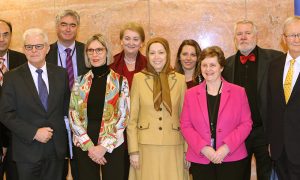
With deep sorrow, I extend my condolences on the passing of Dr. Anna Záborská, Member of the National Council from Slovakia and former MEP, to her family, friends, and colleagues in the European Parliament.
She was a dedicated physician, a courageous and tireless advocate for human rights and women’s rights, who always stood with the people of Iran, the Iranian Resistance, and the residents of Ashraf in difficult times. In the face of the misogynist clerical regime, she amplified the rightful voice of Iranian women.
As she herself once said: “The most important moments of my life are connected with the activities of the National Council of Resistance of Iran, which has continued for nearly thirty years. Every day I met with the men and women of the Iranian Resistance in the European Parliament. Tirelessly, they spoke with Members, gathered signatures, and organized meetings.”
Why Tehran fears the graves of PMOI martyrs
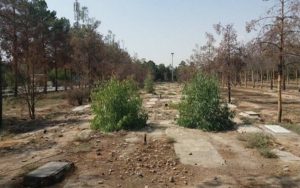
The Iranian regime is engaged in a ghoulish and systematic campaign to destroy the graves of its political victims. This is not random vandalism but a state-sanctioned strategy to erase history and conceal its crimes. From a legal standpoint, the destruction of the graves of victims of political executions is a continuation of a crime against humanity. By bulldozing these final resting places, the regime in Tehran reveals not its strength, but its profound and unshakable fear of its main opposition, the People’s Mojahedin Organization of Iran (PMOI/MEK), and the enduring legacy of its martyrs.
How the IRGC’s corruption drained Iran’s dams and fuels nationwide dissent

As Iran endures the sweltering heat of August 2025, a devastating water crisis is pushing the nation to its breaking point. While the clerical regime points to the sky and blames a lack of rain, the drying riverbeds and empty reservoirs tell a different story: this is not a natural disaster, but a man-made catastrophe engineered by decades of corruption and catastrophic mismanagement. The scale of the crisis is staggering. In August, official reports confirmed that three major dams—Shamil and Nian in Hormozgan province and Roudbal Darab in Fars province—have run completely dry. Twelve other dams are on the verge of emptiness.
Soghra Khodadadi, the Butcher of Qarchak Prison
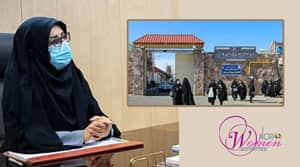
Soghra Khodadadi’s Dark Record at Qarchak Prison: From Beatings and Forced Veiling to Medical Deprivation and International Sanctions
Qarchak Prison in Varamin, originally built as an abandoned poultry farm, has become one of the most notorious detention centers for women in Iran. Overcrowding, inhumane conditions, lack of medical care, and the violent conduct of prison authorities have turned it into a symbol of the systemic violation of women’s rights. At the center of this machinery of repression stands the name of Soghra Khodadadi, the prison’s director, who has gained infamy for her role in the abuse and mistreatment of political female detainees.
Born in 1971, Soghra Khodadadi graduated from the Applied Science Training Center of Iran’s Prisons Organization in Isfahan in 2017.
Prominent Figures Unite in Support of Brussels Free Iran Rally on September 6, 2025

The Brussels Free Iran Rally on September 6, 2025, has garnered widespread support from prominent international figures across multiple continents.
Former Ecuadorian President Rosalia Arteaga has voiced strong support for the rally, urging the international community to address Iran’s crises, including water, energy, and labor issues, while endorsing Maryam Rajavi’s 10-point plan for a democratic Iran. Former MEP Struan Stevenson stands firmly with the upcoming rally, condemning the Iranian regime’s execution of over 1,500 people since July 2024 under President Pezeshkian. He emphasizes that Iranians reject both monarchy and theocracy, demanding democracy, freedom, gender equality, and an end to executions.
Stockholm, Sweden – August 23, 2025: MEK Supporters Honor the 60th Anniversary of PMOI

Stockholm, Sweden – August 23, 2025 – Supporters of the People’s Mojahedin Organization of Iran (PMOI/MEK) gathered in front of the Swedish Parliament to commemorate the 60th anniversary of the organization’s founding.
MEK Supporters in Gothenburg Honor 1988 Massacre Victims and Back Maryam Rajavi’s Third Option

Gothenburg, Sweden – August 23, 2025 – Supporters of the People’s Mojahedin Organization of Iran (PMOI/MEK) organized and held a rally in Gothenburg to reaffirm their backing for Maryam Rajavi’s Third Option and the National Council of Resistance of Iran (NCRI), presenting it as a democratic alternative to Iran’s theocratic regime.
Manchester Exhibition Urges Action to Save Iranian Political Prisoners Facing Execution

Manchester, UK – August 21, 2025 – The Academics in Exile Association, supporters of the People’s Mojahedin Organization of Iran (PMOI/MEK), organized an exhibition and bookstall in Manchester to denounce the Iranian regime’s execution of political prisoners.
Qarchak Prison – The Slaughterhouse of Human Dignity and Forgotten Justice – Part 1

In August 2025, Qarchak Prison in Varamin once again drew international attention for grave human rights abuses. Around 60 women political prisoners are trapped in inhumane conditions amid the outbreak of an unidentified illness, causing physical weakness, infection, shortness of breath, and severe oxygen deficiency. This situation constitutes clear evidence of torture, cruel treatment, and a blatant violation of Iran’s international obligations.
Over the past three weeks, an unknown virus has spread among women prisoners in Qarchak. Symptoms such as severe bone pain, loss of voice, throat infections, physical weakness, and lack of oxygen have pushed the health of prisoners to a dangerous brink.
Iran: Khamenei Rejects Negotiations with the United States
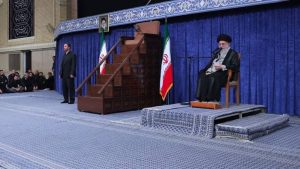
On August 24, 2025, after 26 days of absence, Supreme Leader Ali Khamenei reappeared and stated: “Those who ask why we do not hold direct negotiations with the United States to resolve the issues are superficial. The reality is different and given America’s real objectives in its hostility toward Iran, these problems are unsolvable.”
He added: “Those who call for negotiations with the United States are either naïve or acting with ill intent, moving along the enemy’s path. They easily ignore national interests and justify betraying the homeland under the pretext of ‘freedom’ or ‘reform.’ Even when America and its agents attack Iran, instead of defending their own country, they rejoice and see this aggression as a step toward so-called freedom.”
Mass Exodus: Iranians Queue Overnight at Chinese Embassy Amid Regime’s Failures

Recently published images of overnight lines outside the Chinese Embassy in Tehran once again drew public attention to one of the most pressing realities of today’s Iran: the widespread desire to leave the country. Hossein Selahvarzi, former head of Iran regime’s Chamber of Commerce, called the scenes “a source of shame,” criticizing the situation by stating: “A nation whose imports from China account for more than 70 percent should not have its citizens sleeping on the streets just to get permission to travel.” He urged regime president Masoud Pezeshkian to order the dispersal of these “humiliating queues” before his planned trip to Beijing.
Iranian Regime’s Environmental Catastrophe: Toxic Fuel Burning Exposes Failure and Lies

The Iranian regime’s top environmental official has openly admitted the government’s failure to implement the Clean Air Act, blaming political conditions, sanctions, and limitations. Shina Ansari, head of the Environment Organization, attempted to defend the government of Masoud Pezeshkian by claiming that last year “low-sulfur mazut” was burned at the Shazand power plant in Arak.
Ansari, speaking on Sunday, August 24, insisted that Pezeshkian’s government has “not hidden problems” and admitted that if mazut burning is ongoing, “we must say it directly.” This admission comes after repeated denials and false promises from regime officials.
Iranian MP Admits Regime Clerics Ordered Execution of Their Own Children After 1979 Revolution
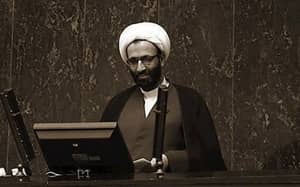
Alireza Salimi, a member of the presidium of the Iranian regime’s parliament, has made a stunning admission that sheds light on the regime’s brutal origins and methods of repression. Speaking about the early years following the 1979 revolution, Salimi revealed that some children of top clerics—figures deeply entrenched in the regime’s ruling hierarchy—joined opposition forces. In response, senior religious leaders allegedly issued execution orders against their own children as proof of absolute loyalty to the regime.
Salimi specifically named hardline clerics such as Mohammad Mohammadi Gilani and Ahmad Jannati, asserting that they quickly and publicly distanced themselves from opposition groups by approving the killing of their own relatives. He disturbingly described this act as a “sign of greatness,” stating: