

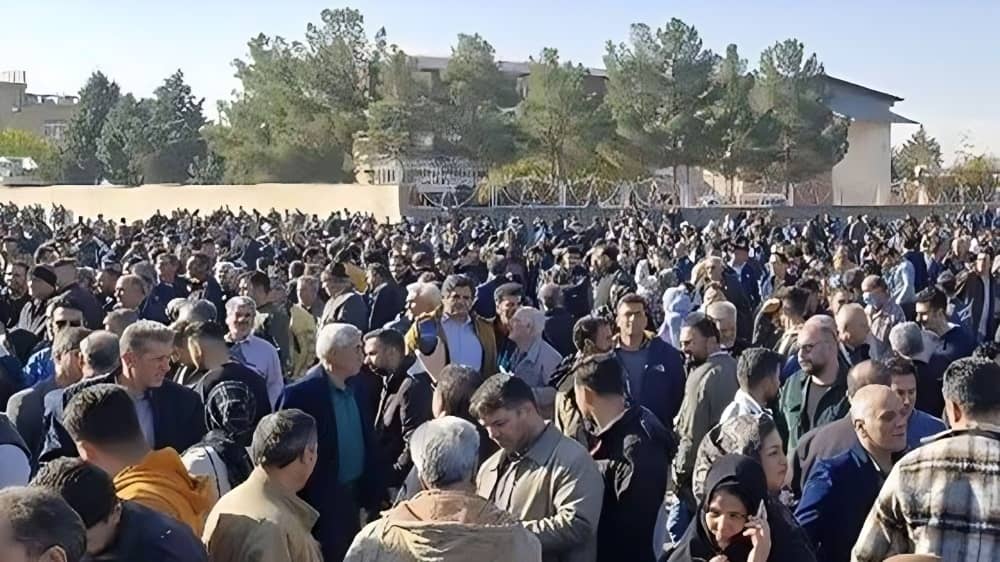
A powerful wave of unrest swept across Iran, as citizens from virtually every segment of society took to the streets in a coordinated symphony of dissent against the clerical regime’s systemic corruption and incompetence. From healthcare workers in Mashhad and bank employees in Tehran to defrauded investors in Qazvin and the families of political prisoners at the gates of Evin Prison, the day’s events painted a stark picture of a nation pushed to its breaking point. These were not isolated grievances but a unified popular verdict on a regime that has failed its people on every front.
The Betrayal of Public Servants and the Youth
The regime’s decay was on full display in its treatment of its most essential sectors. In Mashhad, nurses and medical staff at Ghaem Hospital—once hailed by the state as “heroes” during the pandemic—gathered to protest months of unpaid wages and intolerable working conditions. Their chants echoed the profound betrayal felt by those who risked their lives, only to be denied their basic right to a salary.
November 10—Mashhad, northeast Iran
Nurses and medical staff at Qaem Hospital rallied over unpaid wages and growing discrimination, saying promises have been broken. Those who worked day and night during the pandemic now must protest for basic rights.#IranProtests pic.twitter.com/SDh5hmlx6d— People's Mojahedin Organization of Iran (PMOI/MEK) (@Mojahedineng) November 10, 2025
This sense of abandonment was mirrored in the capital. In Tehran, employees of the state-run Bank Maskan held a rally to protest glaring pay disparities compared to other banks and the fraudulent practices of their employee investment fund. Demonstrators reported that the fund lacks financial transparency and, in a glaring example of systemic discrimination, denies life insurance benefits to the families of female employees despite them paying the same contributions as their male colleagues.
Meanwhile, the regime’s neglect of the nation’s youth manifested in a shocking public health crisis at Farhangian University in Zanjan, where students launched a food strike after discovering lice and other pests in meals served at the university cafeteria. Their protest highlighted a fundamental breakdown of basic services and a complete disregard for student welfare.
November 10—Zanjan, northwest Iran
Student teachers at Beheshti Farhangian University went on strike after finding lice in their cafeteria food, protesting poor hygiene and neglect by university officials.#IranProtests pic.twitter.com/NtQ7f6DLwN— People's Mojahedin Organization of Iran (PMOI/MEK) (@Mojahedineng) November 10, 2025
State-Sanctioned Plunder and Economic Collapse
Simultaneously, protests fueled by years of financial mismanagement and state-enabled fraud erupted across the country. In Qazvin, thousands of victims of the Rezayat Khodro investment scheme gathered to demand the return of their life savings. For ten years, the company operated with the explicit support of government officials, luring 36,000 investors. Now, the regime’s judiciary has suddenly declared the company fraudulent and seized all assets, leaving citizens empty-handed.
A similar story of plunder unfolded in front of the governor’s office in Kerman, where defrauded buyers of the “Taqdis” housing project in Sirjan protested. After five years of waiting and paying huge sums, not a single unit has been built. Protesters accused the cooperative of embezzling their funds for other projects, stating, “Every time they give a promise, but behind these promises lie only silence and backroom deals.”
November 10—Iranshahr, southeast Iran
Workers of San’at Baloch Road Construction Company went on strike over several months of unpaid wages and unmet demands, calling out exploitation and government neglect.#IranProtests pic.twitter.com/VF0rJHLe80— People's Mojahedin Organization of Iran (PMOI/MEK) (@Mojahedineng) November 10, 2025
In Iranshahr, Sistan and Baluchestan province, the economic hardship was felt acutely by workers from the Sanat Baloch road construction company, who went on strike over months of unpaid salaries and benefits. In a cruel twist, reports indicate that workers who visited the company’s office to demand their pay were met with hostility and forced to sign termination papers.
The events of November 10, 2025, are not a collection of separate crises; they are interconnected symptoms of a single disease: a corrupt and oppressive theocracy that has lost all capacity and legitimacy to govern. The unpaid nurse, the defrauded investor, and the student served contaminated food all suffer from the same root cause. The breadth and unity of these protests send an unmistakable message to the world: the Iranian people are organized, defiant, and united in their demand for fundamental change. Their collective cry is the sound of a regime living on borrowed time.