


THIS PAGE WILL BE UPDATED WITH THE LATEST NEWS
UPDATE: 02:30 PM CET
How A Regional Reset Has Left Isolated Iran Fighting to Stay Relevant

While Iran has lived with international isolation for decades, from the 1979 embassy takeover to the long war with Iraq in the 1980s, observers say the pressures it is facing today are of a different order. Old alliances are collapsing and the country is struggling to keep its footing in a rapidly shifting region.
The breaking point came after United States President Donald Trump withdrew from the 2015 nuclear deal in 2018. Prior to this, Tehran had spent years trying to open up to the world through president Hassan Rouhani and foreign minister Javad Zarif. Their approach was dependent upon European support. When Washington pulled out of the deal and reimposed sanctions, that strategy collapsed.
“They had lost the battle. They were not able to reverse course, since the Europeans did not stand up to the American decision,” explains Bernard Hourcade, an Iran specialist at France’s National Centre for Scientific Research (CNRS).
UPDATE: 09:00 AM CET
Lebanon Rebukes Iran for Calling Hezbollah ‘More Essential Than Bread and Water’

The Lebanese Foreign Minister has rebuked a senior adviser to Iran’s supreme leader for describing Hezbollah as “more essential than bread and water” for Lebanon. Adviser Ali Akbar Velayati made the comment after Israel assassinated Hezbollah’s chief of staff Haitham Ali Tabatabai in an air strike in Beirut on Sunday.
“Ongoing attacks and crimes committed by the Zionist entity against Lebanon show that the presence of Hezbollah has become more important for Lebanon than daily bread,” Mr Velayati told Iran’s semi-official Tasnim News Agency on Wednesday.
UPDATE: 07:30 AM CET
Iran’s Rebellious Youth Target Regime Centers After Security Forces Destroy Homes of Defenseless Citizens

Following the brutal attacks by regime security forces and the destruction of the homes of the impoverished and oppressed in Saveh and Zahedan, Iran’s rebellious youth set fire to IRGC Basij bases and images of regime founder Ruhollah Khomeini and supreme leader Ali Khamenei.
ISJ Publishes Comprehensive Open-Source Investigation Exposing Fabricated “Mind-Control” Allegations Circulated by Iranian Regime Proxies
aBrussels — November 2025. The International Committee in Search of Justice (ISJ), led by its President Prof. Alejo Vidal-Quadras, today released a detailed open-source intelligence report documenting how the Iranian regime has orchestrated and disseminated a fabricated “mind-control” dossier through its proxy networks in Europe and North America. The investigation provides a decisive, evidence-based rebuttal to a widely circulated document produced in October 2025 by an obscure individual, Pouya Ahmadi, whose report targeted Iran’s principal democratic opposition movement and misled policymakers with pseudo-academic claims and falsified testimony.
The ISJ report, Open-Source Report on Fabricated “Mind-Control” Document Circulated by Iranian Regime Proxies Abroad, reveals that Ahmadi’s publication is not an independent human-rights study but the latest iteration of the Iranian Ministry of Intelligence and Security’s (MOIS) decades-old smear campaign against the People’s Mojahedin Organisation of Iran (PMOI/MEK) and the broader democratic coalition, the National Council of Resistance of Iran.
Marzieh Farsi’s Health Deteriorated Amid Denial of Medical Care

The health condition of political prisoner Marzieh Farsi, currently held in Evin Prison, has deteriorated alarmingly in recent weeks. Marzieh Farsi, who has battled cancer and serious cardiac complications for years, has experienced intensified symptoms, including persistent migraines, severe dizziness, and overall physical weakness, since her transfer from Qarchak Prison to Evin. Despite repeated recommendations from her physician regarding the urgent need to continue essential medications to control the progression of cancer cells and stabilize her cardiac condition, Evin Prison authorities have blocked the entry of her vital medications.
Rostock Protest Highlights Iranian Resistance Against Executions and Dictatorship
Rostock, Germany – November 28, 2025 – Supporters of the People’s Mojahedin Organization of Iran (PMOI/MEK) held a book stall to protest the Iranian regime’s increasing use of the death penalty, particularly against political prisoners. Despite freezing, sub-zero temperatures, supporters of the Iranian Resistance gathered at the port of Rostock to denounce executions and dictatorship.
Rostock Protest Highlights Iranian Resistance Against Executions and Dictatorship #StopExecutionsInIran #No2ShahNo2Mullahs #FreeIran https://t.co/9ohyxsx4y9
— Iran Freedom (@4FreedominIran) November 28, 2025
Their rallying cries echoed through the cold air: “No to the Shah! No to the Sheikh! The Shah is gone, and the Sheikh will go too! Yes to a democratic republic led by the people of Iran.” The event also expressed solidarity with the “No to Execution” campaign.
Copenhagen Rally Calls for Ending Executions and Supporting Democratic Change in Iran

Copenhagen, Denmark – November 27, 2025 – Supporters of the People’s Mojahedin Organization of Iran (PMOI/MEK) gathered in Copenhagen to protest the Iranian regime’s increasing use of the death penalty, particularly against political prisoners. Freedom-loving Iranians and MEK supporters stressed the urgent need to end all executions in Iran and voiced strong support for the Iranian people’s ongoing resistance against tyranny.
Escalating Pressure and Deprivation Against Female Political Prisoners in Evin Prison

Recent reports from the women’s ward of Evin Prison indicate that new restrictive measures and intensified security pressure have been imposed on female political prisoners in recent weeks. The complete termination of basic food rations, the shutdown of the ward’s kitchen, sharp increases in the price of essential goods, and the reduction of visits from once every two weeks to once a month have all severely worsened living conditions. Families state that the cost of providing even the most basic items has become “unbearably high,” while the psychological strain caused by reduced visits is clearly visible among prisoners. Simultaneously, access to medical care has faced further obstruction due to deliberate delays, security interference, and lack of essential medication. According to relatives, “neglect in Evin has reached a dangerous stage and now threatens the health and safety of the women held there.”
Food Inflation in Iran Soared to 66% in November

Food prices have increased by more than 66% over the past year, with some sub-categories experiencing even higher growth. Bread and cereals rose by 100%, fruit and nuts by 108%, vegetables by 69%, beverages by 68.3%, fish and shellfish by 52.3%, and milk, cheese, and eggs by 48.6%. Data from the Statistical Center of Iran’s regime shows that in November, the highest inflationary pressure fell on the “food, beverages, and tobacco” category, which grew by 4.7%—more than double the increase of the “non-food goods and services” category. According to these statistics, year-on-year inflation—measuring price changes relative to November 2024—reached 49.4%. The non-food sector also continued its upward trend, recording a 2.6% increase.
Iran’s Regime Channels Hundreds of Millions in Oil Revenue to Hezbollah Through Dubai Networks
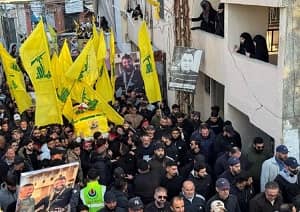
New investigation reveals that Iran’s regime relies on exchange houses, private firms, and hawala networks in Dubai to bypass sanctions and rebuild Hezbollah’s financial lifeline. A detailed new investigation exposes how Iran’s regime has spent the past year funneling hundreds of millions of dollars in oil revenue to Hezbollah through exchange houses, private companies, and hawala networks operating from Dubai. These channels have become central to Hezbollah’s financial survival after its traditional routes collapsed under regional upheaval and intensified security controls inside Lebanon. According to a report published by the Wall Street Journal on Thursday, November 27, 2025, sources familiar with the transfers confirmed that Tehran has used Dubai for years to evade sanctions, but its dependence on the emirate has sharply increased. With previous pathways disrupted, both Iran’s regime and Hezbollah now rely more heavily than ever on Dubai as their primary financial artery.