

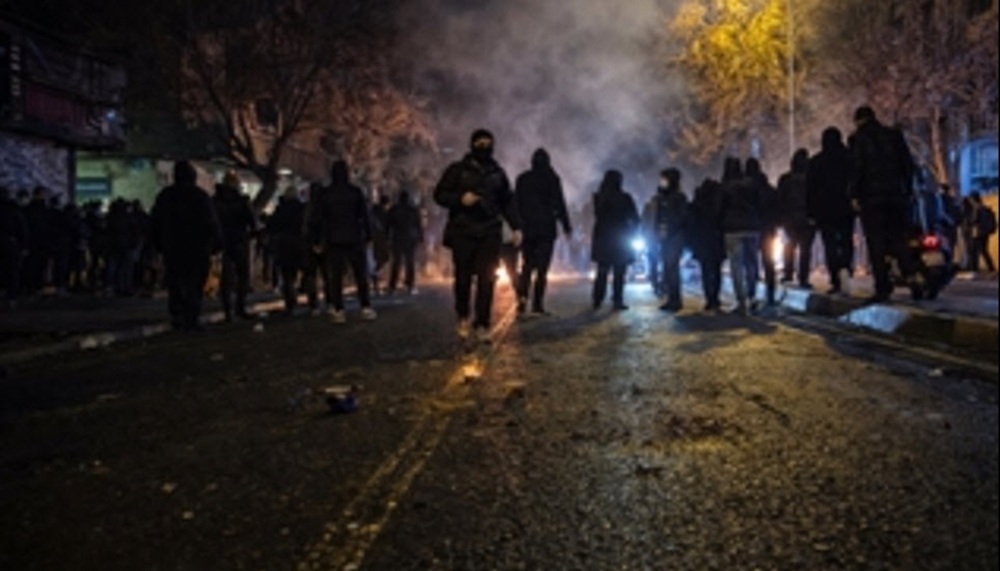
THIS PAGE WILL BE UPDATED WITH THE LATEST NEWS
UPDATE: 09:00 AM CET
Day 21 of Iran Uprising: Tehran under military siege; PMOI announces 31 more martyrs
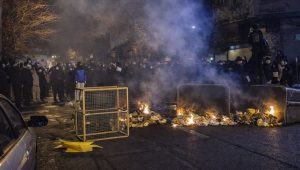
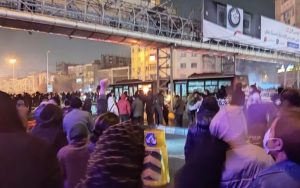
The nationwide uprising against the mullahs’ regime in Iran has reached its twenty-first day on Saturday, January 17, 2026. Following a twentieth day defined by the courageous protests of Baluch compatriots in Zahedan and deepening diplomatic isolation for the mullahs, the regime has responded by turning the capital into a military garrison. On Saturday, reports from the PMOI’s network inside Iran reveal that the regime has declared a state of 100% alert, deploying tens of thousands of armed forces to lock down Tehran. Despite this unprecedented siege, rebellious youth continued their resistance with hit-and-run clashes across the capital and other major cities overnight.
Akram Rezaei, the 3rd Woman Executed in Iran in 2026
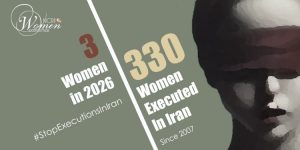
Akram Rezaei, a female prisoner, was hanged on Tuesday, January 13, 2026, in the Prison of Rasht. She is the third woman executed in the first two weeks of 2026. The death sentence was carried out amid a continuing wave of executions, and concurrent with nationwide protests and the prolonged, widespread internet shutdown in Iran. Akram Rezaei was reportedly sentenced to death on charges of murder. As of the time of this report, prison authorities and relevant judicial bodies have not officially confirmed or announced the execution. Many of the women executed by the Iranian regime are themselves victims of domestic violence and discriminatory family laws. A significant number have acted in self-defense.
Iranians in Washington Hold Candlelight Vigil Honoring Iran Uprising’s Martyrs, Calling for Regime Change

Washington, DC – January 16, 2026: On Saturday night, Iranian Americans, supporters of the Iranian Resistance gathered in front of the White House to show solidarity with the ongoing nationwide protests in Iran. The participants—supporters of the People’s Mojahedin Organization of Iran (PMOI/MEK) and the National Council of Resistance of Iran (NCRI)—chanted anti-regime slogans and called for an end to dictatorship in all its forms, demanding the immediate release of political prisoners and detainees.
Berlin Rally Supports Iran Uprising, Urges IRGC Blacklisting and Accountability for Regime Leaders

Berlin, Germany — January 16, 2026 — Freedom-loving Iranians and supporters of the People’s Mojahedin Organization of Iran (PMOI/MEK) held a rally outside the Bundestag in Berlin to express solidarity with the nationwide protests in Iran that began on December 28, 2025. Participants echoed the call of their compatriots inside Iran for a free and democratic republic.
Iran Explores Potential for China‑Style Internet System

Iran’s repeated internet shutdowns during periods of unrest have revived a central question for policymakers and observers alike: can the country replace global connectivity with a China-like Internet that allows control without total disconnection? The issue goes beyond censorship alone and hinges on whether Iran can shift from emergency shutdowns to a stable, managed system similar to the one developed over decades in China. Understanding this question requires distinguishing between two often-confused concepts: controlling internet access and cutting it off entirely. China’s experience shows that the two are not the same—and that the difference is largely technological and structural.
Ali Khamenei Confirms Death of Thousands of People During Recent Protests
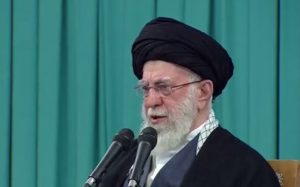
Ali Khamenei, the supreme leader of the Iranian regime, referring to the recent protests, confirmed the killing of several thousand people and said the Iranian regime does not intend to drag the country into war, but will not let go of “domestic and international criminals.” On Saturday, January 17, Ali Khamenei, in a meeting with individuals close to the regime held on the occasion of “Eid al-Mab’ath,” confirmed the killing of several thousand people during the Iranian national uprising and said: “We do not intend to take the country toward war, but we will not let domestic criminals go. We will not let international criminals go either.” Some sources say that the Iranian regime’s repressive forces mainly killed several thousand people over two consecutive nights, Thursday and Friday, January 8 and 9.
Silence as a Weapon: From the 1988 Massacre to the January 2026 Killings in Iran
In that terrifying silence—absolute, deliberate, and total—more than 30,000 political prisoners were systematically executed in Iran. This was the massacre of the summer of 1988, one of the gravest crimes against humanity of the late twentieth century. Many of the victims were young men and women whose only “crime” was loyalty to freedom, dignity, and political belief. The world did not hear their screams. Or worse, it heard—and chose to look away. Families were never told where their loved ones were buried. To this day, many do not know which mass grave holds the remains of their children, siblings, or parents. Silence was not merely a byproduct of the crime; it was its central instrument. Silence protected the perpetrators. Silence preserved foreign interests. Silence normalized atrocity. Only fragments of this genocide surfaced decades later, during the trial of Hamid Nouri in a Swedish court, where survivors and witnesses revealed a small portion of what had taken place behind Iran’s prison walls. But for Iranians who lived through it, the truth has never faded. This crime is neither forgiven nor forgotten.