

THIS PAGE WILL BE UPDATED WITH THE LATEST NEWS
UPDATE: 09:00 PM CET
Iran War Enters Day 14 With Intensified Strikes Inside the Country, Wider Domestic Repression, and Fresh Regional Spillover
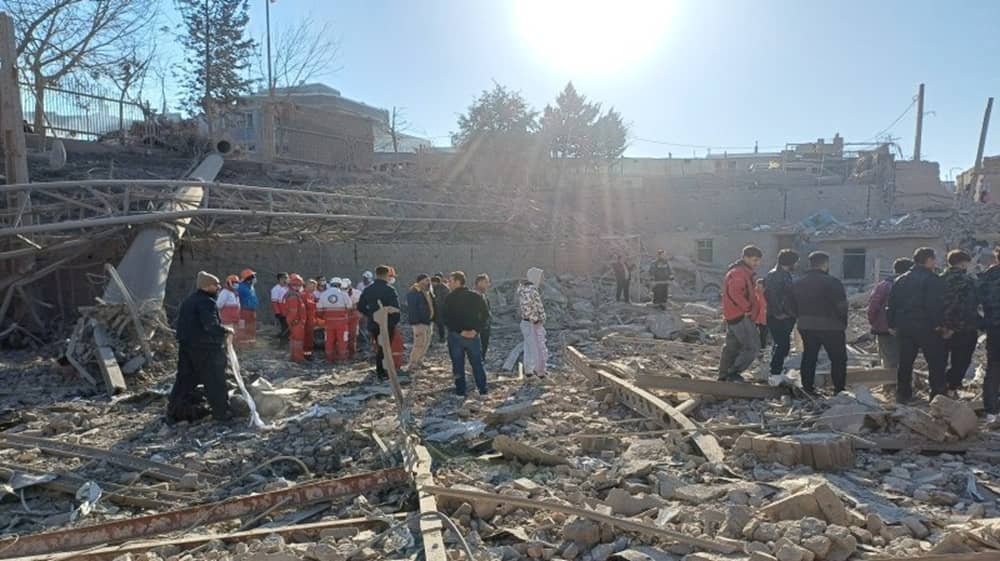
The war entered its 14th day on Friday with a sharp escalation inside Iran, where air and missile strikes continued through the night and into the morning while the authorities simultaneously expanded internal security measures across major cities. According to sources from inside Iran, fresh explosions and bombardments were reported in Tehran, Ahvaz, Qom, Isfahan, Tabriz and Behshahr, while additional overnight strikes were reported in Arak, the Hamedan industrial zone, Kashan, Fardis and Qazvin’s Lia industrial district. Israel issued new evacuation warnings for parts of Tehran, including the Villa Street and Moniriyeh areas, and for the Lia industrial area in Qazvin before some of those strikes.
Israel said it struck more than 200 targets in central and western Iran in the previous 24 hours, including ballistic-missile launchers, air-defense systems and weapons production sites. AP also reported a large blast in Tehran’s Ferdowsi Square area after an Israeli warning tied to a state-organized Quds Day rally, underscoring how the capital itself remains under direct pressure.
Inside the country, the most important development over the last 24 hours was not only the continuation of bombardment, but the regime’s intensified focus on internal control. Authorities have tripled street patrols, widened checkpoints and rolled out what state media described as new “security and policing” plans in urban areas. The official IRNA News Agency said street patrols had been increased threefold to guarantee “sustainable security” during wartime. At the same time, the IRGC Intelligence Organization warned that the “enemy” was seeking to provoke street unrest and threatened protesters with a blow “harder than January 18,” while calling on Basij and IRGC personnel to maintain a constant visible presence.
The Pentagon is moving a Marine expeditionary unit to the Middle East, as Iran steps up its attacks on the Strait of Hormuz, according to two U.S. officials. Expeditionary units typically consist of up to 2,500 Marines. https://t.co/g4fmC7lIhF
— The Wall Street Journal (@WSJ) March 13, 2026
Security pressure in Tehran has deepened as the war continues. Reuters reported that Israel has been targeting checkpoints associated with the IRGC and Basij in Tehran, while AP described a city living under a heavy security presence, with civilians reporting fear, isolation, and strikes arriving without warning or sirens.
Reports also suggest that the regime’s armed forces raided the home of the family of slain protest figure Javad Heydari in Qazvin province, detained his father and brother, destroyed his gravestone, attacked the family farm and beat workers. The attackers were linked to IRGC intelligence, which shows the state is still prioritizing intimidation of protest-linked families even while the country is under sustained military attack.
IRAN EXPLOSION: Iranians march through the streets of Tehran for Al Quds Day rally as a strike hits the Islamic Republic’s capital. pic.twitter.com/MZblWCKu4C
— Fox News (@FoxNews) March 13, 2026
Iran’s communications blackout has made exactly these kinds of domestic reports far harder to verify independently, but the blackout itself is well documented. NetBlocks said Friday that Iran’s wartime internet shutdown had entered its 14th day, with national connectivity still at about 1% of ordinary levels after 312 hours. AP likewise reported that many residents in Tehran are relying on word of mouth and personal contacts to learn where strikes have landed, because the internet remains largely cut off.
The human impact inside Iran is also becoming more visible. UNHCR said this week that up to 3.2 million people have been temporarily displaced across Iran, with hundreds of thousands to a million households uprooted by the fighting. AP reported that residents of Tehran described a city emptied by fear, toxic smoke from damaged sites, and random bombardment that is now affecting ordinary neighborhoods as well as state-linked targets.
Cultural damage inside Iran has also become part of the story. UNESCO said it was concerned about damage to major heritage sites including Tehran’s Golestan Palace and monuments in Isfahan, while AP reported that shockwaves and debris from nearby strikes had affected protected historic sites.
New Iranian leader Khamenei vows 'never-ending' revenge in first public statement https://t.co/bb8ek1qJck
— Los Angeles Times (@latimes) March 12, 2026
Around Iran, the conflict continued to spill outward over the last 24 hours. French President Emmanuel Macron confirmed that one French soldier was killed and six others were wounded in a drone attack on a base in Iraq’s Makhmour area. Saudi Arabia said its air defenses intercepted drones over the kingdom’s east and central regions, including around Riyadh and Shaybah, according to Saudi-linked reporting summarizing Defense Ministry statements. Turkey said one Turkish-owned vessel had been allowed through the Strait of Hormuz with the Iranian regime’s permission, while 14 others were still waiting.
Israeli and Lebanese reporting said Abuzar Mohammadi, an IRGC-linked figure active in Hezbollah’s missile apparatus in Beirut, was killed in an Israeli strike. More broadly, the Lebanon front remained active, with Reuters reporting that nearly 700 people have been killed there and more than 800,000 displaced as the conflict tied to the Iran war widens.
Iran latest: Rescue efforts underway after US refuelling plane crashes in Iraq https://t.co/bgROPqJOuq
— The Times and The Sunday Times (@thetimes) March 13, 2026
Another major development came in Iraq, where a U.S. KC-135 refueling aircraft crashed during operations linked to the war, killing all six crew members on board. The U.S. military said the aircraft went down in western Iraq after an incident involving a second plane that landed safely, and said the crash was not caused by hostile fire or friendly fire, although an Iran-backed Iraqi militia later claimed responsibility.
UPDATE: 08:00 AM CET
Human Rights Conference at the UN’s European HQ in Geneva
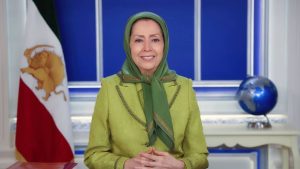
Mrs. Maryam Rajavi’s message: “In the name of peace and freedom, I call on human rights defenders to support the solution of the Iranian people and resistance, which is the establishment of a democratic republic. Today, the people of Iran are facing very serious crises. From the brutal killing of thousands of young people and teenagers during the January uprising by the criminal clerical regime, to the dangers and hardships that the current war has created for our people.
“Now the son of Khamenei has been announced as his successor. For the past three decades, he and his father have been among the top officials responsible for repression.
With his appointment, the regime will continue its policy of repression, as well as exporting terrorism and warmongering. Once again, it has been proven that a viper cannot give birth to a dove.”
PMOI Releases Names of Mojahedin Arrested and Missing in Tehran
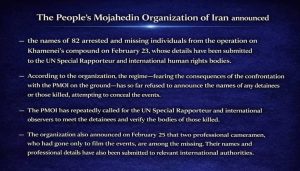
The People’s Mojahedin Organization of Iran (PMOI/MEK) has published the names of its fighters who were either arrested or went missing during the historic operation on the headquarters of the regime’s supreme leader on February 23. In a bid to secure their safety and prevent further regime atrocities, the PMOI has formally submitted this list to the United Nations Special Rapporteur and other relevant international authorities.
Terrified of the vast domestic and international implications of the operation, the Iranian regime has deliberately refused to announce the names of any detainees or martyrs. This silence is a desperate attempt to cover up the scale of the operation and mask the unprecedented vulnerabilities of the regime’s security apparatus on the ground.
In response to this cover-up, the PMOI has repeatedly called on the UN Special Rapporteur and representatives of international human rights organizations to be permitted to meet with the arrested fighters and to visually inspect the bodies of the martyrs.
Nahal Ahoo Ghalandari Killed in Khorramabad After Celebrating Death of Khamenei

Nahal Ahoo Ghalandari, a young woman from Khorramabad, was shot and killed by members of Iran’s Basij militia after she reportedly celebrated news of the death of Khamenei.
On the evening of February 28, Nahal Ahoo Ghalandari went out into the streets with several friends after hearing the news of death of Khamenei.
They had gathered to celebrate the news when Basij forces confronted them.
Basij personnel allegedly opened fire on the group’s vehicle. During the shooting, a bullet struck Ghalandari in the chest. She succumbed to her injuries shortly afterward.
Her friends reportedly remained beside her until emergency medical services arrived but attempts to save her life were unsuccessful. Several of the people accompanying her were arrested at the scene by Basij forces.
The IRGC’s Crown Prince: Mojtaba Khamenei and Iran’s Power Transition
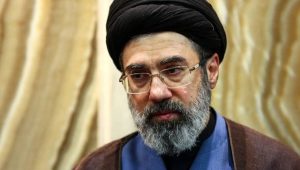
This development signals what critics describe as the consolidation of power around a network of military, financial, and security interests that have shaped the Iranian state for decades.
Iranian Opposition Figures Say Regime Is in Its Final Stage as Iranians Prepare for Democratic Change
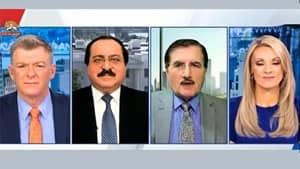
Iranian opposition figures tell U.S. media that the clerical regime has lost legitimacy, warning that the attempt to elevate Mojtaba Khamenei reflects a desperate bid to preserve a collapsing system.
Three Iranian opposition representatives speaking to American media outlets say Iran’s ruling clerical establishment has lost all legitimacy and is entering its final phase, as public anger and organized resistance movements continue to grow across the country.
In separate interviews with Newsmax and One America News Network, Iranian political commentators Alireza Jafarzadeh, Ali Safavi, and Homeira Hassami argued that the Iranian people have already decided to end the religious dictatorship and establish a democratic republic. They also described the reported elevation of Mojtaba Khamenei as merely the latest unsuccessful attempt by the regime to prolong its survival.
Iran Regime Escalates Arrests and Security Threats Amid Fears of Rising Protests

Officials of the Iranian regime intensify arrests, deploy security forces across cities, and openly threaten protesters with live fire as authorities fear a new wave of nationwide unrest.
Iran’s regime have intensified security measures across the country amid growing reports of public dissatisfaction and fears of renewed nationwide protests. A wave of arrests, threats against citizens, and the expanded deployment of security forces in major cities signal what observers describe as mounting concern within the regime over the possibility of another uprising.
On March 10, Ahmadreza Radan, the commander of the regime’s police force, announced during an interview with state television that 82 citizens had been arrested on charges of sending information to foreign media outlets and maintaining contact with them.
Radan confirmed the heightened security atmosphere, stating that police forces were deployed in the streets around the clock. He also issued a direct warning to potential protesters, declaring that security forces were prepared to respond forcefully if demonstrations occur.
Economic Plunder and Public Anger: Iran’s Growing Social Pressure

State-linked economists and media warn that currency policies, massive capital flight, and rising living costs are fueling deep public anger across Iran.
In Iran’s ruling system, critics say corruption has moved beyond covert dealings. Instead of secretive theft carried out behind closed doors, many believe economic decisions are now openly transferring wealth from ordinary citizens to powerful networks—often justified as necessary policy measures.
Authorities frequently attempt to soften the impact of these decisions by announcing subsidy payments or financial aid programs. Yet for millions of Iranians struggling with rising prices and declining purchasing power, such payments appear increasingly insufficient to offset the broader economic pressure.
UK Defense Secretary Warns of Dangerous Attacks by Iran’s Regime in Parliament

Amid escalating military tensions in the Middle East, officials in the British government have warned about widespread attacks by Iran’s regime. The UK Defense Secretary presented a report to the House of Commons, the lower chamber of the British Parliament, outlining the scope of these attacks. He described the actions as dangerous, reckless, and indiscriminate. His report included statistics on missile and drone attacks as well as the military response by the United Kingdom and its allies.
During a session of the UK House of Commons, John Healey, the United Kingdom’s Secretary of State for Defence, presented a report on recent developments in the region. He said Britain’s policy toward the actions of Iran’s regime is based on three principles. The first principle is defending British forces and interests in the region. The second is full coordination with NATO allies and regional partners. The third is adherence to legal foundations in military decision-making.
IRGC and Basij Checkpoints Targeted in Drone Attacks in Various Cities
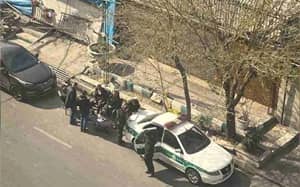
Amid escalating clashes, reports indicate that checkpoints belonging to the Islamic Revolutionary Guard Corps (IRGC) and the Basij militia were targeted in drone attacks in several cities across Iran; attacks that, according to regime sources and field reports, have left significant casualties among security forces.
Fars News Agency, which is affiliated with the IRGC, reported that preliminary investigations indicate Israeli drones were launched to target checkpoints in Tehran. According to the report, in attacks on the evening of Wednesday, March 11, in several parts of the capital, at least 10 security and Basij forces stationed at checkpoints were killed. According to the outlet, checkpoints in District 14 (Mahallati Highway), District 15 (in front of Hashemabad gas station), District 16 (Fadaiyan Eslam Street), and District one (the end of Artesh Boulevard) were among the locations directly targeted.
Iran: Networked Corruption in Mashhad’s Judiciary and Prison System
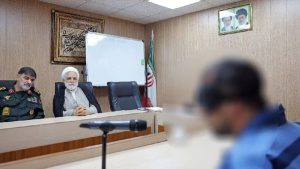
1. SITUATION ANALYSIS: VIOLATION OF THE “DUTY OF CARE” DURING WARTIME
Under the Additional Protocols of the Geneva Conventions and the UN Basic Principles for the Treatment of Prisoners, during times of war or national emergency, states bear an intensified “Duty of Care” toward incarcerated individuals. This obligation includes:
- Granting release or furlough to non-violent offenders with minimal bail to reduce prison density.
- Relocating prisoners to safe zones to prevent them from becoming military targets or indirect victims of conflict.
Current Reality in Mashhad: Instead of facilitating the release of prisoners, the Iranian judicial system is intentionally creating procedural deadlocks. The regime is exploiting the fog of war and the heightened fear of families to force them to engage in mass extortion, effectively holding prisoners as “financial hostages.”
Special Report: “Covert Operations in the Shadow of War”

While the military crisis involving Iran has occupied global attention, Iranian authorities, through covert operations in the shadow of war and its rhetoric, have opened a new domestic front against citizens and prisoners. An examination of recent statements by the heads of the judiciary, alongside staggering execution statistics, reveals a “Preemptive Suppression Doctrine” aimed at suffocating any dissenting voice.
On March 4, 2026, Gholamhossein Mohseni-Eje’i, the Head of the Judiciary, explicitly declared that this institution is no longer an independent entity but acts in lockstep with the regime’s war machine. By officially declaring a state of war, he linked civil actions to “military treason”: “Here again, the Judiciary stands alongside the defenders of security and the Armed Forces, working with even greater and higher seriousness. They both defend and support the defenders of security, whether in domestic issues or within the Armed Forces. We are now at a time of war; they have officially declared and started the war.”
Mojtaba Khamenei and Iran’s Security Power Network – Part 1
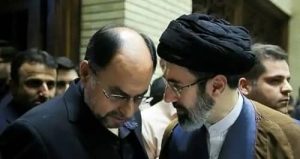 In recent years, speculation about the succession to Ali Khamenei at the top of Iran’s power structure has intensified, bringing the name of Mojtaba Khamenei increasingly into political analyses and media reports. He is the second son of the former leader of the ruling regime in Iran. Although he holds no official position within the state structure, many analysts describe him as one of the influential figures within the regime’s inner circle of power.
For the human rights community, the issue of succession in Iran is not merely a political matter. Experience over the past four decades has shown that decisions made within circles close to the leader of the regime have had a direct impact on the human rights situation in the country. These decisions have ranged from the suppression of protests and mass arrests to the use of lethal force against demonstrators.
In this context, Mojtaba Khamenei’s name has frequently appeared in connection with the security network surrounding the Office of the Supreme Leader, the Islamic Revolutionary Guard Corps (IRGC), and various intelligence bodies. These networks have played a central role in suppressing public protests, arresting political activists, and restricting civil freedoms over the years.
Iran Protests Warning: Police Chief Signals Crackdown as Economic Crisis Deepens
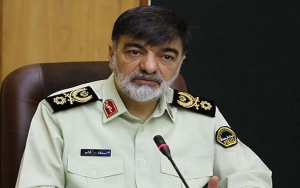
Iran’s police chief says security forces are ready to confront unrest across cities even as inflation, rising prices, and unresolved economic grievances continue to fuel public frustration following the January 2026 protests.
Iran protests warning came sharply into focus this week after Iran’s top police commander signaled that security forces are prepared to confront any new demonstrations. The statement arrives as the economic conditions that fueled the January 2026 protests — soaring prices, shrinking purchasing power, and persistent inflation — remain unresolved and, in some cases, have worsened.
MEK Supporters in Gothenburg Mark 111 Weeks of “No to Execution Tuesdays”

Gothenburg, Sweden — March 10, 2025 — Supporters of the People’s Mojahedin Organization of Iran (PMOI/MEK) held a rally to mark the 111th consecutive week of the “No to Execution Tuesdays” campaign, a movement protesting the Iranian regime’s escalating wave of executions and ongoing systematic repression.
Participants warned that thousands of prisoners across Iran are facing an immediate and serious threat to their lives, as ongoing military tensions and attacks have turned prisons into highly vulnerable locations where detainees—completely under the control of authorities—have no means to evacuate or protect themselves.
Copenhagen Rally Endorses NCRI’s Provisional Government as a Democratic Alternative for Iran

Copenhagen, Denmark – March 10, 2026 — Supporters of the Iranian Resistance gathered once again outside the Iranian regime’s embassy in Copenhagen, where they voiced strong support for the announcement of a Provisional Government by the National Council of Resistance of Iran (NCRI). Participants described the initiative as a viable democratic alternative for Iran following the death of Ali Khamenei.
During the rally, attendees also called for the overthrow of the clerical establishment and expressed support for the MEK’s Resistance Units operating inside Iran.
Zurich Exhibition Honors January Uprising Martyrs, Condemns Executions in Iran

Zurich, Switzerland – March 10, 2026 – Freedom-loving Iranians and supporters of the People’s Mojahedin Organization of Iran (PMOI/MEK) held a photo and book exhibition in Zurich to honor the martyrs of the January uprising and express solidarity with the Iranian people’s struggle for freedom.
Participants displayed banners reading “No to Executions” and expressed support for the campaign to abolish the death penalty in Iran.