

THIS PAGE WILL BE UPDATED WITH THE LATEST NEWS
UPDATE: 09:00 PM CET
War May Delay Regime Change, Current Regime Has No Way Out

The first wave of attacks on Iran, along with the reported elimination of Ali Khamenei and several of the regime’s top military and intelligence commanders, initially led some observers to predict the imminent collapse of the Iranian regime. Yet an important question remains.
The real turning point in Iran will not come from the skies above the country, but from the millions of Iranians who have repeatedly risen against the regime and are determined to change it from within.
On March 12, Reuters reported — citing three sources familiar with U.S. intelligence assessments — that despite recent attacks by Israel and the United States, the Iranian government is not yet at risk of collapse and the country’s leadership structure remains largely intact.
UPDATE: 08:00 PM CET
Tehran and Major Iranian Cities Reel Under New Strikes as the Regime Expands Arrests and the Gulf Crisis Deepens
Iran entered the seventeenth day of war under one of the broadest strike patterns yet reported inside the country, with Tehran again absorbing the heaviest blows. In the capital, blasts were reported from the east, center and west, including at the electricity office in Meydan Shohada, where power was cut across the area, near Zafarshan Street in Shahrak-e Gharb close to the Khatam al-Anbiya command zone, at the 123 Niaravan police station on Bahonar Street, around Tehransar where a police site and a nearby drone-linked factory were reported hit, near Azadi Stadium, and at the Khazraei air force barracks on Damavand Street. Residents described repeated detonations, thick smoke over the city and rolling disruptions to electricity and movement.
The strikes spread far beyond Tehran. In Shiraz, impacts were reported at the Law Enforcement Command headquarters on Somayeh Street and near the Rudaki-Zand axis. In Tabriz, heavy air-defense fire and strong explosions were reported across the city. In Hamedan, a cyber police site and other communications-related targets were reported struck. In Isfahan, renewed attacks were reported on army aviation facilities and missile-linked infrastructure, while staff were seen evacuating after an explosion near Alzahra hospital. Dezful was again hit around the Fourth Tactical Air Base, while attacks were also reported in Bandar Abbas, Mallard, near the police road post on the old Qazvin road at Abyek, and near Fasa, where a launcher-carrying truck was reported destroyed. Earlier material from inside Iran also pointed to fires at the Tarasht Space Research Institute in Tehran and continuing damage in western and southern approaches to the capital.
Thousands of Iranian military targets have been struck by U.S. forces to neutralize threats posed by the Iranian regime now and into the future. pic.twitter.com/dE4VNxjjW1
— U.S. Central Command (@CENTCOM) March 16, 2026
Israel said the latest raids were part of a much larger operational push. The Israeli military said it had launched a fresh wave of attacks on Tehran, Shiraz and Tabriz and had hit more than 200 targets in western and central Iran over the previous 24 hours. Iranian media reported an aircraft on fire at Mehrabad airport, and Reuters cited the Israeli military as saying the aircraft destroyed there had been used by Iran’s slain supreme leader. The state-run Mehr News Agency also reported destruction at a residential complex in Arak, underlining how closely civilian and military geographies are now colliding inside Iran’s cities. Reuters separately reported that Israel says it has detailed plans for at least three more weeks of war.
Checkpoints, arrests and prisons
The domestic security response hardened further even as it showed visible signs of strain. Across multiple cities, Basij and IRGC-linked checkpoint forces were reported nervously scanning the sky for drones, while roadblocks, motorcycle patrols and ad hoc searches multiplied. Casualties among the regime’s street-level enforcers also appear to be climbing. IRGC-run news agencies like Tasnim, Fars and other domestic reporting, said funerals and internal acknowledgments now point to rising losses among Basij personnel deployed at checkpoints, including forces killed at Tehran-area roadblocks and at least 10 deaths acknowledged by Fars in the first wave of checkpoint strikes in the capital. Reuters has also reported that Israeli operations are increasingly targeting internal-security nodes, including checkpoints used to control movement inside Tehran.
Israel Targets Iranian Checkpoints Using Tip-Offs From Informants, Source Says https://t.co/XNdYKhLMDr
— Algemeiner (@Algemeiner) March 13, 2026
The regime’s answer has been mass detention and a sharper criminalization of information-sharing. Police chief Ahmadreza Radan said 500 people had been arrested, including 250 in what he described as major cases and 20 in especially sensitive ones. Officials claimed that those detained were accused of sending information to hostile powers, filming strike locations, passing on details of military and security sites and trying to stir unrest. Other sources reported arrests in West Azerbaijan and Khorasan Razavi, including 20 people detained in Urmia on allegations of sending details of military, police and security sites, while the judiciary threatened citizens who film impact sites or send material to foreign outlets.
Pressure is rising inside prisons as well. In Urmia, one ward of the central prison was emptied and NOPO special units moved into the compound after nearby military-security sites came under bombardment; families said prisoners feared they were being turned into human shields. At the U.N. Human Rights Council on Monday, Special Rapporteur Mai Sato said Iranian authorities must end excessive force against civilians, release those detained for exercising fundamental freedoms and restore unhindered internet access. Her office said tens of thousands of protesters, including children, medics and lawyers, had been arbitrarily detained since the uprising began, and warned that a second telecommunications shutdown after the wartime escalation had left much of the population increasingly isolated. The same U.N. material said prison conditions had become critical, with food and medical shortages and little outside scrutiny.
Today I present my report to the Human Rights Council on the human rights situation in the Islamic Republic of Iran, starting at 10:45am CET. I will address the nationwide protests, the State’s use of lethal force, the ongoing military strikes, and the thousands detained. The…
— Mai Sato (@drmaisato) March 16, 2026
The humanitarian picture inside Iran also worsened over the last day. The World Health Organization said six hospitals in Iran had now been evacuated, while the health system was still functioning despite mounting pressure. WHO said it had verified 18 attacks on healthcare facilities and the deaths of eight medics, and warned of respiratory risks linked to toxic “black rain” after strikes on oil facilities. Amnesty International, in another rights intervention on Monday, said those responsible for the Minab school strike that killed 168 people, including more than 100 children, must be held accountable.
Regional spillover widens
As Iran’s cities came under renewed assault, the conflict spilled further across the region. Inside Iraqi Kurdistan, three missiles were reported fired by the IRGC at the Komala base in the Zargwez area of Sulaymaniyah. In the Gulf, Saudi Arabia said it intercepted six missiles and 34 drones launched from Iran early Sunday, while Bahrain said it had downed more than 125 missiles and over 200 drones since the war began. Kuwait also reported fresh drone interceptions. International media reporting suggests Gulf states were still intercepting projectiles overnight even as the regime’s Foreign Minister Abbas Araghchi denied Iran had targeted civilian areas in neighboring countries and proposed a joint investigative committee.
⚠️ Update: The internet blackout in #Iran is entering its 17th day after 384 hours. Over the last day a decline has been tracked in reserved telecoms network infrastructure, further reducing VPN availability and sending some whitelisted users and NIN services offline. https://t.co/xFVkYHiHDr pic.twitter.com/zxXYqX7GPO
— NetBlocks (@netblocks) March 16, 2026
The UAE remained one of the clearest examples of the war’s regional spread. Reuters reported that a drone strike caused a fuel-tank fire at Dubai International Airport, forcing a temporary shutdown and rerouting of flights before a gradual resumption of operations. The National reported that one person of Palestinian nationality was killed in Abu Dhabi after an Iranian missile attack on a civilian car. At the political level, UAE President Sheikh Mohamed bin Zayed and Saudi Crown Prince Mohammed bin Salman discussed the Iranian attacks and called for an immediate halt to military escalation and a return to diplomacy.
Shipping, oil and a broader international shock
The war’s global consequences are now moving almost as quickly as the military ones. Reuters reported that loadings at ADNOC’s Fujairah terminal were again disrupted after the latest strike, and that UAE crude output had fallen by more than half because of the near-closure of the Strait of Hormuz. A separate Reuters report said Gulf oil exports had dropped at least 60% week on week compared with February levels, with floating storage surging and producers shutting in supply. Brent remained above $100 a barrel, and the International Energy Agency said member states could release even more oil after last week’s record 400-million-barrel emergency drawdown.
With the Strait of Hormuz effectively closed and shipping under attack, analysts warn oil could surge to $150 or even $200 per barrel if disruptions remove 6–8M bpd from global supply. The crisis is reshaping energy security debates. #CrudeOil #EnergyMarkets…
— OilPrice.com (@OilandEnergy) March 16, 2026
Washington is pressing allies to respond militarily to the maritime crisis, but support remains uneven. Reuters and AP reported that U.S. President Donald Trump is still urging allies to send warships to help reopen Hormuz, while major partners including Germany, Japan and Australia have declined to do so, arguing for political de-escalation instead. AP reported that the United States is also moving about 2,500 Marines and the assault ship USS Tripoli toward the region. Pope Leo, meanwhile, renewed his appeal for an immediate ceasefire, condemning what he called the “atrocious violence” that has killed thousands of non-combatants and spread suffering across the region.
The cumulative picture is of a war that is no longer confined to military attrition. Inside Iran, it is now striking power infrastructure, police stations, barracks, prisons, hospitals and the communications space at the same time. Regionally, it is widening the rift between Tehran and Gulf capitals. Globally, it is forcing governments to weigh naval deployments, emergency oil releases and aviation disruptions against the risk of a much wider war.
UPDATE: 06:30 PM CET
The Opportunity for a Democratic Iran Is Now

U.S. policy expectations for the Islamic Republic of Iran have never been complicated: stop committing terrorist attacks on American military and civilians, stop destabilizing the Middle East, stop arming extremist non-state actors, stop trafficking weapons, stop taking hostages, stop dispatching terror cells around the world, stop threatening international shipping, stop trying to develop nuclear weapons, and stop brutalizing the Iranian people. Since hijacking the Iranian democratic movement in 1979, the ruling religious extremists in Tehran have been chanting “Death to America” and Death to Israel.”
If allied forces stop operations now, Iran’s theocracy will rebuild itself and recommence terrorist operations with a greater vengeance than ever before. Newly named Supreme Leader Mojtaba Khamenei made it clear he will continue pursuing his father’s reign of terror by publicly announcing: “I assure everyone that we will not refrain from avenging the blood of your martyrs. The retaliation we have in mind is not limited only to the martyrdom of the great leader of the Revolution; rather, every member of the nation who is martyred by the enemy constitutes a separate case in the file of revenge.”
UPDATE: 05:00 PM CET
There Is a Solution to Iran That Everyone Seems to Be Missing

The killing of Ali Khamenei did not bring the Islamic Republic to an immediate breaking point. Instead, it revealed something perhaps even more telling: a regime trapped at a dead end. Within days, Iran’s Assembly of Experts elevated his son, Mojtaba Khamenei, to the position of supreme leader—the first effective father-to-son transfer of power since the 1979 revolution that overthrew the monarchy. Mojtaba Khamenei is essentially his father’s brand, but weaker—exercising far less influence over the system.
Rather than projecting strength, the move demonstrated the regime’s desperation and despondency. Like a drowning man grasping at straws, the leadership turned to the only figure it believed might hold the system together. In reality, it had little choice but to select Khamenei’s son—not least because he carries his father’s name and maintains deep ties to the Islamic Revolutionary Guard Corps and the regime’s security apparatus.
UPDATE: 08:30 AM CET
Online International Conference – Supporting the NCRI’s Provisional Government Based on the Ten-Point Plan
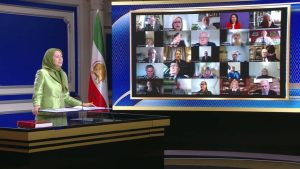
Mrs. Maryam Rajavi’s speech: “At a time when Iran and the entire region are caught in a major war, I call on the world, in the name of peace and in the name of freedom, to recognize the only solution to Iran’s grave crisis. That solution is the overthrow of the regime by the Resistance, through an organized uprising and the Liberation Army. The history of the past four decades testifies that for years and years we warned, we exposed, and we pointed to the source of the danger, so that Iran and the region would not be dragged into the situation we see today.
“From exposing fundamentalism as the new global threat in the 1990s,
from exposing the Quds terrorist force in 1993,
from exposing the regime’s most secret nuclear sites in 2002,
from exposing the regime’s destructive interference in Iraq in the 2000s,
from exposing the IRGC Intelligence Organization in 2009.”
PMOI Resistance Units Champion NCRI Provisional Government and Reject All Dictatorships in Iran
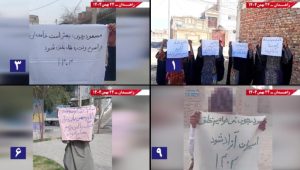
Amid severe wartime conditions and the Iranian regime’s threats to crack down on dissidents, the PMOI Resistance Units have launched a widespread grassroots campaign across Iran. Defying the heavy security climate, these brave activists took to the streets to project a message of readiness and defiance. Their activities focus on explicitly endorsing the National Council of Resistance of Iran’s (NCRI) newly announced Provisional Government, showing the world that the Iranian people are prepared to transfer sovereignty back to themselves and establish a democratic republic.
Across major cities including Tehran, Kermanshah, Qazvin, Karaj, Shiraz, and Ilam, activists installed banners, put up posters, and wrote graffiti with messages of resistance. A central theme of this campaign is the outright rejection of any form of dictatorship. In Tehran, a collective action featured the slogan, “Death to the oppressor, whether it be the Shah or the Supreme Leader.” This highlights that while Iranians are fighting to overthrow the clerical regime, they refuse to return to the monarchical fascism of the past.
Simay Azadi Exclusive: PMOI Commander on Feb. 23 Offensive on Khamenei HQ
This report features a firsthand account from a commander of the People’s Mojahedin Organization of Iran (PMOI/MEK) Resistance Units who participated in the offensive against the headquarters of the Iranian regime’s Supreme Leader on February 23, 2026.
#Iran News Alert – Simay Azadi Exclusive
Voice report from a PMOI Resistance Unit commander on the front lines of the Feb. 23 offensive against Khamenei’s headquarters in Tehran, describing fierce clashes and the surprise of regime forces. pic.twitter.com/Mzm3ccnTyQ— SIMAY AZADI TV (@en_simayazadi) March 15, 2026
Positioned within the second ring of engagement, the commander describes the tactical movement through Tehran’s back alleys, the intense firefights with security forces, and the vital support provided by local residents. This testimony highlights the determination of the units to strike at the center of the regime’s power despite the heavy presence of the IRGC and specialized protection forces.
Iranians Face a Defining Moment as National Traditions Clash with Authoritarian Control
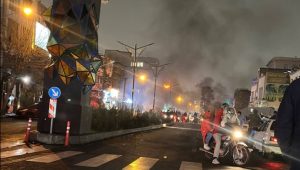
As the regime attempts to suppress traditional celebrations, activists say festivals such as Nowruz and Chaharshanbe Suri are becoming symbols of resistance and demands for democratic change.
As Iran approaches the spring of 2026 (Nowruz 1405), the country finds itself at a critical crossroads—between celebration and mourning, and between the aspirations for freedom and the persistence of authoritarian rule. The arrival of the Persian New Year traditionally marks a season of renewal and national unity. Yet critics of the mullahs’ regime argue that the regime is attempting to transform these cultural traditions into periods of enforced mourning.
According to observers, the authorities have sought to use the death of Ali Khamenei as a political pretext to restrict or discourage public celebrations associated with national traditions. Events such as Chaharshanbe Suri, Nowruz, and Sizdah Bedar have long symbolized renewal, community, and the endurance of Iranian cultural identity. Critics say the regime’s effort to impose mourning during this period reflects a broader attempt to suppress social energy and public gatherings.
Iran’s Escalating Regional Threats Reflect Deep Fear of Domestic Unrest
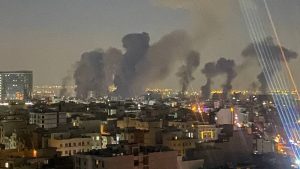
As Tehran issues fresh threats to close the Strait of Hormuz and expand regional confrontations, global attention has increasingly focused on the geopolitical consequences of such actions. Yet some analysts argue that the roots of the Iranian regime’s belligerent posture lie not primarily in military calculations but in a deep fear of a potential social explosion within the country.
From this perspective, escalating external tensions can serve as a political instrument for a government facing widespread domestic dissatisfaction. By amplifying regional crises and emphasizing external threats, the regime may attempt to shift attention away from internal instability and justify heightened security measures at home.
This interpretation has also been raised by prominent political figures. Newt Gingrich, in a recent analysis, noted that the early stages of the joint U.S. and Israeli operations against Iran’s ruling clerical establishment have revealed difficult lessons. According to Gingrich, the possibility that Tehran could disrupt the Strait of Hormuz underscores how vulnerable global energy markets remain, as such a move would dramatically raise oil and natural gas prices worldwide.
National Council of Resistance of Iran Warns About Dire Situation of Prisons

In a statement, the National Council of Resistance of Iran (NCRI), an Iranian opposition coalition, warned about the condition of prisoners in Iran under wartime circumstances and announced that the lives of thousands of prisoners, especially political prisoners, are in serious danger due to the lack of shelters inside prisons, the severe shortage of basic facilities, and intensified repression by security forces.
The statement says that as airstrikes and bombardments expand across different parts of the country, millions of citizens have left their homes to stay safe from the attacks, but prisoners inside prisons have no possibility of taking shelter or leaving their places of detention. According to the council, prisoners are not only exposed to the dangers of military attacks but also face a severe crisis in meeting basic needs such as food, water, and sanitary facilities.
Three Members of Tehran-Backed Kataib Hezbollah Killed in Baghdad
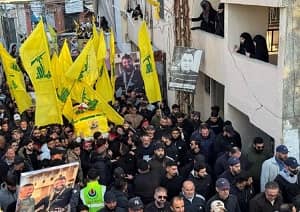
Iraqi security sources announced that the United States Embassy in Baghdad was targeted by a drone attack on the morning of Saturday, March 14. According to witnesses, after several explosions were heard, black smoke was seen rising above the area of the U.S. Embassy located in Baghdad’s Green Zone, a heavily fortified district housing government buildings and foreign diplomatic missions. The attack occurred several hours after two separate strikes on positions of Kataib Hezbollah, the militia backed by Iran’s regime, in Baghdad. According to security sources, those strikes resulted in the deaths of three members of the group, including one commander.
According to reports by local media outlets, in one of these attacks, which targeted a house in Baghdad, Ahmad al-Hamidawi, a senior leader of Kataib Hezbollah, was wounded. However, these reports have not yet been independently confirmed.
The Concurrence of External War and the Intensification of Domestic Repression in Iran
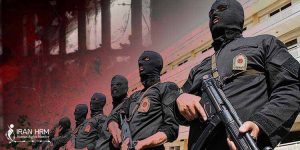
While Iran grapples with the dire consequences of war and the bombardment of urban areas, evidence indicates that the repressive apparatus of the Islamic Republic has not only maintained its stance but is utilizing the wartime “state of emergency” as a cover for political purges and the consolidation of the new leadership’s power. On March 11, 2026 (20 Esfand 1404), the UN Independent International Fact-Finding Mission on the Islamic Republic of Iran officially warned that Iranian civilians are facing escalating risks. The mission noted that the simultaneous pressure of external military force and internal security measures has increased the risk of “grave human rights violations” to an unprecedented level.
Military and law enforcement officials of the regime have employed explicit rhetoric to categorize domestic protests as military targets.
Stockholm Rally Backs Democratic Republic in Iran

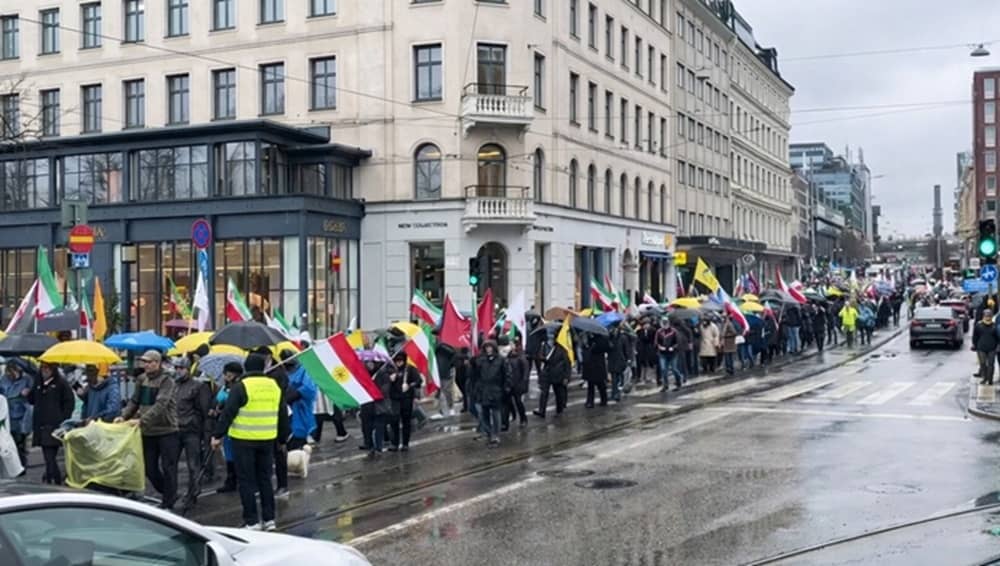
On March 14, 2026, freedom-loving Iranians gathered in Stockholm to support the establishment of a democratic republic in Iran and to voice their strong backing for the announcement of a Provisional Government by the National Council of Resistance of Iran (NCRI).
Hamburg Rally Calls for Democratic Republic in Iran

On March 14, 2026, freedom-loving Iranians gathered in Hamburg in support of a democratic republic in Iran and to voice their strong backing for the announcement of a Provisional Government by the National Council of Resistance of Iran (NCRI).
The rally brought together supporters of the People’s Mojahedin Organization of Iran (PMOI/MEK) along with Kurdish compatriots and other compatriots from ethnic groups such as Baluch, Arabs, and others.