


THIS PAGE WILL BE UPDATED WITH THE LATEST NEWS
UPDATE: 09:30 PM CEST
Missile Production Sites, IRGC Infrastructure and Ports Hit Across Iran as Conflict Expands Across Region
On March 29, 2026, the Iran war entered a more advanced and volatile phase, marked by sustained U.S. and Israeli strikes on missile infrastructure, command centers, and military-industrial assets across Iran. The past 24 hours saw intensified bombardment in Tehran and multiple provinces, mounting evidence of degraded Iranian missile capabilities, and a widening regional conflict involving Iraq, Yemen, and Gulf economic targets. At the same time, diplomatic efforts accelerated, reflecting growing international concern over the risk of a broader regional war.
Military Operations Inside Iran
Tehran experienced one of the most intense bombardment cycles since the start of the conflict, carried out in multiple coordinated waves. Initial strikes began late in the evening, followed by additional attacks during the early morning hours and renewed strikes after sunrise. Explosions were reported across a wide geographic spread, indicating city-wide saturation targeting rather than isolated incidents. Affected districts included northern, eastern, western, and southeastern parts of the capital, as well as areas near Mehrabad Airport and the Babayi Highway defense-industrial corridor.
JUST IN: Factory goes up in flames following an Iranian missile attack on an industrial zone in southern Israel. pic.twitter.com/57xfowsdac
— Fox News (@FoxNews) March 29, 2026
A strike in the Heravi district directly hit a building, causing structural damage to surrounding properties. Casualty figures remain unclear. A major explosion was also reported near Evin Prison in northwest Tehran. Although the prison itself was not directly struck, the location carries significant political sensitivity due to its association with political detainees and previous war-related damage.
Strikes in and around Tehran focused heavily on military and security infrastructure, including IRGC command and intelligence-linked facilities, ammunition depots, weapons storage sites, defense industry zones, and fuel and logistics infrastructure supporting security forces. Reports also indicate targeting of a military installation near Babayi Highway linked to Iran’s defense sector.
Beyond the capital, coordinated strikes and explosions were reported across multiple provinces. In Karaj, multiple explosions were recorded overnight across several districts. In Gilan province, one person was killed and five injured in a strike in the town of Shaft. Additional strikes were reported in Isfahan, Arak, Kashan, and other cities. In Bushehr, continued pressure on nuclear-related infrastructure was reported. In Hormozgan province, a strike on port facilities in the Bandar Khamir area resulted in five deaths and four injuries. Despite the attack, local authorities claimed that port operations continued without disruption.
🇵🇰 🇸🇦 🇪🇬 🇹🇷 🇮🇷 🇺🇸 Pakistan, Saudi Arabia, Egypt and Turkey on Sunday held talks about trying to end the war in the Middle East, as Islamabad acts as a go-between between the United States and Iran ➡️ https://t.co/AxrFlxPcEr pic.twitter.com/uJLUKJRzpK
— AFP News Agency (@AFP) March 29, 2026
Strategic Degradation of Iran’s Missile Program
Israeli operations over the past 24 hours focused on high-value missile infrastructure. Targets included one of a limited number of facilities responsible for producing key components used in ballistic missile assembly, as well as sites linked to missile engine production, drone propulsion systems, and air defense development.
Emerging assessments indicate significant degradation of Iran’s missile production capacity, including disruption of supply chains required for missile assembly and reduced ability to sustain large-scale retaliatory launches. Retaliatory missile activity appears to have declined sharply, suggesting growing operational constraints.
Strikes also targeted both mobile and fixed command centers, along with communications and coordination nodes. This reflects a broader strategy aimed at dismantling Iran’s command-and-control architecture, rather than focusing solely on physical weapons systems.
🔊 Reuters reporters crossed into Iran and began filing dispatches on daily life — airstrikes, funerals, rallies, and ordinary people trying to carry on. On Assignment brings you their reporting from the ground. Listen now: https://t.co/17JRLtutYx pic.twitter.com/zxuWo8iYdJ
— Reuters (@Reuters) March 29, 2026
Nuclear Risk and Sensitive Infrastructure
The situation at the Bushehr nuclear power plant has deteriorated. Approximately 400 Russian personnel have been evacuated, and repeated strikes have been reported near critical support systems. Explosions near water pumping infrastructure essential for reactor cooling have raised concerns about nuclear safety risks, although no radiation leak has been reported.
Additional unconfirmed reports suggest strikes near the Parchin military complex and other sensitive defense-industrial sites associated with weapons development. These developments indicate continued pressure on Iran’s strategic infrastructure.
U.S. Military Operations and Escalation
According to United States Central Command, more than 11,000 targets have been struck since the start of operations, including IRGC bases, missile systems, command centers, and defense infrastructure. More than 150 Iranian vessels have reportedly been damaged or destroyed.
U.S. operations have expanded geographically. Airstrikes continued against Iran-aligned Popular Mobilization Forces positions in Nineveh province, particularly around Mosul, reflecting ongoing efforts to degrade Iran’s regional proxy network.
⚠️ Update: #Iran's internet blackout has now entered day 30 as the nationwide censorship measure continues into its fifth week after 696 hours.
Metrics show that connectivity to the outside world remains at just 1% of ordinary levels. pic.twitter.com/DrvOluEp6B
— NetBlocks (@netblocks) March 29, 2026
The United States has also increased its forward military posture. The deployment of the USS Tripoli, carrying approximately 3,500 Marines and equipped for amphibious and air assault operations, signals heightened readiness. At the same time, the Pentagon is preparing contingency plans for potential ground operations in Iran, although no final decision has been announced.
Within the United States, political divisions are emerging over the risks of escalation, the possibility of a prolonged ground conflict, and broader strategic objectives.
Iranian and Proxy Responses
The regime in Iran and its allied groups continued to respond through asymmetric and regional actions. In Iraq’s Kurdish region, drone strikes targeted headquarters of Iranian Kurdish opposition groups, representing a clear example of cross-border escalation and efforts to suppress opposition forces.
In the Gulf, economic infrastructure was targeted. The Aluminium Bahrain (Alba) confirmed that its facilities were struck, resulting in minor injuries and operational disruption. A similar incident was reported at an aluminum facility in the United Arab Emirates. These actions suggest a strategy focused on economic pressure rather than purely military confrontation.
A reported Iranian strike also destroyed a U.S. airborne early warning aircraft at Prince Sultan Air Base in Saudi Arabia. This claim remains unverified independently but would represent a significant escalation if confirmed.
The Pentagon is preparing for weeks of ground operations in Iran, U.S. officials said.
It would fall short of a full-scale invasion and could involve raids by a mixture of Special Operations forces and conventional infantry troops, said the officials. https://t.co/QyqiwLFNQw
— The Washington Post (@washingtonpost) March 29, 2026
Maritime Threats and Global Trade Risk
Regional maritime security has become an increasingly critical concern. The Houthis in Yemen warned that closing the Bab el-Mandeb Strait remains an option in response to potential U.S. ground operations or continued strikes on infrastructure.
At the same time, Iran has allowed limited passage of Pakistani-flagged vessels through the Strait of Hormuz, suggesting a controlled and selective approach to maritime escalation.
These developments carry significant implications for global energy markets, commercial shipping routes, and overall supply chain stability.
The Houthis have opened a new front in the regional conflict just as President Trump signaled it could be winding down. https://t.co/8m4dB6cy7K
— TIME (@TIME) March 28, 2026
Diplomatic Developments
Diplomatic activity intensified over the past 24 hours. Delegations from Turkey, Egypt, and Saudi Arabia arrived in Islamabad for high-level talks with Pakistani officials aimed at mediating the conflict. Pakistan is positioning itself as a key intermediary, working to facilitate dialogue between the United States and Iran.
Iran appears to be pursuing a dual-track strategy, combining continued military activity with limited openness to diplomatic engagement.
In Lebanon, authorities escalated tensions by detaining and expelling the Iranian ambassador after he refused to comply with an expulsion order. This represents a notable diplomatic confrontation.
Navy fits RFA Lyme Bay with mine-hunting drones to end Iran blockade https://t.co/iYUZzhp7l1
— The Times and The Sunday Times (@thetimes) March 29, 2026
Information Environment
Iran remains under a near-total internet shutdown, now entering approximately its fifth week. This severely limits independent verification of events and restricts civilian communication, meaning that much of the available information relies on local reporting, state media, and external intelligence sources.
Civilian Impact
Confirmed casualties include five killed and four injured in Hormozgan province and one killed with five injured in Gilan. Additional casualties are likely but remain unverified due to the communications blackout. Urban strikes have caused structural damage and widespread fear among civilians.
Outlook
The conflict is simultaneously intensifying and expanding geographically. The degradation of Iran’s missile capabilities and command infrastructure suggests increasing military pressure, while regional escalation across Iraq, Yemen, and the Gulf raises the risk of a broader confrontation.
At the same time, active diplomatic engagement and limited maritime cooperation indicate attempts to prevent uncontrolled escalation. The next phase of the conflict will likely depend on whether military momentum continues to dominate or whether diplomatic efforts succeed in stabilizing the situation.
UPDATE: 05:30 PM CEST
The Iranian ‘Spy Recruitment Hub’ Operating in London

An Iranian spy recruitment ring is operating openly in London, ministers have been warned. Tehran is exploiting Britain’s “permissive environment” as a base for its Western intelligence-gathering and propaganda campaigns, The Telegraph was told. The regime was accused of using Press TV, the English-language channel of Iran’s state broadcaster, which has a studio in London, as a front to recruit assets.
The channel was said to have effectively created a “target list for terrorists” with its reports on Jewish charities, schools and community organisations. Last week, two men were arrested after an anti-Semitic firebomb attack in north London, in which four ambulances owned by a Jewish charity were set alight outside a synagogue. Counter-terrorism police are leading an investigation into the arson, amid fears it may have been orchestrated by Iran.
UPDATE: 10:30 AM CEST
Neither Shah nor Mullahs: Iran’s Resistance Units Rally for a Democratic Republic

Amidst wartime conditions and the clerical regime’s persistent threats to crack down on dissidents, the brave activists of the People’s Mojahedin Organization of Iran (PMOI) Resistance Units have launched a new wave of anti-regime activities. On March 27, 2026, activists in the southeastern city of Zahedan took to the streets, projecting a message of defiance and readiness. By installing posters and holding placards, the Resistance Units reiterated their unwavering support for the Provisional Government announced by the National Council of Resistance of Iran (NCRI) and demanded a democratic republic that rejects all forms of dictatorship.
A core pillar of the Iranian Resistance is the rejection of any return to the monarchical dictatorship of the past, alongside the determination to overthrow the current theocracy. In Zahedan, this principle of “Neither Shah nor Mullahs” was on full display. Activists held placards reading, “A dictatorship is a dictatorship, whether with a turban or a crown,” and “No to shah, no to mullahs, yes to freedom and democratic republic.”
Massoumeh Yavari Faces Worsening Health in Golpayegan Prison

Massoumeh Yavari’s medical treatment has remained unfinished following a surgical procedure on her hand. She underwent surgery in late February of last year; however, despite posting a substantial bail and while still in recovery, her medical leave was abruptly revoked, and she was returned to Golpayegan Prison.
Iran Uses 12-Year-Old Children in Security Patrols

The use of 12-year-old children in security patrols in Iran raises serious human rights and structural concerns. This development shows why the ruling regime in Iran has turned to using children in intelligence and operational activities, what crises have shaped this decision, and what this policy reveals about the actual condition of the country’s security and military institutions. The formal reduction of the participation age under the scheme known as “For Iran,” and the presence of adolescents at checkpoints and in urban missions, not only violates international obligations toward children’s rights, but also points to a growing pattern of instrumentalizing children within structures of internal repression.
On March 26, 2026, Rahim Nadaali, the cultural deputy of the Islamic Revolutionary Guard Corps in Tehran, announced in an official televised interview that the age for participation in intelligence patrols, operational patrols, and checkpoint duties had been lowered to 12. He said: “We launched this plan in different areas… there are intelligence and operational patrols, and our dear young people and teenagers repeatedly came forward and said they wanted to take part in these patrols.
Young Women Disappear in Iran Arrest Wave as Prisoner Denied Urgent Medical Care
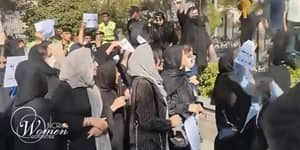
Iran arrests are once again drawing international concern, as a new wave of detentions targets young women, civil society figures, and political prisoners—while a jailed woman is denied urgent medical care despite a worsening infection.
A series of recent reports from human rights organizations describe a pattern that goes beyond isolated incidents—one defined by silence, pressure, and the steady erosion of basic rights.
Among the most urgent cases is Masoumeh Yavari, a political prisoner whose health is reportedly deteriorating after being denied proper medical treatment.
According to human rights groups, Yavari had undergone surgery on her hand earlier this year and was temporarily released on heavy bail equivalent to billions of tomans to continue treatment. But before her recovery was complete, authorities revoked her medical leave and sent her back to prison.