

Four-minute read
A Silence Imposed by War
Iran today may appear quieter than during previous waves of protests, but this quiet is neither organic nor durable. It is imposed by war. Under conditions of aerial bombardment and heightened military alert, the basic mechanics of protest collapse. Civilians avoid gathering not out of consent, but because proximity to state facilities—often targets—carries mortal risk. At the same time, the state’s security apparatus operates with expanded latitude: dissent is more easily framed as collaboration with foreign enemies, and security forces, alongside aligned militias, respond with force that is both immediate and less restrained.
This creates a forced stillness. It is not that grievances have diminished; it is that the cost of expressing them has sharply increased. Society is not stabilizing—it is compressing.
Economic Breakdown at the Household Level
Beneath this enforced calm lies an economy that has become structurally unsustainable for large segments of the population. Inflation has remained persistently elevated, with official rates around 40–45% through 2025, while food inflation has surged to approximately 70% year-on-year in several reporting periods. These figures are critical because food constitutes a disproportionate share of household expenditure for lower- and middle-income families.
The national currency has deteriorated dramatically, reaching roughly 1.4 to 1.45 million rials per US dollar by late 2025, representing a loss of more than half its value within a year. This has cascading effects: imports become prohibitively expensive, domestic production costs rise, and price volatility becomes entrenched.
Wages have not kept pace. Official minimum wage adjustments have lagged far behind inflation, covering only about 25–30% of estimated living costs. In practical terms, a full-time worker can no longer secure basic subsistence through formal employment alone. This is the defining feature of Iran’s current economic condition: the normalization of the working poor.
Unemployment figures, often cited at around 7–8% officially, obscure deeper structural issues. Youth unemployment remains significantly higher—15–20% overall, and up to 30–35% among young women—while labor force participation hovers near 40–41%, reflecting widespread discouragement and withdrawal from the formal economy. It is obvious that the war has only worsened this situation.
A Nation on the Brink: #Iran’s Economy Nears Total Breakdownhttps://t.co/vGWSKMuzub
— NCRI-FAC (@iran_policy) June 9, 2025
The Crisis of Unpaid Wages and Pensions
If inflation erodes income, delayed or unpaid wages eliminate it altogether. Across 2025, reports of salary arrears became systemic rather than exceptional. Workers in multiple sectors—from industrial plants to hospitals—reported delays of one to three months or more. In October 2025, hospital staff in several regions were documented as being unpaid for extended periods, prompting organized protests.
Retirees have become one of the most persistent protest groups. Pension payments, even when delivered, have been rendered insufficient by inflation. Demonstrations by retirees across cities from the south in Ahvaz to the north in Rasht have focused on a simple demand: survival with dignity.
February 8—Shush, southwest Iran
Retirees of the Social Security Organization resume their protest rallies, demanding higher pensions and access to basic services. Protesters held a minute of silence for the martyrs of the recent uprising.#IranProtestspic.twitter.com/9qcqh3Hh2P— People's Mojahedin Organization of Iran (PMOI/MEK) (@Mojahedineng) February 8, 2026
Infrastructure Failure and Daily Disruption
Parallel to the economic crisis is a visible and increasingly disruptive failure in infrastructure and resource management. Despite possessing some of the world’s largest natural gas reserves, Iran has faced recurrent gas shortages, forcing industrial shutdowns, including in major sectors such as steel production in late 2025. Electricity outages have compounded these disruptions, affecting both households and economic activity.
Water scarcity has reached critical levels in multiple provinces. Protests in regions such as Bushehr and Khuzestan have been driven by acute shortages, while experts within Iran have described the situation as approaching “water bankruptcy”—a structural imbalance between supply and demand resulting from years of mismanagement and overuse.
Environmental degradation adds another layer of strain. Air pollution in major urban centers has reached hazardous levels, while industrial and mining activities have contributed to long-term ecological damage. These are not distant or abstract concerns; they are daily realities that directly affect health, livelihoods, and quality of life.
Why #Iran Is Running Out of Water, Power — and Patiencehttps://t.co/9ZghlJCNpO
— NCRI-FAC (@iran_policy) August 13, 2025
A Society Converging in Discontent
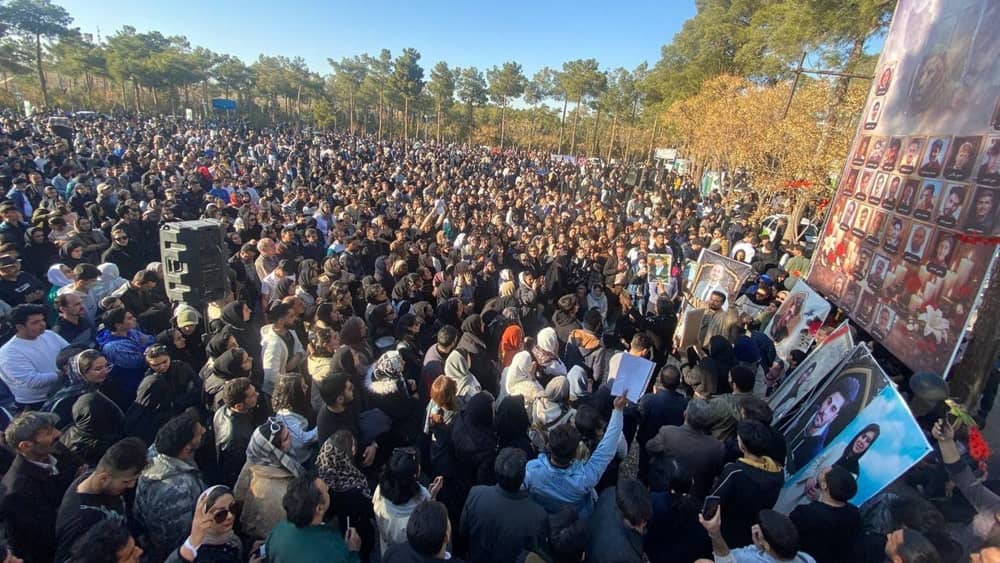
What makes the current situation particularly volatile is the breadth of those affected. Iran’s unrest is no longer confined to specific social groups. The 2026 January uprising began with bazaar merchants—traditionally cautious and often aligned with stability—and quickly expanded to include workers, retirees, students, and all sectors of society.
Demonstrations spread across major urban centers—Tehran, Isfahan, Shiraz, Mashhad—as well as smaller cities, indicating a nationwide pattern rather than localized unrest. This convergence across classes and regions marks a critical shift. Grievances are no longer experienced in isolation; they are shared across society.
When dissatisfaction reaches this level of diffusion, it becomes structurally embedded. The question is no longer whether unrest will occur, but how it will manifest when conditions permit.

Repression Without Resolution
The state’s response has relied heavily on coercion. During the 2025–2026 protest wave, security forces were instructed to suppress unrest “by any necessary means,” resulting in mass arrests and reports of lethal force. Internet shutdowns and information controls have been used systematically to limit coordination and visibility.
Under wartime conditions, these mechanisms intensify. The threshold for repression lowers, and the justification broadens. Dissent is more easily equated with disloyalty, and enforcement becomes more aggressive.
Yet repression operates within clear limits. It can reduce the visibility of protest, but it cannot address inflation, restore purchasing power, resolve water shortages, or pay wages. These underlying pressures continue to accumulate, even in the absence of visible unrest.
January 21, 2026 – As the nationwide uprising in #Iran reaches its 25th consecutive day, the clerical regime has intensified its crackdown, deploying military convoys to crush protests while maintaining a total internet blackout. Read more:https://t.co/SHtBNZTSMB
— NCRI-FAC (@iran_policy) January 22, 2026
What Happens After War
When conflict subsides, societies do not return to pre-war conditions. They emerge with heightened expectations. In Iran, this is certainly to translate into immediate demands for economic relief, restoration of services, and accountability for losses incurred during the war.
These expectations will confront a constrained reality. Inflation will not recede quickly, and fiscal limitations will restrict the state’s ability to respond. The gap between what society expects and what the system can deliver is likely to widen sharply.
War often conceals internal divisions within political systems. Once the external pressure diminishes, those divisions tend to re-emerge. Iran’s political structure is characterized by multiple centers of power, and while wartime conditions may enforce temporary alignment, post-war conditions are likely to reopen competition over authority, resources, and responsibility.
If senior leadership structures have been weakened, this fragmentation may intensify. In such circumstances, coordination declines, decision-making slows, and the system’s ability to respond to societal demands diminishes further.
#Tehran’s Leaders Split Over War, Talks, and Moralehttps://t.co/6pr5MEasXc pic.twitter.com/5BT3EsXe6H
— NCRI-FAC (@iran_policy) August 21, 2025
Conclusion: An Uprising Deferred, Not Prevented
When the war ends, restraint lifts—but the grievances return intact, and sharper.
A population battered by inflation, price surges, unpaid wages, and failing services will not accept more delay. Expectations will rise immediately, and people will call for accountability. At the same time, the state will be weaker—financially strained, internally divided, and managing war damage.
What follows is straightforward: the pause ends, pressure releases, and a broader, more impatient society—already enraged by the bloody suppression of the 2026 uprising—returns to the streets.
Not a reset. A resurgence.