

THIS PAGE WILL BE UPDATED WITH THE LATEST NEWS
UPDATE: 02:00 PM CEST
Ayatollah Preparing for Mass Uprising When Trump’s Attacks Are Over

The clerical leadership currently controlling Iran fears widespread uprisings following the US-Israeli military strikes and is accelerating executions of regime opponents.
New Ayatollah Mojtaba Khamenei, son of Ali Khamenei, who died in the initial wave of US airstrikes on Iran, is believed to be semi-conscious after sustaining serious injuries in the same attack. Reports indicate he is receiving continuous medical care in the holy city of Qom. However, either he or clerical and Revolutionary Guard representatives acting on his behalf have ordered an acceleration of executions for political prisoners who oppose the government.
Prominent opposition figure Maryam Rajavi, President Elect of the National Council for Resistance of Iran, stated the move aims to intimidate ordinary Iranians because the dictatorship anticipates a widespread popular revolt once American and Israeli military operations conclude, reports Daily Express UK.
UPDATE: 10:00 AM CEST
Commemoration of Executed PMOI Members and Protesters
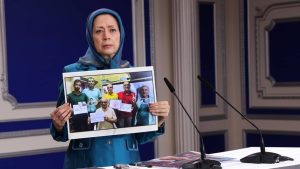
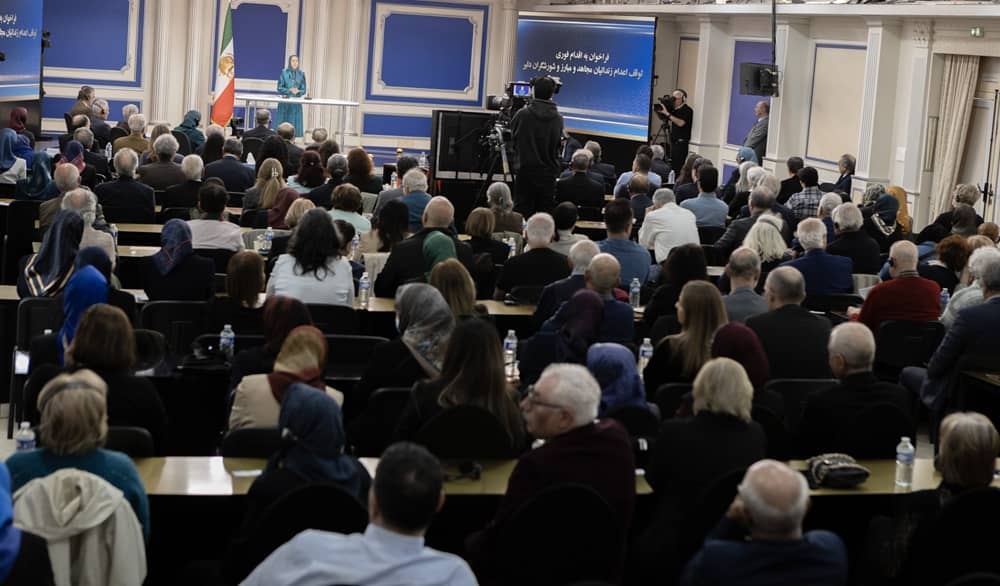
Mrs. Maryam Rajavi’s speech: “On Friday, April 10, a conference was held to honor executed PMOI members and courageous protesters, under the title: ‘A Call for Immediate Action to Halt the Executions of PMOI and dissident political prisoners, and courageous protesters.’
“PMOI members at Ashraf-3 participated in the conference online. A number of political figures also spoke at the event, including Ms. Herta Däubler-Gmelin, former German Minister of Justice; Franz Josef Jung, former German Federal Minister; John Bercow, the Rt Hon Speaker of the House of Commons, Jean-Pierre Spitzer, a prominent French lawyer; and Jean-François Legaret, head of the Femo Institute, along with several French mayors.”
Who was Iran’s Dictator Ali Khamenei?
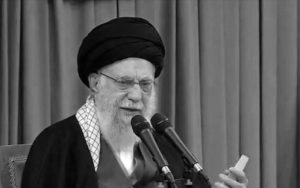
Simay Azadi April 2026 – April 8, marked the 40th day since the death of Ali Khamenei, the Iranian regime’s supreme leader. Khamenei’s final days were defined by the January 2026 uprising, where his final act of domestic policy was the “black bag” strategy—broadcasting images of dead protesters in industrial bags to terrorize the public. It was the closing chapter for a leader whose transition from a minor cleric to a multi-billionaire dictator left Iran on the brink of ruin.
Born in Mashhad on April 19, 1939, Khamenei was the son of Javad Khamenei, a cleric born in Najaf, Iraq. His education began in traditional Maktab-khanehs and progressed through various seminaries in Mashhad and Qom. However, his religious credentials were long disputed; his brother-in-law, Sheikh Ali Tehrani, described his studies in Qom as “superficial and unfocused,” noting that he spent only four years in serious study and lacked the focus required for high-level jurisprudence.
Wave of Arrests Targeting Women and Minors Amid Wartime in Iran

Following an intensified crackdown amid the recent war, multiple reports indicate a sharp rise in arrests across Iran, with women and minors disproportionately affected. Authorities are reportedly detaining large numbers of individuals daily, frequently on charges such as “collaboration with hostile states” or “actions against national security,” and transferring them to detention facilities and prisons.
Azar Yahoo, 38, has been held in Ward 6 of Vakilabad Prison in Mashhad since her arrest on Wednesday, March 5, 2026, by intelligence forces affiliated with the Revolutionary Guard Corps’ Tharallah unit.
Iran’s Internet Blackout: Governance by Disconnection

What was once considered an emergency measure has, in Iran, evolved into a defining feature of governance: the systematic restriction of internet access. Recent data suggests that, at certain points—even as recently as early 2026—access to the global internet fell to near-total blackout levels, reaching only a fraction of normal connectivity. This is no temporary disruption. It is a sustained, structural disconnection unprecedented in scale and duration.
Globally, internet shutdowns have typically been associated with acute political crises—coups, mass protests, or brief periods of instability. Even in such cases, disruptions tend to last days or, at most, weeks. Iran now stands apart. Its prolonged and repeated shutdowns, unfolding alongside a deep economic crisis and ongoing regional tensions, mark a new category: disconnection as policy, not reaction.
After the Ceasefire: The Hidden Economic Devastation Reshaping Iran
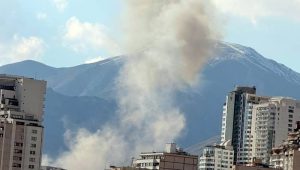
As the dust settles from weeks of intense U.S. and Israeli strikes on Iran, a fragile ceasefire has revealed a reality far more consequential than the immediate destruction. What has emerged is not a conventional post-war recovery scenario, but a structural economic rupture—one that distinguishes this conflict sharply from Iran’s past wartime experiences. Unlike the Iran-Iraq War, where destruction was largely concentrated along border regions and front-line cities, the recent campaign targeted the core of Iran’s economic and industrial architecture. Analysts have described it as a deliberate effort to neutralize critical infrastructure—an approach that prioritizes systemic disruption over territorial damage.
Initial figures released by organizations such as the Iranian Red Crescent Society indicate that more than 93,000 residential and commercial units were destroyed or severely damaged. Yet this visible destruction represents only a fraction of the overall impact. The deeper crisis lies within the country’s foundational industries—where the cost, complexity, and geopolitical constraints of reconstruction far exceed anything seen in recent decades.
Economic Suffocation: How Industrial Paralysis and Mass Layoffs Are Pushing Iran’s Society to the Brink
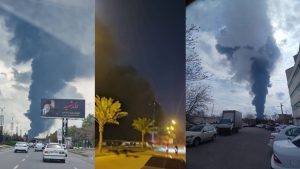
Today after nearly forty days of war, Iran’s economic collapse is no longer an abstract projection—it is a lived, daily reality. Over the past two months, a convergence of structural shocks has accelerated the deterioration of livelihoods across the country. Factory closures, widespread layoffs, and prolonged internet disruptions have combined into a single, reinforcing cycle of economic paralysis. Reports emerging from multiple cities depict a consistent pattern: businesses shutting down or operating at minimal capacity, workers dismissed without compensation, and households pushed into survival mode. What distinguishes this moment is not merely the scale of the downturn, but the simultaneity of its causes—industrial contraction, digital disconnection, and post-war uncertainty.
Iran in A Bottleneck Over Restoring Infrastructure After Ceasefire
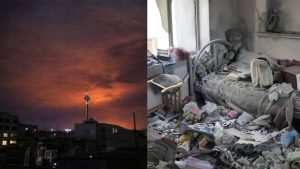
A few weeks after heavy U.S. and Israeli attacks, and under the shadow of a fragile ceasefire, Iran is facing a level of destruction incomparable to any past experience. Unlike the Iran-Iraq war, when damage was largely confined to border regions, this time the country’s main economic, energy, and technology centers have been targeted; what some experts describe as “the neutralization of vital infrastructure.”
Although preliminary figures indicate the destruction or severe damage of more than 93,000 residential and commercial units, the main damage has occurred in key base industries; a sector whose reconstruction is not compatible with the country’s current resources.
Hostage-Taking of Bodies in Iran
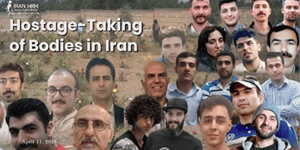
The question “Where are the bodies?” has been one of the primary and most agonizing demands of the families of executed political prisoners in Iran for decades. These families are not only deprived of the basic right of a “final visit” with their loved ones before the execution but are also denied the right to receive the body and hold mourning ceremonies afterward.
The failure to return bodies and the concealment of burial sites of the executed, according to international law, is a clear instance of “enforced disappearance” and “psychological torture” of the families. By creating ambiguity and permanent suspense regarding the fate and burial place of the victims, the government imposes double, continuous, and long-term suffering on the survivors. This action deprives families of the right to hold burial rites, mourning, and ceremonies befitting their loved ones. The psychological consequences of this situation can affect the lives of survivors for years, becoming a form of ongoing torture. This practice forms part of a broader pattern of enforced denial of the right to mourn and systematic psychological pressure on families and is a blatant violation of Article 7 of the International Covenant on Civil and Political Rights (prohibition of torture and cruel treatment).
Mojtaba Khamenei Message Signals Hardline Continuity in Iran Policy
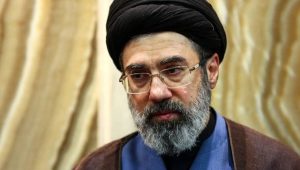
The Mojtaba Khamenei message released on the 40th day after the death of Iran’s former leader is raising a central question: has Iran policy changed?
So far, the answer appears to be no. The message—if authentic—points to continued confrontation abroad and heightened sensitivity to internal unrest, signaling continuity rather than a shift.
Despite ongoing doubts about Mojtaba Khamenei’s condition and the authenticity of statements attributed to him, the tone and content align with earlier messaging from Iranian state channels, emphasizing resistance and control at a moment of regional and domestic pressure.
Iranian Resistance Supporters Continue Berlin Rallies, Condemn Executions in Iran

Berlin, Germany – April 9, 2026: Supporters of the Iranian Resistance have been rallying for several consecutive days outside the Iranian regime’s embassy in Berlin, protesting the execution of six political prisoners — Mohammad Taghavi, Akbar Daneshvar Kar, Babak Alipour, Pouya Ghobadi, Vahid Bani-Amerian, and Abolhassan Montazer. The victims were affiliated with the People’s Mojahedin Organization of Iran (PMOI/MEK).
Iranian Resistance Supporters Continue Copenhagen Rallies, Honor Executed PMOI Political Prisoners

Copenhagen, Denmark – April 9, 2026: Supporters of the Iranian Resistance have been rallying for several consecutive days outside the Iranian regime’s embassy in Berlin, protesting the execution of six political prisoners — Mohammad Taghavi, Akbar Daneshvar Kar, Babak Alipour, Pouya Ghobadi, Vahid Bani-Amerian, and Abolhassan Montazer. The victims were affiliated with the People’s Mojahedin Organization of Iran (PMOI/MEK).