

Three-minute read
The heavy iron doors of Iran’s prisons are designed to impose absolute silence, yet they continuously fail to contain the voices of those within. The modern political prisoner in Iran is not merely a passive victim of a repressive state apparatus; they have increasingly become central actors in a profound sociological shift, redefining the nature of defiance for a generation of youth exhausted by decades of authoritarian rule. This transformation is vividly captured in the recent communications smuggled from behind the walls of Vakilabad Prison in Mashhad and the Central Prison in Yazd. These texts reflect a striking psychological paradigm shift among Iran’s political detainees: the complete erosion of the regime’s primary tool of social control—fear.
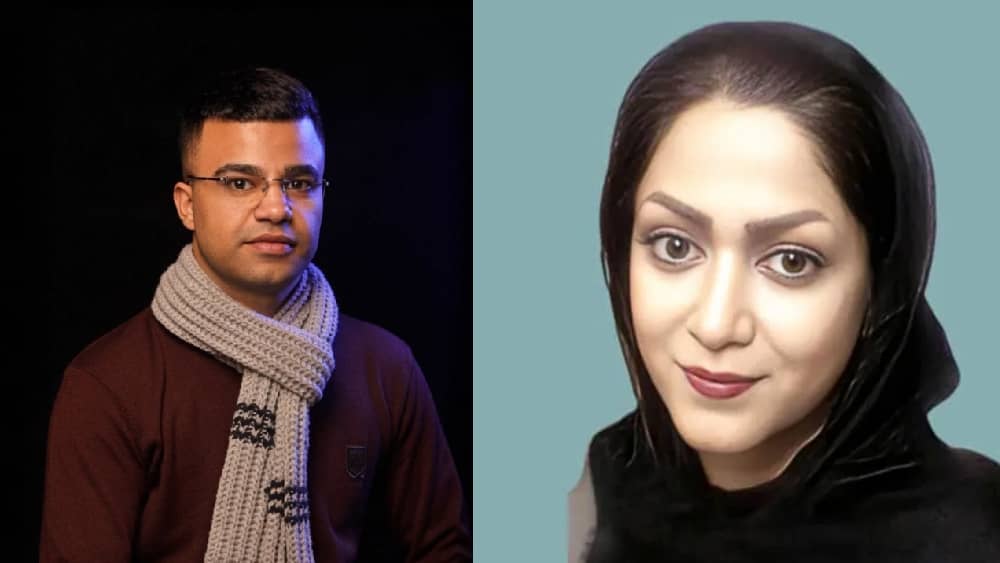
For decades, the Islamic Republic has relied on the spectacle of capital punishment as a systematic tool of intimidation designed to paralyze public dissent. Yet, the testimony of Mohammad Javad Vafaei-Sani, a champion boxing athlete facing his third death sentence in Mashhad, reveals how this strategy is losing its efficacy. Writing from the precipice of execution, Vafaei-Sani exhibits an astonishing level of psychological fortitude. In his letter, which opens “In the name of God” , he draws strength from a deep sense of conviction, stating, “We have proven that we possess the most formidable weapon possible, meaning our faith and righteousness”. He explicitly details a mindset that has completely conquered state-enforced terror, writing, “Without a doubt, the will of God is above all wills, and death and life are by His will alone”. Rather than pleading for mercy, he requests, “I lift my hands in prayer, simply and briefly asking Him to increase my will and courage at this time, and to accept my loyalty to the oppressed, to the truth, and to the freedom of the people of my homeland”.
Facing the gallows, boxing champion Mohammad Javad Vafaei Sani sends a message of unyielding resistance https://t.co/0cKtw4UNZz
— People's Mojahedin Organization of Iran (PMOI/MEK) (@Mojahedineng) June 9, 2026
Crucially, Vafaei-Sani refuses to grant the regime the one concession it seeks above all else: the denunciation of organized resistance. The judicial apparatus routinely utilizes the threat of execution to force detainees to recant their political affiliations, aiming to signal to the public that structured opposition is futile. Vafaei-Sani explicitly rejects this coercion, dedication his path “in the name of my PMOI brothers and sisters who are symbols of pride, hope, and self-sacrifice”. He reinforces this institutional bond by stating, “Our presence in the path of truth and honor is the very path of the Mojahedin-e Khalq, which is a blessing and a favor from our Lord”. When a political prisoner under a death sentence openly embraces the organized resistance, the traditional power dynamic between the state and the citizen dissolves.
This refusal to submit is not an isolated act of martyrdom; it serves as a powerful catalyst for a broader generational awakening among a youth population desperate for change. In an audio message recorded during a call from the Central Prison in Yazd, Parisa Kamali, who is serving an eight-and-a-half-year sentence on charges of membership in the People’s Mojahedin Organization of Iran, directly connects her individual confinement to an unbreakable collective. Confronting the authorities who use state violence to maintain control, Kamali defiantly states, “You execute in the hope of ending us. You have miscalculated”.
🚨 Iran: Political Prisoner Parisa Kamali Condemns Executions – Simay Azadi Exclusive
In an exclusive voice message from Parisa Kamali, a political prisoner and PMOI supporter held in Yazd Central Prison, she declared:
“No to executions! They are nothing but a tool of terror… pic.twitter.com/cj1qtbd9Z6
— SIMAY AZADI TV (@en_simayazadi) June 9, 2026
She exposes the regime’s reliance on terror, calling them “cardboard rulers” and noting that “execution is a tool for creating terror and suppression”. She beautifully illustrates the futility of the regime’s crackdowns by declaring, “We are seeds of wheat. One by one, we become a thousand sheaves”. Kamali emphasizes that the regime cannot erase the resistance, warning that “we are everyone you wanted to silence with execution”. This metaphor captures the core of the current social friction in Iran. The Iranian youth, disillusioned by economic stagnation and political disenfranchisement, increasingly view these prisoners not as distant dissidents, but as proxies for their own struggles.
The language emerging from these modern dissidents reveals a highly adaptable ideological framework capable of unifying a fractured society. Vafaei-Sani seamlessly integrates traditional spiritual devotion with explicit aspirations for the future, concluding his message with: “Long live the Democratic Republic of the Iranian People—Long live Rajavi”. This synthesis allows the message of resistance to transcend traditional secular-religious divides, offering a broad cultural foundation that resonates across diverse segments of Iranian youth. By confronting the state at its most violent margins, these prisoners are establishing a new standard of political agency.

They demonstrate to the public that even under total physical confinement, intellectual and moral autonomy remains entirely out of the regime’s reach. As Iran navigates an era defined by deep societal friction and generational transition, the voices emerging from its prisons are doing more than protesting individual sentences. They are providing the intellectual and emotional framework for a population increasingly determined to define its own future, turning the prison cell into an unexpected arena of political transformation.