

In an article published by RealClearDefense, former German Defense Minister Franz Josef Jung argues that Western governments continue to misread the Iranian regime’s resilience, warning that Tehran’s survival after recent military conflict should not be mistaken for renewed strength.
Writing in RealClearDefense under the headline “Iran Is Not a Crisis Without a Solution,” Jung contends that Western policy toward Iran has long been trapped between two failed approaches: appeasement and military confrontation. According to him, neither negotiations designed to alter the regime’s behavior nor armed conflict has succeeded in resolving the underlying crisis surrounding the Islamic Republic.
Jung argues that despite Tehran’s efforts to portray itself as strengthened by surviving the recent war, the regime is facing what he describes as its deepest legitimacy crisis since coming to power. He points to a combination of economic decline, currency depreciation, corruption, water and energy shortages, unemployment, and widespread social discontent as evidence that the fundamental causes behind recent nationwide uprisings remain unresolved.
The former German minister rejects claims that the regime emerged stronger from the conflict simply because it avoided collapse. Instead, he maintains that the war exposed and intensified existing vulnerabilities, including internal factional disputes, succession-related tensions, and growing strains within the state’s repressive apparatus.
Iran Is Not a Crisis Without a Solution https://t.co/1WYsEXjJOz
— RealClearDefense (@RCDefense) June 19, 2026
Jung argues that even a future agreement between Tehran and Washington would not solve the clerical regime’s core challenge because, in his view, the regime’s principal problem is not its nuclear program but its loss of legitimacy among large segments of Iranian society.
As evidence of the government’s insecurity, he highlights a recent wave of political executions. Jung notes that dozens of political prisoners have reportedly been executed since March, including members of the People’s Mojahedin Organization of Iran (MEK) and participants in the 2026 protests. He argues that such measures reflect fear of internal unrest rather than confidence or stability.
“The leadership knows very well that the main danger is not an attack from outside, but the possibility of an internal uprising,” Jung writes, emphasizing what he sees as the regime’s concern over organized opposition networks capable of mobilizing protests.
Important commentary by Franz Josef Jung @jungfj former German Minister of Defense: Iran Is Not a Crisis Without a Solution https://t.co/qiqyPHj5z7 @realDonaldTrump @JDVance @SecRubio @PeteHegseth
— Ali Safavi (@amsafavi) June 19, 2026
The article presents what Jung describes as a “third solution” beyond war and accommodation with Tehran. He argues that meaningful change must come from within Iranian society itself, pointing to youth activists, women, labor protests, and organized opposition movements as potential drivers of political transformation.
Jung also highlights the Ten-Point Plan proposed by NCRI President-elect Maryam Rajavi, describing it as a democratic alternative based on free elections, separation of religion and state, gender equality, abolition of the death penalty, and a non-nuclear Iran.
Beyond developments inside Iran, Jung warns that Tehran’s activities increasingly affect European security. He notes that European authorities have repeatedly raised concerns about alleged intimidation campaigns, transnational repression, and operations targeting Iranian dissidents on European soil.
.@jungfj: The Iran regime fears the democratic alternative—@Maryam_Rajavi and the #MEKResistanceUnits. That’s why it executes its members and denies their existence. But repression shows weakness, not strength.https://t.co/MHcNYVhLiU
— NCRI-FAC (@iran_policy) July 24, 2025
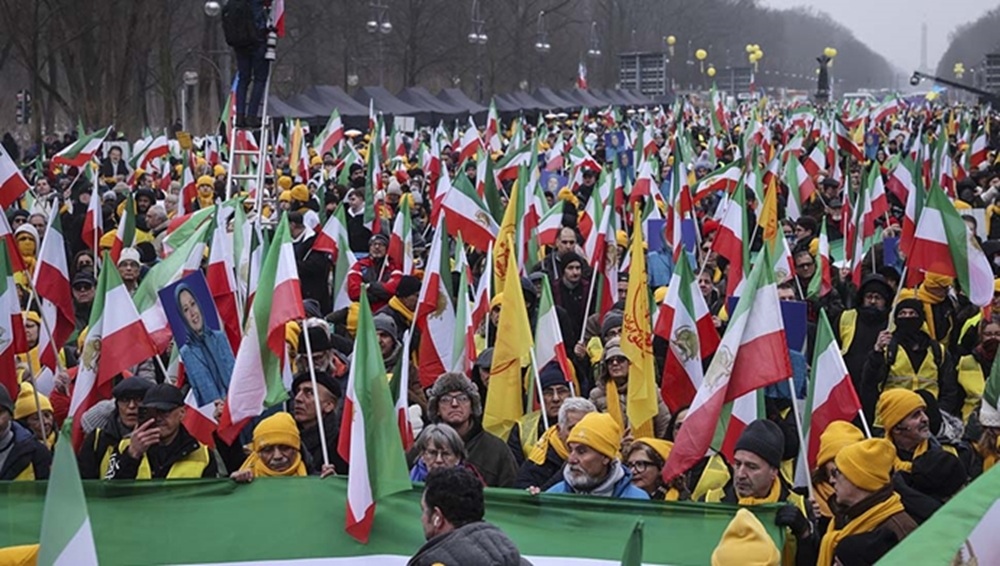
The former defense minister further points to the June 20 Iranian opposition gathering in Paris, expected to draw tens of thousands of participants, as evidence that many Iranians continue to seek democratic change and reject what he characterizes as a false choice between dictatorship and war.
Jung concludes that Europe’s greatest mistake would be to interpret the regime’s apparent stability as genuine strength, arguing instead that the Islamic Republic remains deeply vulnerable despite surviving recent military confrontation.