

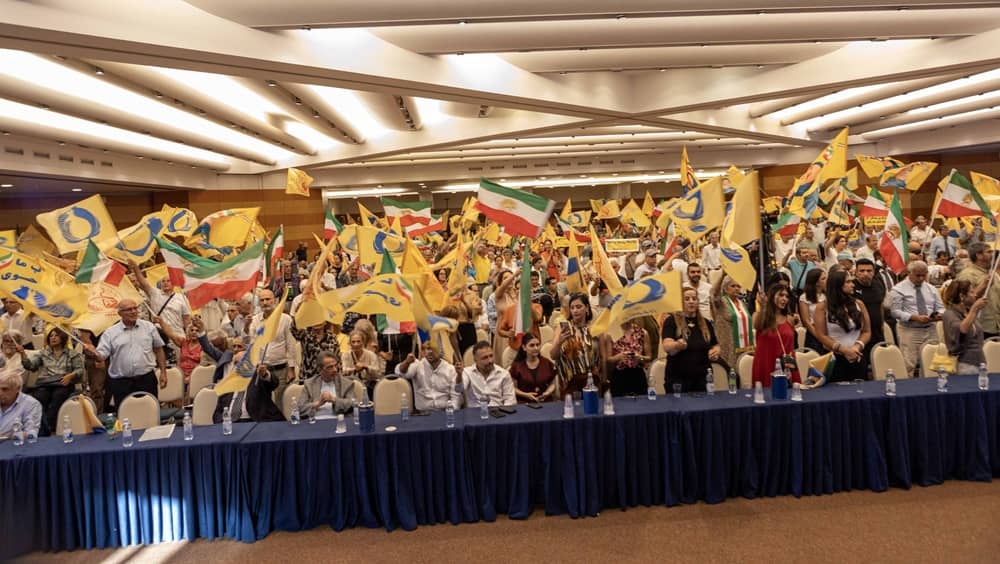
Thousands of Iranians and supporters gathered in Rome, Italy, to support a democratic republic in Iran
THIS PAGE WILL BE UPDATED WITH THE LATEST NEWS
UPDATE: 9:30 AM CEST
Iraq Arrests Suspects in Syria Arms Shipment Case Linked to Hezbollah

BAGHDAD – Iraqi security forces have arrested two men suspected of involvement in a major arms smuggling operation from Iraq into Syria, after Syrian authorities seized a shipment of weapons, missiles and drones allegedly destined for Lebanon’s Hezbollah, Iraqi security sources said on Sunday.
Police in Iraq’s western Anbar province arrested Saleh Mohammed Saleh, identified by security sources as the main suspect in the operation, in the Al-Sufiyah area, according to sources cited by Al Arabiya and Al Hadath.
Authorities also detained a second suspect, identified as Hadi Sallal, along with others suspected of links to the smuggling operation, the sources said. The detainees were handed over to relevant authorities for further investigation and legal procedures.
The arrests followed the seizure by Syrian authorities last week of what they described as a large shipment of advanced weapons hidden inside an oil tanker travelling from Iraq into Syria.
UPDATE: 8:00 AM CEST
Two January Uprising Detainees Executed in Isfahan as 10 More Face Imminent Threat of Death
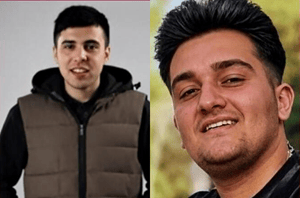
On the morning of Sunday, July 19, 2026, Iranian regime authorities carried out two more political executions, hanging 18-year-old Erfan Esfandiari and 24-year-old Afghan national Gol-Mohammad Mohammadi in Isfahan. Both young men were arrested during the nationwide January 2026 uprising and were executed on fabricated charges of ‘Moharebeh’ (waging war against God) and ‘Efsad-fel-Arz’ (corruption on Earth), as well as the killing of four State Security Force (SSF) officers tasked with suppressing anti-regime protests.
While the regime uses these fast-tracked, state-sanctioned murders in an attempt to project an image of absolute control, these executions are the desperate acts of a terminal dictatorship. They highlight the profound weakness of a regime terrified of its own people and underscore the urgent need for international intervention.
The regime’s own judiciary admitted that the protests at Alikhani Square in Isfahan province, where four SSF officers were killed, occurred “with the aim of overthrowing the system.” The Supreme Court had confirmed the death sentences of 12 protesters tied to this fabricated case on July 5, 2026. In a deceitful move on Saturday morning, July 18, all 12 death row prisoners were taken out of the general ward of Dastgerd Prison under the false pretext of “meeting the case judge.”
Iran: Azam Gerami, 58 and Mother of Three, Executed in Yasuj
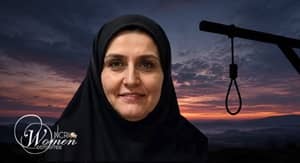
The clerical regime executed another woman at dawn on Saturday, July 18, 2026 at the Central Prison of Yasuj, the capital of Kohgiluyeh and Boyer-Ahmad province, southwestern Iran. The victim was Azam Gerami, 58, and mother of three children. She had been sentenced to death for committing murder eight years ago.
At the time of this report, no official authority or news outlet has announced this execution.With the execution of Azam Gerami at the Central Prison of Yasuj, the number of women executed in the year 2026, reaches 18.According to data recorded by the Women’s Committee of the National Council of Resistance of Iran, at least 346 women have been executed in Iran since 2007.
Many of the women executed by the Iranian regime are themselves victims of domestic violence and discriminatory family laws. A significant number have acted in self-defense.
Since Masoud Pezeshkian took office, the clerical regime has executed more than 3,920 prisoners, including 106 women.
Iran’s Deepening Internal Fractures: Why the Regime Faces a Growing Crisis of Survival
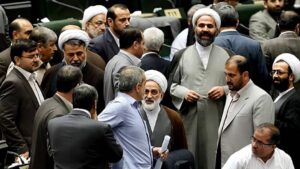
The increasingly visible divisions within Iran’s regime are not merely the result of personal rivalries or factional competition. Rather, they reflect a deeper structural crisis that has been building for years and has intensified amid mounting economic, social, and political pressures.
As disagreements among senior officials become more public, two fundamental questions emerge: Why has the regime become so vulnerable to internal fragmentation, and why has it proved unable to contain these divisions?
Two interconnected factors help explain the current situation. The first is the growing readiness of Iranian society to resume nationwide uprisings. The second is the erosion of the Supreme Leader’s traditional dominance over the political system—an issue that has become even more acute following the disputed succession of Mojtaba Khamenei.
The roots of today’s instability lie in the long-standing conflict between Iranian society and the regime. Decades of political repression, widespread human rights abuses, and unresolved economic grievances have created structural tensions that continue to deepen.
The 1988 Massacre Began Before the Fatwa: How Iran’s Regime Prepared the Execution of Political Prisoners

Thirty-eight years after the 1988 massacre of political prisoners in Iran, mounting documentary evidence and survivor testimonies continue to challenge the long-held narrative that the killings were merely a sudden response to military or political events during the final weeks of the Iran-Iraq war.
Instead, the available evidence points to a carefully orchestrated campaign that had been under preparation for months. Long before the executions began in the summer of 1988, the regime had already initiated a systematic process of identifying, classifying, and physically reorganizing political prisoners to facilitate what would become one of the largest mass executions of prisoners in modern Iranian history.
Rather than an improvised decision, the massacre appears to have been the culmination of a coordinated security, intelligence, and judicial operation. The first stage of the operation began during the autumn and winter of 1987. According to survivor accounts and historical documentation, special committees consisting of Intelligence Ministry interrogators and prison judicial officials distributed detailed questionnaires and conducted mandatory interrogations in prisons across Iran.
Resistance Units Expand Anti-Repression Campaign Across Iran, Promote Democratic Alternative
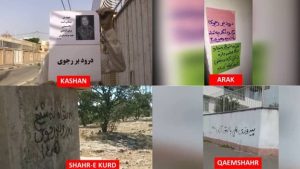
The PMOI’s Resistance Units have carried out a new wave of anti-repression activities across Iran, demonstrating the continued presence of organized resistance despite the regime’s extensive security apparatus. The coordinated campaign included slogans, graffiti, banners, and symbolic actions in numerous cities, conveying messages in support of freedom, democratic change, and the organized Resistance. The latest activities came as the regime continues to tighten security following recent political developments. Rather than silencing dissent, however, the Resistance Units sought to project a message that the struggle for a democratic Iran continues with renewed determination.
Resistance Units reported approximately 40 revolutionary actions in cities throughout the country, including Tehran, Isfahan, Mashhad, Shiraz, Kermanshah, Zahedan, Sari, Shahin Shahr, Gorgan, Rasht, Arak, Borujerd, and Hamedan.
In Tehran, activists displayed the emblem of the PMOI and banners praising the Resistance leadership while expressing support for the National Liberation Army. Similar messages appeared in several other cities, emphasizing opposition to the doctrine of Velayat-e Faqih and calling for democratic change.
U.S. Central Command (CENTCOM) Reports Eighth Consecutive Night of Attacks Against IRGC
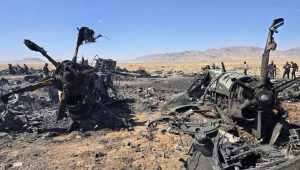
U.S. Central Command (CENTCOM) announced early Sunday, July 19, that the eighth consecutive night of U.S. strikes against targets in Iran had concluded. According to CENTCOM, the operation was carried out in response to an attack on Friday night that killed two U.S. service members in Jordan.
CENTCOM said that in this latest round of strikes, units of the Islamic Revolutionary Guard Corps (IRGC) that, according to the command, were involved in directing the missile and drone attack against U.S. forces in Jordan were targeted. The command also stated that, in addition to the two service members killed, one U.S. soldier remains missing.
According to the CENTCOM statement, the purpose of the strikes was to degrade the Iranian regime’s ability to threaten commercial shipping in the Strait of Hormuz and to respond to the recent attack against U.S. forces.
12 Death Row Prisoners Transferred to Solitary Confinement at Dastgerd Prison in Isfahan
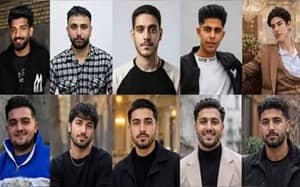
Following the transfer of 14 prisoners to solitary confinement at Dastgerd Prison in Isfahan, concerns have intensified over the imminent execution of at least 12 of them. Informed sources have warned that the executions could be carried out within the next 48 hours.
According to published reports, on Saturday, July 18, 14 prisoners were transferred from the general wards of Dastgerd Prison to solitary confinement. Of these, 12 are death row prisoners in the case known as the “Alikhani Square Isfahan” case. Their death sentences, after being upheld by Iran’s Supreme Court, have been forwarded to the Enforcement Office of the Isfahan Revolutionary Court for implementation.
Knowledgeable sources say that transferring these prisoners to solitary confinement, which is typically one of the final stages before executions are carried out in Iranian prisons, has significantly increased the likelihood that the sentences will be implemented in the coming days.
Save Masoud Jamei, a Political Prisoner Facing a Double Death Sentence in Iran
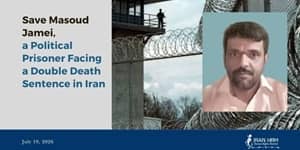
Amid an escalating wave of repression and executions in Iran, the case of Masoud Jamei has become one of the most alarming examples of using the death penalty to silence dissenters and political prisoners. As the number of executions across the country continues to rise, death-row prisoners in Qezel-Hesar Prison have put their lives on the line through hunger strikes and the chant of “No to Execution.” Simultaneously, recent political executions demonstrate that the apparatus of repression deploys death sentences not as justice, but as a tool of intimidation and social control. In this climate, saving the life of Masoud Jamei is an urgent humanitarian demand.
Masoud Jamei (Bavi), 50, is a citizen belonging to the Arab minority of Iran from the village of Shakh-Kopal in the suburbs of Ahvaz. He was arrested by security forces on August 1, 2023. Following interrogation, he was transferred to Sheiban Prison in Ahvaz. Masoud Jamei is married, a father of four, and was employed in the oil sector prior to his arrest.
Mojtaba Khamenei: US Presidential Signatures are ‘Valueless and Invalid’
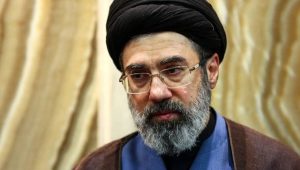
TEHRAN — In the wake of the death and funeral services of the former Supreme Leader of the Islamic Republic of Iran, Seyyed Mojtaba Hosseini Khamenei has issued an official and solemn statement outlining the country’s future political roadmap. Taking a hardline stance against the United States, Khamenei called for total solidarity on the domestic front. Issued during Iran’s ongoing political transition, the message sends critical signals regarding Tehran-Washington relations and how internal dissent will be managed moving forward.
A major portion of the statement is dedicated to a fierce critique of United States foreign policy, accusing Washington of systemic bad faith. Pointing to previous diplomatic arrangements, Mojtaba Khamenei accused Washington of routinely reneging on its commitments, writing: “The Great Satan’s repeated breaches of trust regarding the memorandum of understanding signed between the presidents of Iran and the US have once again proven to everyone just how worthless and invalid a US president’s signature truly is.”