

THIS PAGE WILL BE UPDATED WITH THE LATEST NEWS
UPDATE: 9:00 PM CEST
Iranian Regime Sentences Another Political Prisoner to Death; Exiled Opposition Calls for UN Intervention

The National Council of Resistance of Iran (NCRI), an Iranian opposition group in exile, has denounced a new death sentence imposed on a political prisoner linked to the People’s Mojahedin Organization of Iran (PMOI/MEK). The prisoner is Isa Chari, a 37-year-old worker and father of two, who was convicted on charges of membership in the PMOI/MEK, an organization designated as “terrorist” by the regime in Tehran.
The death sentence was handed down by Judge Mohammad Mehdi Shahmirzadi of Branch 23 of the Tehran Revolutionary Court. Chari had been arrested in December 2025.
According to the NCRI, during that period the Mehr News Agency, which is affiliated with the regime’s Ministry of Intelligence, reported the arrest of an individual for activities against national security and alleged links to “expatriate movements,” but did not disclose the person’s name or specify the organization to which he allegedly belonged.
Exiled Iranian Opposition Movement Denounces New Death Sentence Against Political Prisoner

Paris, July 25 (EFE) – The National Council of Resistance of Iran (NCRI), an Iranian opposition group in exile, denounced on Saturday a new death sentence imposed on a political prisoner linked to the People’s Mojahedin Organization of Iran (PMOI/MEK), which is affiliated with the NCRI.
According to a statement issued by the organization, the prisoner is Isa Chari, a 37-year-old worker and father of two, who was convicted on charges of membership in the People’s Mojahedin Organization of Iran (PMOI/MEK), an organization designated as terrorist by the regime in Tehran.
The sentence was handed down by Judge Mohammad Mehdi Shahmirzadi of Branch 23 of the Tehran Revolutionary Court. Chari had been arrested in December 2025.
According to the NCRI, around that time the Mehr News Agency, which is affiliated with the regime’s Ministry of Intelligence, reported—without disclosing his name or specifying his organizational affiliation—that an individual had been arrested for activities against national security and alleged links to “expatriate movements.”
UPDATE: 5:30 PM CEST
Final Message of Executed Mehdi Hanaki: “Women Will Liberate Iran”

In a farewell video released after his execution, Mehdi Hanaki spoke about the massacres carried out against the Kurdish people and the repression of women, stating that Iran’s liberation would only be possible through the resistance of women.
On July 22, 2026, Iran’s clerical regime executed Mehdi Hanaki, a 26-year-old law graduate and member of the People’s Mojahedin Organization of Iran (PMOI/MEK). Hanaki was arrested in February 2026 during the nationwide mass protests. After being subjected to severe torture, he was sentenced to death on charges of membership in the PMOI and active participation in the protests.
The PMOI described Hanaki’s execution on July 22 as part of the Iranian regime’s escalating campaign of political repression and torture.
A notable aspect of the case was the unusually swift pace of the judicial process. According to published reports, PMOI member Mehdi Hanaki was arrested on February 10, 2026, and executed on July 22, 2026. The reports also state that Hanaki was subjected to severe torture following his arrest.
UPDATE: 1:30 PM CEST
Iran: Crackdown On Human Rights Intensifies with Surge in Executions

ARTICLE 19 condemns the recent surge in executions across Iran.
In June alone, 109 individuals, including three women, were executed – a 10% increase from the same time last year. Since the outbreak of conflict with Israel and the United States, more than 50 individuals have reportedly been executed on charges related to the January protests, raising serious concerns that the regime is exploiting the conflict to justify executions and spread fear among the Iranian population, and that the death penalty is being used as a tool of political repression.
Alarmingly, out of the 109 executions carried out in June, only 7 have been officially announced, likely obscuring the true scale of the authorities’ use of the death penalty. In at least 12 cases, families were not informed prior to the execution, denying them the opportunity for a final visit.
At least five individuals were executed last month on political charges, including espionage, following their detainment during the January protests. Three men, Ashkan Maleki, Mehrdad Mohammadinya, and Arman Ma’refati, were tried in a joint case, charged with Moharebeh (enmity against God), and were sentenced to death. Human rights organisations report that security forces used torture to elicit the confessions upon which sentences were determined, and the individuals were prevented from appointing their own legal counsel. Ashkan Maleki and Mehrdad Mohammadinya were executed on June 1 in Karaj, while the current status of Arman Ma’refati is unknown.
UPDATE: 11:00 AM CEST
32 Former Senior Officials Endorse a Democratic Republic in Iran

June 17, 2026 — As Americans who have served the national interests of the United States, we stand united in solidarity with the millions of Iranians who seek an end to the nightmare of repression, economic deprivation, and lies imposed by morally corrupt clerics since the 1979 revolution.
This regime has one priority, which is to survive in power, no matter the cost in lives and economic sacrifices by the Iranian people. Decades of prolific executions at home with no due process and destabilizing meddling in other countries have left no doubt that Iran under the fascist clerics can never follow a path of benign governance and trusted cooperation with other countries.
Americans are united in their opposition to Iran’s unrelenting terrorism, executions, hostage takings, cyber-attacks, threats of assassination, and support of armed militias inside and outside their sovereign territory. Iran’s longstanding nuclear enrichment program is an unacceptable threat and must end; as our political leaders irrespective of party have vowed for years, Iran must not be allowed to have a nuclear weapon.
UPDATE: 7:30 AM CEST
Iran’s Regime Sentences 22-Year-Old Student to Death Amid Surge in Political Executions

The Iranian regime’s judiciary has sentenced 22-year-old political prisoner and accounting student Amir Hassan Akbari-Monfared to death. Currently held in Evin Prison, he was charged with “rebellion (Baghi) through contact with the People’s Mojahedin Organization of Iran (PMOI/MEK).”
This retaliatory sentence was issued by Branch 15 of Tehran’s Revolutionary Court, presided over by the notorious executioner Abolqasem Salavati. The ruling was issued solely due to Akbari-Monfared’s family relationship with martyred PMOI member Farshid Asadi, in connection with the “Abdar-chi” case and the elimination of regime executioners Ali Razini and Mohammad Moghiseh.
Amir Hassan was violently arrested on January 19, 2025, just a day after the elimination of Razini and Moghiseh. Heavily armed intelligence agents raided his home in Tehran, physically assaulting him before dragging him away. In Ward 209 of Evin Prison, he was subjected to severe torture to extract forced confessions. Following the bombing of Evin, he was moved to Fashafouyeh Prison before being returned to Evin.
Iran: Over 300 Women Held in Extreme Heat in Ahvaz Sepidar Prison

Reports from the women’s ward of Ahvaz Sepidar Priso n describe critical and inhumane conditions for female prisoners. Severe overcrowding, the absence of cooling systems, poor sanitation, and extensive restrictions have made daily life increasingly difficult for those held in the facility.
Approximately 302 women are currently detained in the prison’s women’s ward. Seven young children, including two infant girls, are also living in the ward alongside their mothers under the same inadequate conditions.
At least 15 women in the ward are living with serious contagious diseases, including hepatitis and HIV. Reports of self-harm among some prisoners have raised concerns about the potential transmission of these illnesses to other inmates, particularly the children housed in the ward.
According to one prisoner, temperatures in Ahvaz have exceeded 50 degrees Celsius, while women in the ward have been left without even basic cooling facilities. The air conditioning units serving Wards 5 and 6 are out of service, and frequent power outages have further worsened conditions. The prisoner said the prison is included in scheduled electricity cuts, with repeated outages placing additional strain on inmates confined to an overcrowded space.
Factional Infighting Erupts at the Top of Iran’s Regime as Disputes Over U.S. Talks and Security Crisis Deepen
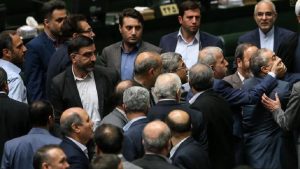
As Iran’s political and military crises continue to intensify, public infighting among the regime’s rival factions has become increasingly visible. Statements by senior IRGC commanders, members of parliament, government officials, and state-controlled newspapers reveal widening disagreements over negotiations with the United States, the Strait of Hormuz, and the regime’s handling of growing internal and external challenges.
The latest exchanges demonstrate that the ruling establishment is struggling not only with mounting domestic unrest but also with deepening divisions over how to respond to escalating pressure.
On July 22, Brigadier General Abolfazl Shekarchi, spokesperson for the regime’s Armed Forces, accused advocates of negotiations with the United States of serving enemy interests.
He claimed that the regime’s enemies were attempting to create divisions among officials and alleged that individuals whose “hopes and aspirations lie with America and the West” had “come out of their hiding places” to undermine national unity.
Iran Crown Prince’s Phantom Army of The Revolutionary Guard Defectors Exposed
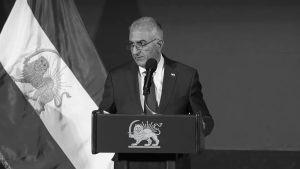
For years, Reza Pahlavi has presented contacts inside Iran’s military and security establishment as a central pillar of his strategy for political transition. Rather than describing these as occasional anonymous messages, he spoke at various times of daily contact with military “representatives,” telephone calls, faxes, a secure defection platform, “large sections” of the security forces signaling loyalty, and ultimately over 160,000 applicants.
Yet in a Reuters interview recorded on July 14, 2026, just one day after the British government announced that the Islamic Revolutionary Guard Corps would be outlawed under newly enacted state-threat legislation, Pahlavi offered a starkly different account. He denied ever communicating with the Guard’s senior command, claiming his earlier references merely concerned individual members who discreetly contacted him via social media direct messages.
That attempt to whitewash his long-standing boasts collapses under basic technical scrutiny: Pahlavi’s X account settings restrict direct messaging to only 66 approved accounts. As a result, the public at large, and specifically members of the Basij and the Guard operating under strict digital surveillance inside Iran, cannot DM him.
PMOI Resistance Units Renew Their Pledge After Execution of Mehdi Khanaki with Nationwide Acts of Defiance
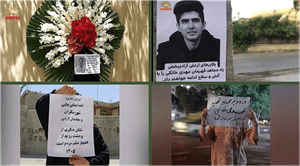
In the days following the execution of PMOI member Mehdi Khanaki, Resistance Units and supporters of the Iranian Resistance carried out coordinated activities across numerous cities, honoring his memory and reaffirming their determination to continue the struggle against the Iranian regime. The commemorative actions took place in Tehran, Karaj, Mashhad, Shiraz, Kermanshah, Bandar Abbas, and Ahvaz, reflecting the continued presence of organized resistance despite an escalating campaign of executions.
The nationwide campaign came after the regime executed Khanaki, an act that Resistance supporters describe as another attempt to intimidate political opponents amid growing domestic unrest. Through slogans, floral tributes, and public messages, participants emphasized that executions would not deter the movement and instead strengthen their resolve.
Resistance Units dedicated their activities to honoring Khanaki’s steadfastness under imprisonment and his refusal to renounce his beliefs despite severe pressure and torture.
In Tehran, activists displayed messages paying tribute to Khanaki, including:
“Salute to PMOI martyr Mehdi Khanaki, who was executed today.”
Ghezel Hesar Hunger Strike Enters 12th Day as Prisoners’ Health Deteriorates Amid Execution Protests

The mass hunger strike by approximately 1,500 death row prisoners in Iran’s Qezel Hesar Prison has entered its twelfth consecutive day, with growing concerns over the prisoners’ deteriorating health and continued refusal by prison authorities to address their demands.
According to reports received from inside the prison, the protest began in response to the Iranian regime’s accelerating use of the death penalty and the continued transfer of prisoners for execution. The striking inmates are demanding an immediate halt to executions, respect for the fundamental right to life, and a fair review of their cases.
A newly released video from Unit 2 of Qezel Hesar Prison shows a group of prisoners gathered in a prison corridor holding handwritten signs reading “No to Executions.” The footage demonstrates that, despite nearly two weeks without food, many participants remain committed to continuing their protest until their demands are met.
The hunger strike, which began in Unit 2 and has involved around 1,500 prisoners sentenced to death, has become one of the largest coordinated prison protests against executions in recent years.
Power Outages Plunge Iran into Darkness

Amid wartime conditions, the Iranian regime has imposed widespread power outages on citizens and manufacturers while dramatically increasing energy costs. People across the country are struggling with financial losses caused by fluctuations in the power grid. Industries are also facing production shutdowns and sharply rising costs due to energy shortages. Meanwhile, electricity is being sold on Iran’s Energy Exchange at prices four times higher than the standard rate.
On July 20, Abbas Aliabadi, the Iranian regime’s energy minister, said: “We are currently in an exceptional situation, and unauthorized electricity consumption and cryptocurrency miners have added to the demand. Areas affected by the war are the priority for electricity supply, but some cities are not involved, and we must be careful.”
These remarks come as public dissatisfaction with the power grid has reached a peak. For example, a resident shared a video reporting three separate outages in the city of Fardis, near Karaj. The repeated fluctuations caused power cuts in Fardis and neighboring areas, damaging household electrical appliances.
Thirteenth Night of CENTCOM Strikes; Southern, Western, and Central Iran Under Fire
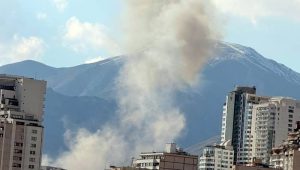
The U.S. Central Command (CENTCOM) announced early Friday, July 24, the conclusion of the thirteenth consecutive night of military operations against targets in Iran. This latest wave of strikes expanded beyond the southern coastal regions to include parts of western and central Iran.
CENTCOM said in a statement that the latest wave of strikes targeted military command centers, drone storage facilities, communications networks, coastal surveillance centers, and Iran’s naval capabilities. According to the command, the objective of the operation was to reduce threats posed by the Iranian regime against civilian mariners and commercial vessels transiting the Strait of Hormuz.
CENTCOM also stated that despite the recent strikes and military tensions, the Strait of Hormuz remains open to commercial shipping and that vessels continue to transit the strategic waterway freely with the support of U.S. forces.
Tracing $100 Million Worth of Properties Attributed to Mojtaba Khamenei
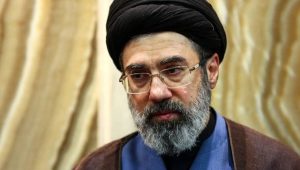
The U.S. government has announced the launch of a new phase in identifying the hidden wealth of senior leaders of the Iranian regime. U.S. Treasury Secretary Scott Bessent said that the financial manager of Mojtaba Khamenei, the son of Iranian regime supreme leader Ali Khamenei, has been identified, and Treasury officials are now investigating a network of his properties and assets around the world.
According to Bessent, the identified properties are worth more than $100 million, and Washington hopes to soon release complete information, including the locations of these assets.
This financial operation is being carried out as part of the campaign known as “Economic Wrath,” which aims to cut off the Iranian regime’s financial lifelines by freezing accounts, identifying overseas assets, and intensifying pressure on the regime’s oil revenues.