

THIS PAGE WILL BE UPDATED WITH THE LATEST NEWS
UPDATE: 12:00 PM CEST
Serial Executions in Iran Under the Shadow of War
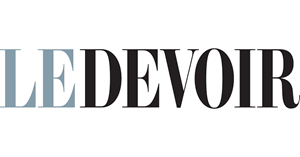
Vahid Baniamerian’s family learned of his imminent execution through the media. The physics teacher, who was hanged in early April, was among dozens of political prisoners who, according to human rights organizations, have fallen victim to the Iranian regime’s crackdown since the outbreak of the war with the United States.
“They were confronted with a fait accompli. Even the lawyer didn’t know,” one of his relatives, speaking to AFP from abroad on condition of anonymity, said, describing him as “a humble and gentle person who always wanted to help.”
He had been sentenced on appeal in late December 2025, and his family was awaiting a ruling from the Supreme Court when the execution was carried out.
“It was completely illegal, even under their own repressive laws,” the relative added.
The 34-year-old was sentenced to death along with five other defendants on charges of membership in the People’s Mojahedin Organization of Iran (PMOI/MEK), an opposition group banned in Iran. All six have since been executed by hanging.
UPDATE: 9:00 AM CEST
Iran’s Regime Sentences Political Prisoner Isa Chari to Death Amid Surging Crackdown on Dissidents
The clerical regime in Iran has sentenced political prisoner Isa Chari, an oppressed 37-year-old laborer, to death, marking the latest atrocity in its escalating crackdown on dissidents. A father of two young children and of Baluch origin, Chari worked at a poultry farm in Varamin to earn a living.
The criminal death sentence was issued by Judge Mohammad Mehdi Shahmirzadi in Branch 23 of Tehran’s Revolutionary Court on fabricated charges of membership in the People’s Mojahedin Organization of Iran (PMOI/MEK) and “committing anti-security measures.”
Arrested in Varamin on December 7, 2025, Chari has been held in solitary confinement in Ward 35 of Ghezel Hesar Prison. For seven months, the regime completely bypassed its own customary judicial and legal procedures, leaving his family entirely in the dark until his sudden transfer.
On December 23, 2025, the Ministry of Intelligence-affiliated Mehr News Agency reported his arrest without naming him, dubiously labeling him an “insecurity-causing element affiliated with expatriate currents” caught by IRGC intelligence forces.
Iran Escalates Death Sentences Against January 2026 Protesters as Executions Intensify
The Iranian regime has entered a new phase of judicial repression, dramatically accelerating the issuance and implementation of death sentences against those arrested during the January 2026 nationwide uprising. As executions continue to rise across the country, Isfahan Province has emerged as the principal center for capital prosecutions targeting anti-regime protesters.
More than 50 protesters have reportedly been executed since the uprising began. However, following the regime’s bloody crackdown—which claimed the lives of tens of thousands of demonstrators according to opposition sources—the campaign of executions has intensified further, signaling an apparent effort to extinguish any remaining momentum for public dissent through fear and intimidation.
The most alarming developments are unfolding in Isfahan, where multiple high-profile cases have placed dozens of detainees at imminent risk of execution.
One of the largest is the so-called Shohada Square case, involving 16 protesters charged with offenses including moharebeh (“waging war against God”) and complicity in moharebeh—charges frequently used by the regime to prosecute political opponents.
Economic Anger Mounts Across Iran as Protests Spread During Late July
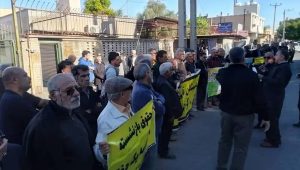
During the last week of July 2026, demonstrations continued across Iran as retirees, workers, housing applicants, and other social groups protested worsening economic conditions, inflation, corruption, and what they described as systematic government plunder.
The protests, which took place in numerous cities, reflected the growing frustration of ordinary Iranians facing declining living standards while accusing the regime of prioritizing corruption and repression over addressing the country’s deepening economic crisis.
Among the ongoing protests, applicants to the government’s National Housing Movement in Arak maintained their sit-in, criticizing authorities over prolonged delays in construction projects and the failure to deliver promised housing units.
Participants also denounced what they described as official mismanagement that has left thousands of families in uncertainty despite repeated promises from government officials.
Resistance Units Mark Operation Eternal Light Anniversary with Nationwide Campaign Across Iran
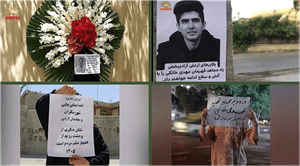
On July 25, marking the anniversary of Operation Eternal Light (Forough Javidan), Resistance Units carried out a coordinated series of commemorative activities across Iran. The nationwide campaign included memorial ceremonies, flower-laying tributes, poster and leaflet installations, photo actions, and public displays honoring those who lost their lives during the operation while reaffirming the continued struggle for a free and democratic Iran.
The coordinated actions stretched across the country, demonstrating the organizational reach of the Resistance Units despite the regime’s extensive security apparatus. Throughout the campaign, participants displayed messages emphasizing freedom, equality, resistance, and remembrance of the operation’s fallen members.
The most symbolic commemoration took place in Kermanshah, where Resistance Units laid flowers at the site associated with those who fell during Operation Eternal Light.
One participant described the historic significance of the location, saying the surrounding land still bears witness to the courage of the men and women of the National Liberation Army who fought “with hearts filled with love for the Iranian people and their homeland.”
What Makes a Credible Democratic Alternative for Iran?
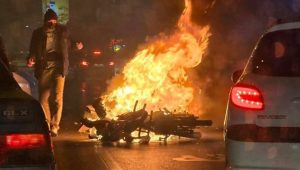
The question of Iran’s political future has become increasingly urgent as the country’s multiple crises deepen and public dissatisfaction continues to grow. While many observers agree that the current regime faces mounting internal and external pressures, an equally important question remains: what kind of political alternative is capable of leading Iran through a democratic transition?
History has repeatedly shown that the collapse of authoritarian systems alone does not guarantee democracy. A successful transition requires a credible alternative with the organization, legitimacy, and practical capacity to replace dictatorship with democratic governance.
Three fundamental characteristics define such an alternative.
Any movement seeking democratic change in Iran must first demonstrate that it is prepared to confront the regime’s principal instrument of repression: the Islamic Revolutionary Guard Corps (IRGC).
For decades, the IRGC has functioned as far more than a military organization. It has become the backbone of the regime’s political control, economic influence, intelligence operations, and suppression of dissent. As a result, meaningful political change cannot occur without challenging the institution that safeguards the regime’s survival.
Iranian Regime Official Killed While Preparing to Suppress Protests
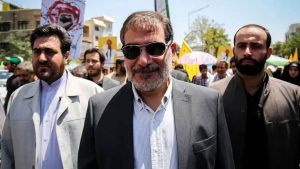
The state-run Nour News, a media outlet close to the slain Ali Shamkhani, revealed that the meeting in which he and several senior Iranian regime military commanders were killed on the first day of the 40-day war had been convened, among other purposes, to follow up on a new plan aimed at organizing forces and procuring new equipment to confront protests.
The outlet wrote on Friday, July 24, that one of the two agenda items for the morning meeting on February 28, 2026, was to follow up on the implementation of the plan for “organizing resources, structures, personnel, and procuring new equipment for managing unrest.” The second agenda item was reportedly to examine the imminent possibility of a U.S. and Israeli attack on Iran.
According to Nour News, the plan was drafted after the widespread January protests, and Ali Khamenei, the former supreme leader of the Iranian regime, had approved its implementation and emphasized accelerating its execution.
Saudi-Led Coalition Bombs Hodeidah Port Are in Escalation of Clashes with Tehran-Backed Houthis
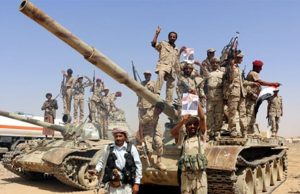
Yemen’s Houthis announced on the morning of Saturday, July 25, that they had carried out a missile attack on Saudi Arabia, just hours after Saudi Arabia targeted the group’s positions in response to Houthi attacks on Saudi vessels.
The attacks came several days after the Iranian regime-backed Houthis announced the imposition of a “naval blockade” against Saudi Arabia and subsequently attacked two Saudi oil tankers in the Red Sea.
The escalation has heightened concerns about the opening of a new front in the regional conflict and further disruptions to global oil shipping routes.
The Houthi-affiliated Ansar Allah media outlet reported early Saturday that a “missile attack” had caused a fire in the city of Jizan in southern Saudi Arabia on the Red Sea coast.
Saudi Arabia has not yet confirmed the claim. However, the Saudi Civil Defense Authority briefly warned residents of Jizan and Yanbu early Saturday of a “potential danger” before canceling the alerts a few minutes later.
Iranian Regime Replaces Essential Goods with Non-Essential Items in Subsidized Voucher Program

Peyman Falsafi, a member of the Iranian regime’s Majlis (parliament), said the government, instead of increasing the rial value of the electronic subsidy voucher, has expanded the number of eligible products from the original 11 items to dozens of products, to the point that even pizza cheese and, “in some places, bottled water is also offered.”
Falsafi, a member of the Majlis Agriculture Committee, told the state-run ILNA news agency on Saturday, July 25, that rising prices for red meat, chicken, and dairy products have forced some households to remove these goods from their shopping baskets, while non-essential items have taken a larger share of purchases made with the subsidy voucher.
The remarks come as the monthly voucher credit remains at 1 million tomans (10 million rials, approximately $5.20) per person. However, according to calculations based on official prices published by the Statistical Center of Iran, the cost of purchasing the program’s original basket of 11 essential goods had reached about 5.4 million tomans (54 million rials, approximately $28.40) per person in June.
Unbridled Suppression by the Islamic Republic of Iran Against Political Prisoners

Since the outbreak of war between Iran and the United States on February 28, 2026, at least 48 political executions have been carried out by Iran to date. Most recently, 5 political prisoners named Mohammad Amini-Dehaqani, Aref Khoshkar, Erfan Esfandiari, Gol-Mohammad Mohammadi, and Mehdi Khanki—the first four being arrested protesters and the last a member of the People’s Mojahedin Organization of Iran (PMOI/MEK)—were executed within a one-week period from July 15 to 22, 2026. Even more painful than the executions themselves is the extent of inaction by the international community in attempting to halt them; no tangible material action has been taken. This global inaction has emboldened the Islamic Republic, and now this unbridled suppression has accelerated across various other fronts against political prisoners—an acceleration to which the free world, regrettably, has given a green light.
The Islamic Republic, as with many other executed political prisoners, refused to hand over the bodies of Erfan Esfandiari, 18, and Gol-Mohammad Mohammadi, 23, to their families and buried them secretly. The hanged body of Erfan Esfandiari was buried in a desert area around Buin Miandasht in Isfahan Province next to two other unmarked graves. Erfan Esfandiari’s family traveled for about four hours to reach their son’s burial site and were permitted to stay at his grave for only about five minutes to bid their final farewells.
Gulf Tanker Attacks Shatter Shipping Truce as Iran Faces Mount Economic Pressures
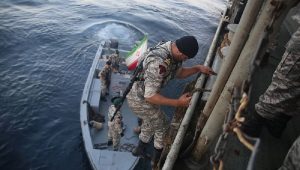
DUBAI/WASHINGTON — A spate of missile and drone strikes targeting commercial oil tankers near the Strait of Hormuz has shattered a weeks-old diplomatic memorandum of understanding, threatening a broader conflict in the Persian Gulf and intensifying socio-economic pressures inside Iran.
The strikes—attributed by Western intelligence and maritime monitors to Iranian forces, though Tehran cites uncoordinated foreign ship transits—effectively ended the short-lived June truce framework intended to keep shipping lanes open while nuclear talks proceeded.
At the center of the diplomatic dispute are two immovable international demands: unconditional freedom of navigation through a waterway handling one-fifth of global oil shipments, and verified limits ensuring Iran’s nuclear infrastructure is strictly civilian. International bodies, including the United Nations International Maritime Organization (IMO), have warned that repeated disruptions pose a severe risk to global trade.
Hamburg Rally Honors PMOI Martyrs and Protesters, Condemns Executions in Iran
Hamburg, Germany – July 24, 2026: Supporters of the People’s Mojahedin Organization of Iran (PMOI/MEK) held a rally and photo exhibition honoring members of the organization and protesters killed during Iran’s January uprising. The event highlighted the recent execution of PMOI member Mehdi Khanaki and commemorated the first anniversary of the executions of PMOI members Mehdi Hassani and Behrouz Ehsani, paying tribute to their sacrifice and resistance against the Iranian regime.

Participants highlighted the Iranian people’s ongoing struggle against the ruling regime and called on the German government to take immediate action to halt executions in Iran. They strongly condemned the regime’s use of capital punishment, describing it as a blatant violation of human rights.