

THIS PAGE WILL BE UPDATED WITH THE LATEST NEWS
UPDATE: 3:00 PM CEST
Norwegian Teenager Guilty of Travelling To UK To Carry Out Contract Killing

A Norwegian teenager has been found guilty of travelling to England to carry out a killing ordered by an international crime gang linked to Iran.
Johannes Kongsnes Natland, 19, from Stavanger, Norway, agreed to shoot an unknown person for €25,000 (£21,500) in March last year. Two days after he arrived in the UK armed police arrested him in a hotel room in Huddersfield, West Yorkshire, seizing two guns and ammunition. After deliberating for 17 hours and six minutes, a jury at the Old Bailey found him guilty of conspiracy to murder following a retrial. Natland blinked but did not visibly react to the verdict. Mrs Justice Cheema-Grubb remanded him into custody to be sentenced in October.
Natland, who worked part-time in a pizza restaurant, was recruited by the Foxtrot Network, a Swedish organised crime group with links to the Iranian government. Natland told jurors he agreed at first to the murder plot in exchange for money to pay for drugs, thinking it was just a “joke” or “scam”.
UPDATE: 12:00 PM CEST
Maryam Rajavi’s Visit to Rome Renews Focus on Human Rights in Iran
The recent official visit to Rome by Maryam Rajavi, President-elect of the National Council of Resistance of Iran (NCRI), has brought renewed political and institutional attention to the grave human rights situation in Iran and the responsibilities of European diplomacy. Invited by parliamentary bodies and political foundations, Rajavi spoke at four institutional events held at the Italian Senate, the Chamber of Deputies, and the Luigi Einaudi Foundation, culminating in a high-level international conference. The centerpiece of her visit was an official hearing before the Italian Senate’s Extraordinary Commission for the Protection and Promotion of Human Rights, chaired by Senator Stefania Pucciarelli and broadcast live on the Senate’s WebTV channel. During the hearing, the Iranian opposition leader strongly denounced the regime’s escalating repression, marked by a sharp rise in executions, mass arbitrary arrests, and the torture of dissidents.
Referring to emblematic cases such as the death sentence imposed on Arghavan Fallahi and the recent executions of members of the Resistance Units of the People’s Mojahedin Organization of Iran (PMOI/MEK), Rajavi issued an urgent appeal to the Italian government and parliament to build on Italy’s longstanding leadership in the global campaign against the death penalty by advocating a firm and uncompromising policy within the European Union.
To Keep Pressure on the Iranian Regime, Support the Democratic Opposition
After 47 years in power, Iran’s authoritarian Islamic theocracy is on the verge of complete collapse. For nearly five decades, the regime has been a source of terror and instability, first threatening its own people with systematic repression and the denial of fundamental freedoms, then extending its malign influence across the region and the beyond, undermining peace and security at every turn.
These threats came to a head earlier this year, when Tehran killed an estimated 30,000 participants in a nationwide uprising for democracy, then proceeded to double down on its defiance of world powers that sought a verifiable end to its nuclear ambitions. When war broke out in February and Supreme Leader Ali Khamenei was killed, it was a step in the right direction for Western World powers that had long failed to address the root of the problem, and let the Iranian leadership spread their poison.
Unfortunately, that momentum has not yet been fully translated into a coherent strategy. Recent events have underscored the futility of efforts to reach a durable understanding with Iranian leadership, reinforcing the need for sustained pressure on the regime. Yet while that pressure has increased, some Western governments continue to pursue policies that provide the ruling authoritarian establishment with unnecessary political breathing room. On June 21, French authorities issued an injunction to halt a rally in Paris organized by the National Council of Resistance of Iran less than 48 hours before some 100,000 Iranian expatriates were due to arrive and take part.
Treasury Disrupts Iranian Regime’s Strait of Hormuz Extortion Network
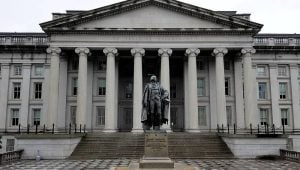
WASHINGTON—Today, the U.S. Department of the Treasury’s Office of Foreign Assets Control (OFAC) is taking further action against the Iranian regime’s desperate efforts to monetize the Strait of Hormuz and prop up the nation’s failing economy. OFAC is designating two firms integral to an Islamic Revolutionary Guard Corps (IRGC)-backed extortion scheme that forces commercial vessels to purchase mandatory maritime “insurance” to transit the Strait. Although this coverage purports to protect vessels from risks such as seizures, these risks are overwhelmingly created by Iran itself. Through the Persian Gulf Marine Insurance Company and HormuzSafe Marine Services Authority, the regime brokers IRGC-approved policies designed to extract revenue under the guise of maritime services, including payments in digital assets to evade sanctions—allowing Iran to tighten control over shipping activity and funnel funds into IRGC operations.
“With its economy in freefall and inflation in the triple digits, the regime is desperate for cash,” said Secretary of the Treasury Scott Bessent. “The United States will not allow Iran to hold global commerce hostage or use international shipping to finance the IRGC’s terrorism, aggression, and repression.”
UPDATE: 7:30 AM CEST
Defying Executions and Repression, PMOI Resistance Units Carry Out 60 Daring Operations Across Iran
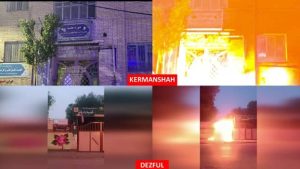
On July 28, PMOI Resistance Units launched a massive wave of anti-regime activities, carrying out 60 daring operations against regime centers of repression and corruption across Iran.
These widespread operations directly challenge the regime’s newly installed supreme leader, Mojtaba Khamenei. As the new dictator attempts to project an aura of power, stability, and unity following his rise to power, the Resistance Units have shattered this illusion. The sheer scale of these operations, which spanned major cities including Tehran, Mashhad, Shiraz, Isfahan, Kermanshah, and Zahedan, demonstrates the nationwide reach, capability, and unwavering resolve of the Iranian resistance.
The timing of these 60 operations is highly significant. They serve as a direct and fearless response to the regime’s desperate attempts to terrorize the public and intimidate the Iranian youth from joining the ranks of the Resistance Units. Recently, the regime executed PMOI member Mehdi Khanaki in a calculated move to instill fear.
Iran’s Resistance Units Honor Fallen PMOI Heroes Behrouz Ehsani and Mehdi Hassani
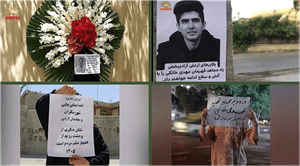
One year after the clerical regime executed political prisoners Behrouz Ehsani and Mehdi Hassani in a desperate act of terror, their legacy continues to inspire a restless population. On July 27, PMOI Resistance Units across Iran mobilized to honor these fallen heroes on the exact first anniversary of their state-sanctioned murder, proving that the regime’s reliance on the gallows has failed to crush dissent.
Defying the regime’s brutal security apparatus, Resistance Units installed flower wreaths and bouquets prominently featuring images of Behrouz and Mehdi in public spaces across the country. These tributes carried powerful messages of resistance. In Tehran and Mashhad, activists displayed messages reading, “Dearest Behrouz, you remain our eternal source of pride.” In Shahr-e Qods, a tribute declared, “Dearest Behrouz, your name and memory remain a guiding light in our hearts.”
In Karaj, a dedicated memorial read, “Dearest Mehdi, your memory will live on forever in our hearts,” while a flower wreath bearing a photo of Behrouz Ehsani was placed at the Behesht-e Sakineh cemetery. Highlighting the deep connection between the martyrs and the broader movement, Resistance Units in Gonbad-e Kavus left a powerful message: “The blood of our martyrs and the suffering of our prisoners converge in you, hero Rajavi.”
State Killing in Iran: 3 Members of a Family Killed in Arbitrary Shooting
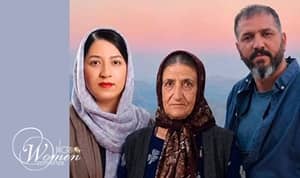
Maryam Aslani, Somayeh Tavakkoli, and Mehdi Tavakkoli were killed in state killing, after being directly targeted in an arbitrary shooting carried out by intelligence forces of the Revolutionary Guard Corps (IRGC) on the Marivan-Baneh road.
Maryam Aslani, her daughter Somayeh Tavakkoli, and her son Mehdi Tavakkoli were killed when IRGC intelligence forces opened direct fire on their vehicle. Mehdi Tavakkoli was a cultural and artistic activist, director of the Kurdistan Photographers House, founder of the Chaw Art Center, and a former political prisoner. The three victims were later buried in Sanandaj under heavy security measures.
On the afternoon of Sunday, July 26, 2026, IRGC intelligence forces opened sustained fire on Mehdi Tavakkoli’s vehicle on the road connecting Marivan and Baneh, two cities in Kurdistan Province.
Mehdi Tavakkoli was killed after being struck by three bullets, Maryam Aslani was killed after being hit by two bullets, and Somayeh Tavakkoli died after sustaining multiple gunshot wounds.
Following the shooting, the victims’ bodies were transferred first to Salah al-Din Ayyubi Hospital in Baneh and were later moved to Sanandaj under the supervision of IRGC intelligence forces. Their funeral took place on Monday, July 27, 2026, at Behesht-e Mohammadi Cemetery in Sanandaj amid a heavy security presence.
Billions Vanish Through Iran’s Sanctions-Evasion Network as Officials Admit Massive Corruption

For years, senior Iranian regime officials dismissed international sanctions as ineffective while portraying them as an opportunity for economic resilience. At the same time, a privileged network of sanctions profiteers amassed enormous fortunes through opaque financial channels established to circumvent banking restrictions.
Now, even the regime’s own officials are acknowledging the staggering scale of corruption. According to recent statements by Zabihollah Khodaeian, head of the State Inspectorate Organization, at least $11 billion belonging to Iran remains in the hands of so-called “trustees”—intermediaries entrusted with handling overseas financial transactions—and more than $1.6 billion of that amount has reportedly been misappropriated.
His remarks offer one of the clearest official admissions yet that billions of dollars in national wealth have disappeared through the very networks the regime created to bypass international sanctions.
As sanctions increasingly restricted the regime’s access to the international banking system, the regime relied on a network of individuals and shell companies known as “trustees” to conduct oil sales and move money outside formal financial channels.
Iran’s Regime Expanding Execution Campaign Reaches New Level
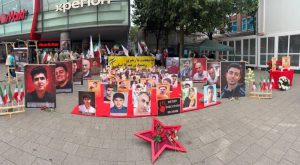
The Iranian regime publicly hanged two young protesters in Isfahan on Tuesday, marking another step in what human rights organizations describe as an accelerating campaign of executions aimed at crushing political dissent and intimidating the public.
Abolfazl Sepahi Badjani, 24, and Amirhossein Safari Hosseinabadi, 27, were executed in Alikhani Square after being convicted in connection with the January 2026 nationwide uprising. Authorities accused them of moharebeh (“waging war against God”), setting fire to a police station, possessing weapons and Molotov cocktails, and involvement in the deaths of four security personnel.
The executions were carried out publicly despite repeated international appeals to halt them and growing warnings that dozens of other political prisoners face the same fate.
The Isfahan executions are only the latest in a rapidly expanding wave of capital punishment targeting protesters and political prisoners.
According to human rights organizations, hundreds of political prisoners and protesters currently face charges that carry the death penalty, while around 100 death sentences have already been issued. One of the most alarming cases involves approximately 70 prisoners in Dastgerd Prison in Isfahan, where dozens remain under sentence of death.
Iran’s Regime Signals New Fuel Price Hike Amid Economic Crisis, Reviving Memories of 2019 Nationwide Protests
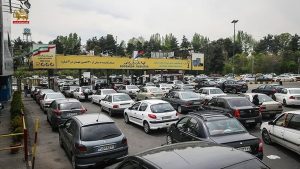
The Iranian regime has begun publicly preparing the ground for another increase in gasoline prices, a move that recalls the 2019 fuel price hike that triggered one of the largest nationwide uprisings in the country’s recent history.
Speaking on July 28, government spokeswoman Fatemeh Mohajerani, representing the administration of President Masoud Pezeshkian, confirmed a reduction in the secondary subsidized gasoline quota from 70 liters to 50 liters per month. She also indicated that the government may raise the price of non-subsidized gasoline in the near future.
Her remarks come as millions of Iranians continue to struggle with soaring inflation, declining purchasing power, and worsening living conditions.
During a press conference, Mohajerani was asked about widespread reports suggesting that the government is considering increasing gasoline prices and reducing fuel quotas.
She stated that no final decision had yet been announced regarding the price of gasoline purchased outside the subsidized quota, but emphasized that any future changes would be made public.
Reza Pahlavi’s Image vs. Reality: What Reuters’ Investigation Reveals About His Leadership Bid
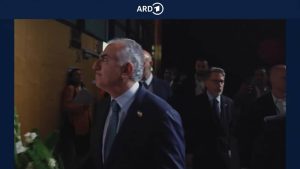
For years, Reza Pahlavi has presented himself as the figure best positioned to guide Iran through a democratic transition. Describing himself as neither a politician seeking office nor a claimant to power, he has instead portrayed himself as a unifying bridge capable of bringing together the country’s fragmented opposition before handing Iran’s future over to its people.
A recent Reuters special report, however, presents a far more complicated picture. Based on interviews with more than 50 people, hundreds of pages of legal documents, and months of reporting across Europe and North America, Reuters examined Pahlavi’s political campaign, his relationships with supporters and critics, and his efforts to establish himself as the leading alternative to the Iranian regime. Rather than reinforcing the carefully cultivated image of a disciplined democratic leader, the investigation documents repeated contradictions between Pahlavi’s public claims and his political record.
The report does not accuse Pahlavi of corruption or criminal conduct. Nor does it argue that he cannot play any role in Iran’s future. Instead, Reuters raises a more fundamental question: whether his record supports the leadership role he increasingly claims for himself.
US, Saudi Arabia Strike Iran Regime-Backed Militias
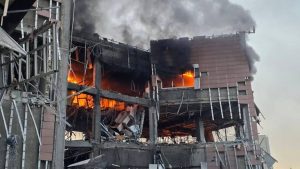
The U.S. military announced that U.S. and Saudi Arabian fighter jets carried out a joint operation early Wednesday, July 29, targeting positions of militias backed by the Iranian regime in Iraq. According to U.S. Central Command (CENTCOM), the strikes were conducted in response to more than 30 drone attacks launched over the previous 72 hours against U.S. forces and Saudi Arabia’s energy infrastructure. CENTCOM said in a statement that the operation targeted terrorists aligned with Iran’s regime—groups that, according to the command, had been directed by the Islamic Revolutionary Guard Corps (IRGC) to attack U.S. forces and Saudi energy facilities.
According to the statement, U.S. and Saudi aircraft carried out precision strikes against multiple logistics centers, weapons depots, and positions belonging to these groups in several areas of eastern Iraq. CENTCOM also emphasized that the recent attacks against U.S. forces had been unsuccessful.
U.S. Central Command stated that Iran-aligned militias had attempted more than 600 attacks against American citizens and facilities between February and April 2026. The command warned that if the attacks continue, the IRGC and its proxy groups will face further military responses from the United States.
Paris Protest Denounces Executions of Political Prisoners in Iran
Paris, July 28, 2026 — Supporters of the People’s Mojahedin Organization of Iran (PMOI/MEK) and the National Council of Resistance of Iran (NCRI) gathered outside the French Foreign Ministry in Paris on July 28 to protest the execution of political prisoners and protesters in Iran, including PMOI memeber Mehdi Khanaki.

The demonstrators also denounced the public hanging of two protesters in Isfahan during the January 2026 uprising and called on the French government to take a firm stance against the Iranian regime’s escalating wave of executions and repression. They urged Paris to close the regime’s embassy, which they described as a center for espionage and terrorism, and demanded the immediate and unconditional release of all political prisoners in Iran.