

Two-minute read
Tehran faces an unprecedented compounding crisis as ongoing military hostilities merge with a severe economic breakdown and social outrage. According to reports published by the Central Bank of Iran in late July 2026, point-to-point inflation spiked to 83.9%, with food item inflation exceeding 100%. Speaking on official state television (IRINN) on July 22, 2026, Interior Ministry spokesman Ahmad Reza Zeinivand admitted the gravity of the crisis, declaring: “We are facing a full-fledged existential war with the most brutal enemies of humanity”. Meanwhile, state media outlets report that parliamentary research foresees the national poverty rate rising above 45% in the near future—an admission that, given the regime’s systematic lack of transparency, is widely understood to be a gross understatement of the true economic reality.
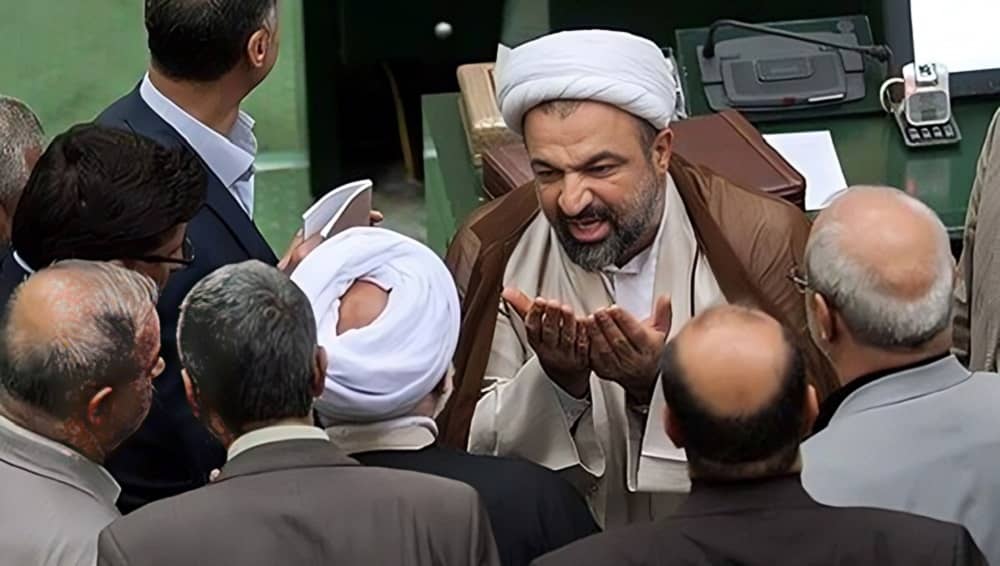
The military strain and economic hardship have exacerbated high-level factional warfare within the ruling establishment. Following Foreign Minister Abbas Araghchi’s public reference to high-level security “loopholes” that enabled high-profile assassinations of military leaders, hardliners launched fierce attacks. Writing in Arman Melli on July 22, 2026, political analyst Mohammad Mohajeri defended Araghchi against factional rivals, asking: “Is it really necessary for Araghchi to be martyred, just like Mr. Larijani, for his value to be recognized?”.
Foreign policy and regional strategy have become key battlegrounds among regime insiders. Speaking to Tose’e Iranian on July 22, 2026, former National Security Committee chairman Heshmatollah Falahatpisheh criticized the diplomatic isolation resulting from aggressive policy choices. He directly challenged the regime’s president Masoud Pezeshkian, demanding: “Name just one friend that Iran has in international relations”.
"In recent weeks a severe political #crisis has erupted within Iran’s ruling establishment as the state #television network, the IRIB, systematically censors top state figures while airing calls to prosecute sitting leaders," writes Farid Mahoutchi.https://t.co/BKxtIYHkAP
— NCRI-FAC (@iran_policy) July 25, 2026
Intra-Regime Battles and Media Warfare
Tensions have exploded inside Parliament over negotiations and control of the Strait of Hormuz. Armed forces spokesman Brigadier General Abolfazl Shekarchi lashed out at advocates of diplomacy on July 22, 2026, stating that “those whose hopes and dreams lie with America, and the West have come out of their lair again”. Heated exchanges in the assembly reached a boiling point, while state publication Kayhan demanded judicial and security crackdowns against politicians advocating for reopening the strategic waterway.
The confrontation extends to domestic media controls and internal state surveillance. In online legislative proceedings on July 27, 2026, MP Mahmoud Kouchekzadeh publicly denounced intelligence agency pressure regarding an arms treaty vote, asking: “What business does the intelligence apparatus have texting me to vote for a bill?”. Simultaneously, government spokesperson Fatemeh Mohajerani criticized state broadcaster IRIB on July 28, 2026, for undermining national cohesion through political censorship.
A highly orchestrated interview with the regime's FM Abbas Araghchi revealed more than intended: Iran's regime can only survive through #IranWar. It chose war because it saw not fighting as far costlier. A signature statement of who this regime truly fears more.…
— NCRI-FAC (@iran_policy) July 21, 2026
Underlying these elite disputes is a deep anxiety over societal stability and public trust. Former minister and current presidential advisor Ali Rabiei highlighted in a July 2026 broadcast that social trust has eroded severely alongside rising economic pressures on unemployed youth. Denying state media rumors about the near-fall of major cities during earlier unrest, officials nevertheless acknowledge a volatile public. As spokesperson Mohajerani reminded rival factions on July 28, 2026: “We are all sitting in the same boat, sitting in the boat of the Islamic Republic of Iran”.
Calculated Survival in a Fragmented System
The escalating conflicts between Iranian state officials do not reflect an ideological pivot toward international alignment, but rather a desperate competition over how best to ensure the regime’s survival. Whether pressing for confrontation or seeking diplomatic off-ramps, both camps recognize that systemic economic failure, intelligence vulnerabilities, and diplomatic isolation threaten to ignite a widespread popular uprising. Consequently, every factional maneuver remains anchored in preserving the clerical state structure before domestic unrest destabilizes the entire system. As the regime approaches a point of no return—reaping the consequences of converging crises—both camps are ultimately steering the clerical system toward a total, catastrophic confrontation with an explosive society.