

THIS PAGE WILL BE UPDATED WITH THE LATEST NEWS
UPDATE: 5:30 PM CEST
The Nuclear Race and Decades of Ecocide Have Drained Iran

The recent major setback suffered by Iran’s uranium-enrichment program, following last year’s air operations, has once again drawn attention to the immense ecological price the Iranian people have paid over the past four decades. Since the 1980s, Tehran’s theocracy has poured enormous financial and energy resources into pursuing the nuclear weapons threshold, implementing a predatory development model based on the unchecked exploitation of the country’s territory, systematic pollution, and the progressive destruction of its water, forest, and mineral resources. Iran now faces an unprecedented environmental catastrophe, in which the nuclear race is intertwined with the ecological collapse of an entire country.
The existence of the clandestine nuclear program led by the mullahs was first exposed in the early 2000s by the People’s Mojahedin Organization of Iran (PMOI/MEK), an opposition force that has historically been persecuted through brutal fatwas and subjected to a strategy of total annihilation, paying a heavy price in blood for its opposition to tyranny. Its international awareness campaign, conducted alongside the National Council of Resistance of Iran (NCRI) led by Maryam Rajavi, played a decisive role in encouraging the European Union and several governments to sanction the IRGC and to highlight the environmental damage caused by the regime.
UPDATE: 2:00 PM CEST
Iran’s Resistance Units Honor the Legacy of the 1988 Martyrs and the Constitutional Revolution
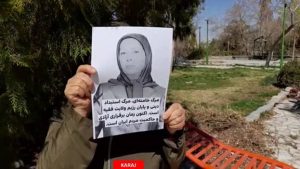
On July 7 in Zahedan, southeast Iran, PMOI/MEK Resistance Units took to the streets to mark two monumental milestones in Iran’s historical struggle for freedom: the 38th anniversary of the 1988 massacre of political prisoners and the 120th anniversary of the Constitutional Revolution.
Through a daring display of placards in public places, these rebellious youth demonstrated that the legacy of those who refused to surrender to tyranny remains a driving force in the current nationwide resistance. Their messages made it unequivocally clear that the “dictatorship of Velayat-e Faqih cannot survive in the face of widespread uprising and organized resistance.”
A central theme of the Resistance Units’ campaign in Zahedan was drawing a “fiery red demarcation” between the Iranian people and the forces of dictatorship. Their slogans rejected any return to the past, warning that “one of the regime’s primary levers to counter the uprising and resistance is promoting a manufactured alternative centered around the remnants of the Shah’s dictatorship.”
Echoing a six-decade struggle against both the theocracy and the monarchy, the youth held up signs declaring, “Down with the oppressor, be it the Shah or the Supreme Leader,” and “A dictator is a dictator, whether with a turban or a crown.” They emphasized that both monarchical and mullahs’ rule are responsible for a century of crimes, demanding: “No to mullahs, no to shah, yes to freedom and a democratic republic.”
While The World Watches War, Tehran Hangs Its Young

The world has become transfixed by conflict. Gaza dominates the headlines. Ukraine fills the television screens. Every diplomatic summit revolves around security, sanctions and shifting alliances. Yet, behind this curtain of global crises, the Iranian regime has unleashed a campaign of political executions on a scale that should shame every democratic nation into action. The silence has become deafening.
Last week alone, the clerical dictatorship executed 26-year-old law graduate Mehdi Khanaki after accusing him of membership of the People’s Mojahedin Organization of Iran (PMOI/MEK) and participation in the nationwide uprising that swept Iran in January.
According to the National Council of Resistance of Iran (NCRI), he endured months of physical and psychological torture before a Revolutionary Court condemned him in proceedings that bore every hallmark of a predetermined verdict rather than justice. A handful of newspapers carried the story, then the world’s attention drifted elsewhere.
Yet Khanaki’s execution formed only one chapter in a rapidly expanding campaign of state terror. Within days, Tehran sentenced Isa Chari, a 37-year-old Baluch labourer and father of two, to death after seven months in solitary confinement. His alleged crime amounted to membership of the PMOI. Twenty-two-year-old accounting student Amir Hassan Akbari-Monfared received the same sentence after enduring torture designed to extract forced confessions. His family connection to an executed PMOI supporter appears to have counted more heavily than any credible evidence.
Iran: Judiciary Officials Insult Women on Death Row in Yazd Central Prison

On Wednesday, August 5, Majid Jafari Nadoushan, an investigating judge, accompanied by Sadeghian, Deputy Prosecutor of Yazd, visited the women’s ward of Yazd Central Prison and announced their intention to speak with prisoners held on security-related charges and women on death row.
According to reports, after entering the quarantine section of the women’s ward, where several women sentenced to death are being held, the two judicial officials directed threatening and insulting remarks at the prisoners.
Reports state that they told the women: “You have been sentenced to death. Your nature is like that of pigs, and you are filthy like pigs. We know that if you ever gain power, you will kill us. Therefore, we will kill you first so that you never gain power.”
The psychological pressure resulting from these threats has led to a deterioration in the physical condition of several women prisoners.
According to available information, one prisoner who had previously suffered two strokes experienced a severe nervous episode and lost consciousness after the incident.
Iran: Eight Years in Prison for Killing His Daughter

The sentencing of Fatemeh Soltani’s father to just eight years in prison for murdering his daughter has highlighted what critics describe as deep-rooted injustice and discriminatory laws against women in Iran’s judicial system.
According to the state-run newspaper Donya-ye Eqtesad, July 26, 2026, the father, who fatally stabbed his 17-year-old daughter multiple times outside her workplace in Eslamshahr in 2024, was sentenced to eight years of imprisonment and ordered to pay blood money (diya). This is while under the clerical regime’s law, murder is punished by execution.
The relatively lenient sentence once again demonstrates that under Iran’s system of governance, so-called honor killings are not only inadequately criminalized but are effectively facilitated through legal protections and judicial leniency, creating conditions that may encourage similar crimes in the future.
The central question, they argue, is why Iran’s judiciary closes some of the deadliest cases of violence against women with sentences of only a few years in prison. The answer lies in the nature and legal structure of a system that is founded on discrimination against and repression of women.
Why Were the Perpetrators of Iran’s 1988 Massacre Never Held Accountable?
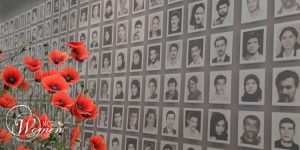
The 1988 massacre of political prisoners in Iran was not simply a crime that ended when the executions stopped. Its consequences have continued for decades through the regime’s refusal to acknowledge the killings, its persecution of those seeking truth and justice, and the continued elevation of officials implicated in the massacre to positions of power.
This is the central conclusion emerging from extensive documentation by Amnesty International, including its landmark report on the 1988 massacre first published in 2018.
More than three decades later, the question remains unavoidable:
Why have those responsible for one of Iran’s gravest human rights crimes escaped accountability?
The answer lies in a system in which impunity was not an accidental failure of justice. It became part of the structure of power itself.
Iran’s Structural Deadlock: Why War and Executions Have Become the Regime’s Pillars of Survival
Iran in August 2026 is confronted by a convergence of political, economic, social, and international crises. The important question, however, is not simply why these crises exist, but where they originate and how they are transmitted into Iranian society.
In any political system, the condition of society is inseparable from the nature and performance of its governing institutions. Economic hardship, political repression, social unrest, and international confrontation do not emerge independently of the state. They are shaped, intensified, or mitigated by the policies of those who hold power.
In Iran, this points directly to the structure of the regime itself.
The central institution of the ruling system has always been the doctrine and institution of velayat-e faqih, or absolute clerical rule. From the beginning, there has been a fundamental contradiction between the interests of this ruling structure and the interests of Iranian society.
For decades, the regime has resolved that contradiction by prioritizing its own survival over the needs and demands of the population.
Protest Gatherings Reported Across Iran as Retirees and Other Groups Demand Their Rights
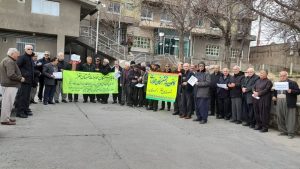
A new wave of protest gatherings was reported across several Iranian provinces on Saturday, August 8, 2026, as retirees and other social groups voiced grievances over deteriorating living conditions, unfulfilled demands, and what they described as widespread injustice.
The gatherings took place in Tehran, Isfahan, East Azerbaijan, and Hormozgan, involving retirees from different sectors as well as pharmacists and local residents. Although the protests involved different groups and local grievances, they reflected a common underlying concern: the growing gap between people’s basic economic and social demands and the regime’s failure to address them.
Retirees held gatherings in several locations to protest what they described as injustice, plunder, and the failure to meet their legitimate demands. In Tehran, retired telecommunications employees gathered in protest. Similar demonstrations were held in Isfahan by steel retirees and telecommunications retirees. The protesters voiced their frustration over deteriorating living conditions and the failure to implement their legal and financial demands.
Among the slogans reported from the demonstrations was: “We saw no justice; we only heard lies.”