

THIS PAGE WILL BE UPDATED WITH THE LATEST NEWS
UPDATE: 7:30 AM CEST
PMOI Resistance Units Challenge Regime as Looming Fuel Price Hike Raises Fears of Unrest
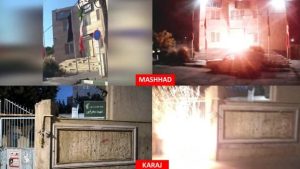
On August 27, PMOI/MEK Resistance Units carried out 60 operations in Tehran and 30 other cities in response to the Iranian regime’s plans to raise gasoline prices. The actions targeted IRGC and Basij bases, other centers of suppression, security-related facilities, and symbols of the ruling establishment.
The operations stretched from Tehran, Mashhad, Shiraz, Karaj and Kermanshah to Zahedan, Chabahar, Iranshahr and Dezful. Among the reported actions were attacks on Basij bases in Karaj, Shadegan, Iranshahr and Dezful, as well as security-force facilities in Chabahar, Borujen and Borazjan. Resistance Units also set fire to regime propaganda posters and billboards in numerous cities.
The timing was significant. The operations came as the regime was openly debating gasoline-price changes while senior officials and security bodies warned that economic dissatisfaction could spill into the streets.
The regime’s fuel problem has become increasingly difficult to contain. On August 15, Esmail Saghab Esfahani, head of the Energy Optimization Organization, said daily gasoline consumption had reached about 135 million liters, while refinery and petrochemical production stood at roughly 121 million liters, leaving a daily shortfall of 14 to 15 million liters.
Women, Resistance, Freedom: The Unbroken Lineage from Camp Ashraf to Iran’s Gen-Z Revolution
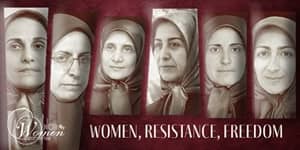
When an early morning raid struck Camp Ashraf at 5:00 AM on September 1, 2013, the goal of Iran’s clerical regime was to crush the heart of its organized democratic resistance. Among the 52 unarmed PMOI members killed in cold blood were six women leaders. These leading women had surrendered personal comfort to build a free Iran.
Over a decade later, the regime has failed to erase their memory. Instead, their defiance laid the foundation for a movement that defines Iran today: a liberation struggle led by women and powered by youth.
The Vanguard of Ashraf
The women who held the line at Camp Ashraf in September 2013 were the architects of a political alternative, who chose to lead at a moment of maximum risk:
- Zohreh Ghaemi (49): Leader of Camp Ashraf and Deputy Secretary General of the PMOI. A former political prisoner known for her humbleness and resolve, she commanded the camp until her final breath.
- Giti Givechinian (55): Assistant Secretary General of the PMOI and Chairwoman of the Security and Counter-terrorism Committee of the NCRI with a degree in psychology, offering 34 years of dedication to democratic change.
Iran’s Ruling Establishment Exposes Its Fear of an Explosive Uprising
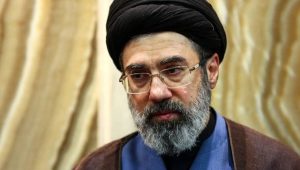
A revealing contradiction has emerged at the highest levels of Iran’s ruling establishment. The regime’s supreme leader Mojtaba Khamenei has called for the regime’s weaknesses and failures to be concealed, while President Masoud Pezeshkian has publicly warned that the Iranian people are already “on the edge” and that another shock could push them over it.
The contradiction is more than a dispute over messaging. It exposes two fundamental realities confronting the regime: deepening divisions at the top and a shared fear that mounting social and economic pressure could trigger another nationwide uprising.
In a televised message on August 28, Mojtaba Khamenei warned against openly discussing the regime’s shortcomings.
He argued that weaknesses and deficiencies should not be “narrated” or highlighted, claiming that doing so while the regime faces external pressure could strengthen its enemies and discourage its supporters.
The message amounts to a call for tighter control over the public presentation of the regime’s failures. Rather than allowing the depth of the crises to be openly discussed, the emphasis is on suppressing information and maintaining morale.
Iran’s Retirees Trapped Between Poverty and a Failing Healthcare System
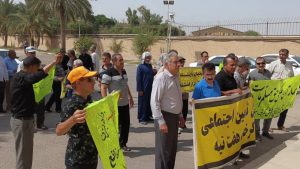
As inflation erodes retirement incomes and medical costs soar, Iran’s retirees face shrinking insurance coverage and mounting out-of-pocket expenses.
For millions of Iranian retirees, retirement has brought neither security nor dignity. After decades of work, many now face inadequate pensions, relentless inflation, and medical expenses they can no longer afford. As the cost of basic necessities rises, healthcare has become one of the most painful dimensions of the crisis.
The problem is not limited to the amount retirees receive each month. The healthcare system itself is increasingly failing to provide the protection that elderly people need most.
Retirees protesting across Iran have repeatedly raised concerns about supplementary health insurance, arguing that coverage is becoming more expensive while the services provided are increasingly limited.
Iran’s Markets Under Siege: Rising Prices, Power Cuts, and the Collapse of Livelihoods
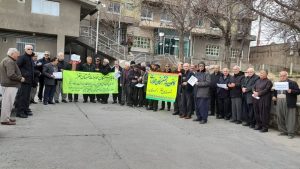
Iran’s merchants, farmers, and families are being crushed by currency depreciation, power outages, rising costs, and collapsing purchasing power as the regime’s economic crisis deepens.
Iran’s economic crisis is no longer confined to statistics, currency charts, or government statements. It is increasingly visible in shuttered shops, empty markets, indebted farmers, and families struggling to afford basic food.
Across Iran, merchants complain that the value of their capital is evaporating as the rial loses purchasing power, while electricity cuts disrupt already weak businesses. Farmers say they are forced to cultivate their land on credit, only to find that the value of their produce fails to cover their costs. Meanwhile, households are cutting back on basic necessities as food prices continue to rise.
The result is a vicious cycle: inflation reduces purchasing power, declining sales weaken businesses, currency depreciation destroys working capital, and rising costs push merchants and producers toward bankruptcy.
Sharp Decline in the Value of the Iranian Rial Against the U.S. Dollar

The decline in the value of the rial in Iran has entered a new phase amid intensified U.S. financial and sanctions pressure on the Iranian regime. As Washington has expanded measures to restrict the regime’s access to the international financial system, the price of the dollar in Iran’s market surpassed 2.08 million rials on Sunday, August 30, setting a new record.
According to the state-run Donya-e Eqtesad newspaper, the U.S. dollar was trading at around 2.061 million rials on Sunday morning. This surge came as the regime’s Central Bank claims to have made large amounts of dollars available through the banking network, and had announced that supply in the first phase was 25 times demand—an assertion that the actual trend in the foreign exchange market has effectively rendered meaningless.
Abdolnaser Hemmati, the head of the regime’s Central Bank, has attributed the rise in the exchange rate to “U.S. posturing and propaganda.” At the same time, however, external pressure on the Iranian regime’s financial network has taken on new dimensions.
The Central Bank of the United Arab Emirates has announced that it will conduct an immediate and special inspection of the branches of “Banque Misr” in the country. The move came after the U.S. Treasury Department accused the bank of conducting Iran-related transactions and warned that its access to the U.S. financial system could be cut off.
Behind The $6 Billion Preferential Currency Allocation Scandal In Iran’s Auto Assembly Industry

News about the allocation of a large share of the automotive industry’s government-supplied foreign currency to assembly companies has once again made headlines, even as some of these companies have low levels of localization and sell their products to Iranian consumers at prices far higher than those in neighboring countries. At the center of these criticisms is the performance of Modiran Khodro and the way it receives and uses foreign currency.
An examination of data on foreign currency allocated to the automotive industry from 2021 to 2025 shows that, out of approximately $10.5 billion in foreign currency resources, more than $6 billion was allocated to Modiran Khodro. This figure raises serious questions about how resources are distributed and how their use is monitored.
This amount of foreign currency was received even though, after more than two decades of cooperation with Chinese automaker Chery, the share of locally produced components in this group’s products is still reported to be less than 20%. By contrast, some of the company’s assembled vehicles are sold in Iran at prices as much as two and a half times those of comparable models in neighboring countries.
The Broken Chain of Healthcare in Iran’s Most Deprived Province
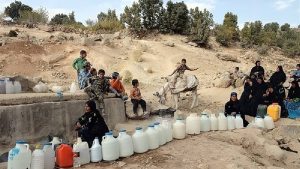
In recent days, the death of a teenager once again exposed healthcare deficiencies in Sistan and Baluchestan in southeastern Iran; shortages of hospital beds, doctors, ambulances, medicine, and blood in underserved areas sometimes delay treatment and at times cost patients their lives.
On August 17, 13-year-old Melika Hemmatzadeh, from the village of Dasak, was taken to Nikshahr’s 22 Bahman Hospital after being stung by a scorpion; however, along the way, a doctor, ambulance, platelets, and ultimately an ICU bed were unavailable. According to Melika’s father, the village health center was closed because there was no doctor, the city of Bent had no ambulance, and the platelets she needed were available neither at Nikshahr Hospital nor in Chabahar. Melika suffered a seizure at 10 p.m. and subsequently died.
Saeed Baluchi, head of the Nikshahr Health and Medical Services Network, attributed the death to “a delay of several hours in seeking medical care,” but at the same time confirmed that a pediatrician had determined that Melika urgently needed intensive care and that she was not transferred to the ICU because there was no available bed; efforts to transfer her to a better-equipped facility also proved unsuccessful. This account offers no response to the family’s claim that they waited for hours to obtain the platelets she needed.
Bucharest Photo Exhibition Condemns Iran’s Executions and Honors Victims of the 1988 Massacre
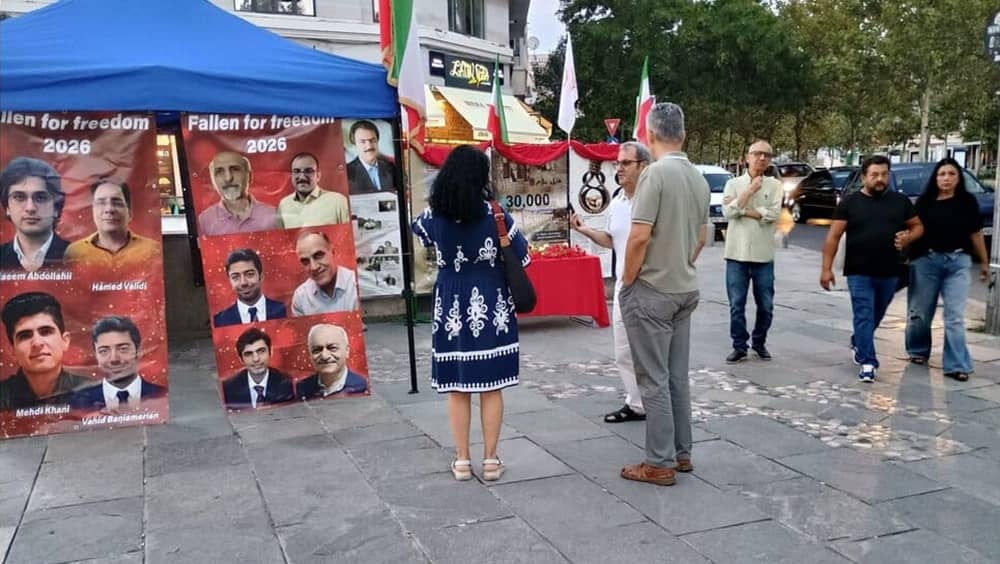
Bucharest, Romania – August 28, 2026 – For the second consecutive week, supporters of the Iranian Resistance, including the NCRI and PMOI, held a photo exhibition in Bucharest to commemorate the anniversary of the 1988 massacre of political prisoners in Iran and to condemn the Iranian regime’s continued use of the death penalty.

The exhibition honored the memory of thousands of political prisoners who were executed during the 1988 massacre and paid tribute to all those who have lost their lives in Iran’s struggle for freedom and human rights. Participants called for justice for the victims and stressed the importance of preserving the memory of those who lost their lives in pursuit of freedom and democracy.
Iranian Resistance Supporters Hold Anti-Execution Exhibition in Paris
Paris, August 29, 2026 — Supporters of the Iranian Resistance (NCRI and PMOI) held an anti-execution photo exhibition on Saturday, August 29, at Palais-Royal Square in Paris, displaying photographs of victims of executions carried out by the Iranian regime.

The exhibition featured images of martyrs from the 1988 massacre of political prisoners, as well as victims of subsequent uprisings and political prisoners who have been executed by the Iranian regime. The display also highlights the continuing wave of executions in Iran, which has continued through August 2026, with political prisoners and other detainees being executed on an ongoing basis.