

THIS PAGE WILL BE UPDATED WITH THE LATEST NEWS
UPDATE: 9:00 AM CEST
Message to the Conference at UK Parliament: Human Rights and Democratic Change in Iran
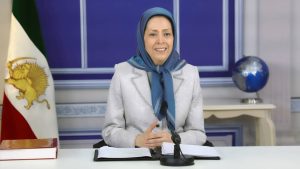
Mrs. Maryam Rajavi’s message: “Members of the House of Commons and the House of Lords, The topic of this conference is human rights and its vital link with democratic change, which is the main issue in Iran today. Today, the people of Iran, especially the young people, are standing up to end religious dictatorship, andestablish a free and democratic republic.
One of these young people was Mehdi Khanaki. He was 26 years old and a graduate of law. He was a member of the PMOI. His crime was fighting to overthrow the regime. He was arrested on February 10, 2026 and executed on July 22, 2026.
“His words show the goals and beliefs of Iran’s young generation who has turned to the PMOI. In a letter, he wrote:
‘My only hope is to destroy the Ghezel Hesar prison walls. I want to destroy all prisons built by the Shah and inherited by the clerical regime. So that no one will be held captive again. Every day of delay is a shame and makes me sad.’
“Recently, political prisoners sent messages honoring the sixty-first anniversary of the founding of the PMOI. Two young women, Arghavan Fallahi and Forough Taghipour, wrote from Evin Prison:
‘We are Generation Z. We are anti-dictatorship and anti-dependency. We are against Shah and the mullahs. The day is not far when this shaky regime of executions will be crushed.'”
Resistance Units Honor PMOI Founders and Martyrs Across Iran on 61st Anniversary
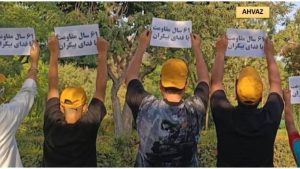
Resistance Units across several Iranian cities marked the 61st anniversary of the founding of the People’s Mojahedin Organization of Iran (PMOI/MEK) with flowers, wreaths, candles, and commemorative displays honoring the organization’s founders and members who lost their lives during its decades-long struggle.
The activities, held on September 7, 2026, took place in Tehran, Tabriz, Karaj, Shiraz, Urmia, and Zanjan. Wreaths and flower baskets carried portraits of PMOI founders Mohammad Hanifnejad, Saeid Mohsen, and Ali Asghar Badizadegan and messages commemorating 61 years of sacrifice, honesty, and perseverance.
Some of the flowers and anniversary messages were sent by political prisoners supporting the PMOI in Ghezel Hesar Prison, linking the commemorations outside prison with parallel anniversary messages being issued from behind bars.
The commemorations took different forms from city to city while carrying a common theme of connecting the PMOI’s founding generation with those who followed it.
In Urmia, Resistance Units set up a memorial table with flowers, a cake, candles, and portraits of the PMOI’s founders and members martyred during the struggle. Photographs of 15 PMOI members, including those executed since the beginning of the current Iranian year, were displayed. Messages at the event emphasized 61 years of struggle against the dictatorships of the Shah and the clerical regime.
Tehran Has Exposed A Vulnerability — And Washington Must Exploit It

When an authoritarian government responds to a small event with overwhelming force, the response itself becomes intelligence. A recent video from near Karaj, west of Tehran, illustrates the point. Motorcyclists and several cars moved through the streets flying the flags of the People’s Mojahedin Organization of Iran, or MEK.
Iranian state television quickly announced that “all the individuals” in the footage had been identified and arrested.
The regime disclosed neither the number of people arrested nor the date that the video was recorded. Still, the public announcement was significant.
For years, Iran has described the MEK as a spent force with no social base. If that were true, a few motorcyclists near Karaj should not have triggered an immediate security response. Tehran’s reaction shows that its own assessment is different.
Missiles Don’t Measure Strength: Mass Arrests Shatter Tehran’s Illusion of Control

Washington knows a great deal about Iran. It tracks uranium enrichment, missile capabilities, oil exports, currency movements, and military infrastructure. These are important measures of the Islamic Republic’s power. But they answer only part of the question American policymakers should be asking.
They tell us what Iran can do. They do not necessarily tell us how politically strong the regime is.
That distinction matters. A regime can become more dangerous while becoming less politically resilient. Washington has too often treated those two things as if they were the same.
Consider how precisely Iran’s measurable capabilities are assessed. Nuclear facilities are monitored down to enrichment levels and uranium stockpiles. Oil exports, inflation, and foreign currency reserves are scrutinized for signs of how much pressure Tehran can withstand. Iranian crude loadings have fallen from about 2 million barrels per day in March to roughly 220,000 to 255,000 in August, while inflation is projected to approach 70% this year.
Iran’s Regime Doubles Gasoline Price as Fuel Crisis Deepens and Fear of Protests Grows

Iran’s regime has doubled the price of gasoline for high-volume consumers, raising the third-tier rate from 50,000 to 100,000 rials per liter as the country faces a widening fuel deficit, record consumption, and mounting economic pressures.
The new measure, implemented on September 7, applies to gasoline consumed beyond the existing monthly quota of 110 liters. The first 60 liters remain priced at 15,000 rials per liter, while the next 50 liters cost 30,000 rials. Only consumption beyond those subsidized quotas is now subject to the 100,000-rial rate. The government says the additional revenue will be directed toward supporting households.
But the measure is far more than a routine adjustment of fuel prices. It exposes the growing contradiction at the heart of the regime’s energy policy: Iran possesses some of the world’s largest oil and gas reserves, yet its limited refining capacity, inefficient vehicle fleet, subsidized prices, and rapidly rising consumption have forced it to import gasoline at enormous cost. The latest increase is the culmination of a process that has unfolded gradually.
For years, motorists were able to purchase 60 liters of gasoline per month at 15,000 rials per liter and an additional 100 liters at 30,000 rials. In December 2025, the regime introduced a third pricing tier, initially charging 50,000 rials per liter for consumption beyond the quota. During 2026, the second-tier quota was reduced first from 100 to 70 liters and then to 50 liters.
Iran’s Economic Collapse: When Market Sees a Darker Future Than Present
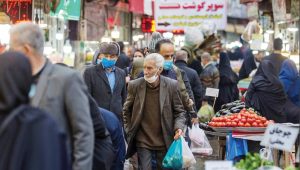
Today, the signs of Iran’s economic collapse can be seen not only in official reports but also in the daily behavior of the market and on household tables. The intervals between currency surges have become shorter, and the prices of goods no longer even follow the current dollar exchange rate. The market is effectively pricing in the future. More than any official statistic, this behavior demonstrates the collapse of confidence in the ruling structure’s ability to control the future.
Within a short period, the dollar exchange rate rose from around 2 million rials to 2.3 million rials, while claims were simultaneously being made about the adequacy of foreign currency reserves. But the market responded differently to these reassurances. The prices of many essential goods were calculated at rates equivalent to a dollar worth 2.4 million or even 2.5 million rials.
A seller who prices a product based on a higher exchange rate is not necessarily seeking greater profit; the seller knows that replacing the same product in the future may be much more expensive.
£36 Million in London Properties Linked to Iranian Regime Supreme Leader
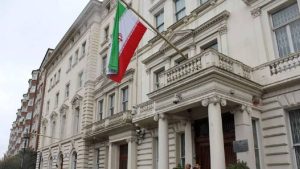
The listing of two luxury apartments in London worth approximately £36 million has once again drawn attention to the complex financial network linked to Iranian regime supreme leader Mojtaba Khamenei. Reports by The Telegraph, Bloomberg, and Voice of America, citing property records and media investigations, have highlighted the role of Ali Ansari, a businessman close to the Iranian regime, in this network.
The Telegraph reported that two luxury apartments in London, allegedly belonging to Mojtaba Khamenei’s financial network, have been put up for sale. The properties are located near the official residence of the Prince of Wales and are registered in the name of Ali Ansari, an Iranian businessman. Ansari purchased the properties in 2014 and 2016, and their combined value has been estimated at approximately £36 million.
The proceeds from the sale of these properties are expected to be frozen by the British government, as Ansari has been sanctioned by the UK government for financially supporting the activities of the Islamic Revolutionary Guard Corps (IRGC) and is barred from entering Britain.
Iran: Human Rights & Suppression of the Kurdish Minority (Dec 2025–Present)
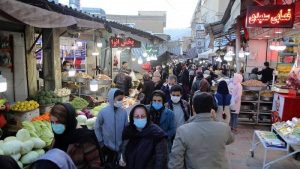
In 2026, Kurdish-populated regions of Iran, along with other parts of the country, were impacted by a new wave of state repression that intensified following the outbreak of nationwide protests on 28 December 2025 (7 Dey 1404). Available evidence indicates that Kurdish citizens have been subjected to a wide range of human rights violations, including the killing of protesters, mass detentions, trials based on security charges, the issuance and execution of death sentences, restrictions on cultural and civic activities, and the lethal use of force against Kolbars (cross-border labor couriers). These measures have occurred against a backdrop of structural discrimination and the ongoing securitization of civic and identity-based demands of Kurds.
This report argues that these documented cases cannot be viewed merely as an isolated series of infractions; rather, they form part of a continuous pattern that affects the civil, political, economic, social, and cultural rights of Iranian Kurds.
Kurds represent one of the largest ethnic minorities in Iran, residing predominantly in the provinces of Kurdistan, Kermanshah, West Azerbaijan, and Ilam. Despite statutory guarantees regarding the equality of citizens, Kurdish regions have consistently faced high levels of security interference, restrictions on political and cultural activities, detentions of civil activists, and violent crackdowns over past decades.
Iran’s Nuclear Dispute Moves Toward UN Security Council Amid Strait of Hormuz Tensions
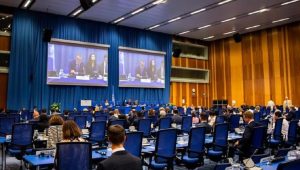
As the United States and three European powers push to return Iran’s nuclear file to the UN Security Council, escalating tensions along one of the world’s most important energy routes risk turning Tehran’s leverage in the Strait of Hormuz into a factor that broadens the international coalition against it.
Iran’s nuclear file has once again reached the threshold of the United Nations Security Council. This time, however, the crisis is not confined to centrifuges, uranium stockpiles and inspectors’ access. As the International Atomic Energy Agency’s Board of Governors meets in Vienna, clashes between Iran and the United States in the Strait of Hormuz have disrupted shipping, turning the security of one of the world’s most vital oil and gas transit routes into part of the same political confrontation.
The United States, Britain, France and Germany have asked the IAEA’s 35-member Board of Governors to report Iran’s case to the UN Security Council and General Assembly, a move that, if approved, would mark the first referral of its kind in roughly two decades. The four countries say Tehran has still not allowed the agency to fully verify its nuclear material and facilities.
MEK Supporters in Vancouver Celebrate the 61st Anniversary of the PMOI’s Founding
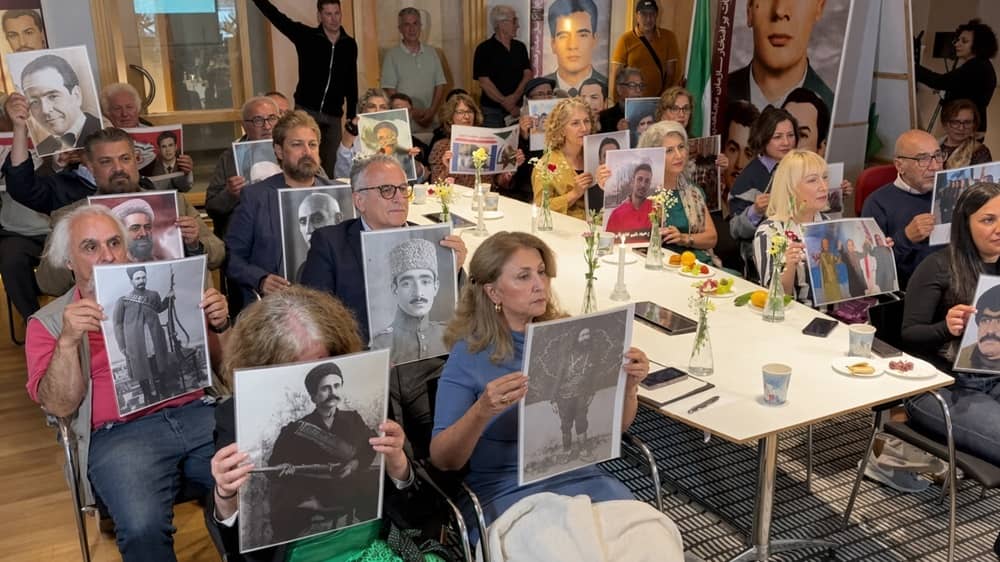
Vancouver, Canada – September 5, 2026: Supporters of the People’s Mojahedin Organization of Iran (PMOI/MEK) gathered in Vancouver to celebrate and commemorate the 61st anniversary of the PMOI’s founding.
Alongside celebrating and commemorating the anniversary, they reaffirmed their unwavering support for the PMOI’s struggle to achieve freedom, democracy, and equality in a free and democratic republic in Iran.

They also emphasized their continued support for the PMOI’s Resistance Units inside Iran and for the courageous political prisoners who continue to stand against the regime from within its prisons and voice their support for the PMOI.
Supporters of the MEK in Gothenburg Commemorate 61st Anniversary of PMOI’s Founding
Gothenburg, Sweden – September 5, 2026: Freedom-loving Iranians and supporters of the People’s Mojahedin Organization of Iran (PMOI/MEK) in Gothenburg, held a series of ceremonies to commemorate the 61st anniversary of the organization’s founding.

The events marked the anniversary while reaffirming steadfast support for the PMOI’s struggle for freedom, democracy, and equality in a free and democratic republic in Iran.
Participants also expressed their continued support for the MEK’s Resistance Units inside Iran and for courageous political prisoners who continue to stand against the regime from within its prisons and voice their support for the PMOI.