

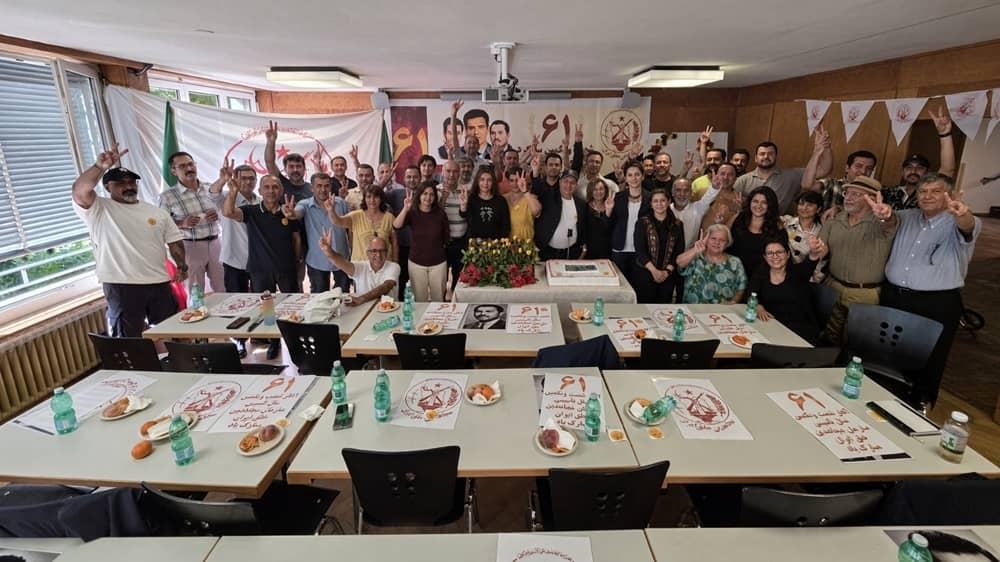
THIS PAGE WILL BE UPDATED WITH THE LATEST NEWS
UPDATE: 6:30 PM CEST
The Karaj Motorcade Exposed Iran’s Biggest Lie

A short video from the outskirts of Karaj, near Tehran, exposed one of the Islamic Republic’s biggest lies. A group of motorcyclists and several cars moved through the streets, openly displaying the flags of the main opposition People’s Mojahedin Organization of Iran (PMOI/MEK). A regime that has spent decades insisting that the movement was destroyed and has no support inside Iran immediately announced that it had identified and arrested “all individuals” seen in the footage.
If the MEK truly belonged to the past, a handful of motorcyclists should not have prompted such a swift and public response. In Iran, carrying the organization’s flag can lead to years in prison—or a death sentence. Those who joined the motorcade knew the risk. The significance of Karaj was not the number of participants. It was that, after decades of killings and repression, people were still prepared to show their faces and accept that price.
The Iranian regime did not merely fight the MEK. It tried to erase the movement from the country’s memory and future. The first major confrontation came in June 1981, when authorities opened fire on demonstrations and launched a sweeping wave of executions. Teenagers and young adults—many arrested simply for supporting the organization or distributing leaflets—were sent before firing squads.
Bipartisan Lawmakers Call on Rubio to Address Iran’s Executions and Arrests

U.S. lawmakers from both parties are urging Secretary of State Marco Rubio to take a stronger stand against what they describe as Iran’s growing campaign of executions, arbitrary arrests, and political repression.
In a letter obtained by Scripps News Thursday, 64 House members from both parties — including Reps. Brian Fitzpatrick (R-Pa.), Brad Sherman (D-Calif.), Don Bacon (R-Neb.), and Debbie Wasserman Schultz (D-Fla.) — urged the State Department to publicly condemn the executions, make human rights a priority in any diplomacy with Tehran, work with allies and United Nations investigators to improve data on the crackdowns, and sanction officials responsible for the abuses.
“We write to express our deep concern over the escalating execution of political prisoners by the Iranian regime,” the lawmakers wrote, characterizing the executions as a “grave violation of fundamental human rights and international legal standards.”
The Mullahs Built a Dynasty. The Resistance Just Held an Election

At a time when Iran’s clerical establishment is confronting perhaps the most consequential crisis in its history, two very different leadership transitions illuminate competing visions of the country’s future.
On Sept. 6, the National Council of Resistance of Iran, the principal organized opposition to the ruling theocracy, elected Mahnaz Maimanat, 67, as its new secretary-general as the organization entered its 62nd year. The election followed three rounds of voting involving members in seven countries.
Viewed in isolation, the election of a new opposition leader might appear to be an internal organizational matter. Against developments inside Iran, however, it assumes broader significance.
The Iranian regime has emerged from the upheavals of the past year significantly weakened. The January 2026 uprising underscored both the depth of public discontent and the widening divide between society and the state. The subsequent war further damaged the regime’s political and military command structure. Economic deterioration, international isolation, and continuing unrest have intensified the pressure. None of these challenges appears easily resolved.
UPDATE: 5:00 PM CEST
‘Surge In Construction’ At Suspected Iranian Nuclear Site, Analysts Say, As US Considers Ways to Strike Deep Underground

A suspected Iranian nuclear site buried under granite has seen a flurry of construction work this year as the war with the US has transpired, according to a group of analysts who reviewed six years of satellite imagery.
The Pickaxe Mountain site, located near the Natanz nuclear complex roughly 140 miles south of Tehran, has been the subject of steady discussion by intelligence agencies which view it as a likely location for Iran to protect future nuclear program efforts.
According to a new satellite imagery analysis by the Center for Strategic and International Studies think tank, shared exclusively with CNN ahead of its publication, there has been “a clear surge in construction activity” this year.
The underground facility is “likely” designed to be a safe haven for Iran’s nuclear program, according to the CSIS analysts.
Iran: Is the Organized Opposition Emerging from the Shadows?

This is one of the rarest images seen in Iran in recent years. Around Karaj, near Tehran, motorcyclists rode through the streets waving the flags of the People’s Mojahedin Organization of Iran (PMOI/MEK). The authorities’ reaction is as revealing as the participants’ audacity: state television confirmed the incident and stated that “all the people” appearing in the video had been identified and arrested, without specifying their number or when the footage was recorded.
In a country where displaying the symbols of a banned organization can lead to lengthy prison sentences or even death, this act goes beyond a simple publicity stunt. The participants physically exposed themselves, openly and in full view of cameras and security forces. The regime was forced to respond publicly. This brief face-off opened a breach in one of its oldest narratives: the idea that the Mojahedin belong to the past and no longer have a presence in Iranian society.
UPDATE: 8:00 AM CEST
‘No Wind Can Extinguish This Flame’: Letter by Political Prisoners in Ghezel Hesar on PMOI Founding Anniversary
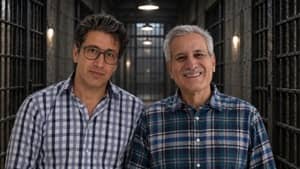
Political prisoners Akbar Bagheri and Assadollah Hadi have sent messages from Ghezel Hesar Prison marking the 61st anniversary of the founding of the People’s Mojahedin Organization of Iran (PMOI/MEK), offering two complementary explanations for how the resistance has survived decades of repression.
Bagheri places “sacrifice” at the center of the PMOI’s endurance, describing a flame lit by the organization’s founders in 1965 that “no wind” can extinguish. Hadi looks back across 120 years of Iranian struggles and emphasizes “organization,” arguing that earlier movements repeatedly suffered from the absence of a durable revolutionary organization.
Akbar and Assadollah join political prisoners from Evin, Yazd, Vakilabad, Karaj, and Ghezel Hesar, who have marked the PMOI anniversary despite death sentences, lengthy imprisonment, torture, medical deprivation, and repeated punishment for speaking out.
Bagheri begins by honoring PMOI founders Mohammad Hanifnejad, Saeid Mohsen, and Ali Asghar Badizadegan, then asks how an organization subjected to such enormous pressure and conspiracy could remain “firm and standing like Mount Damavand.”
Woman Sentenced to Death Denied Medical Care, at Risk of Losing Ability to Walk

The health condition of Taraneh Rahimi, a 20-year-old political prisoner sentenced to death, has reportedly deteriorated severely at Dowlatabad Prison in Isfahan, with the risk of her losing the ability to walk increasing.
A prison doctor has confirmed that Taraneh Rahimi needs to be transferred to a hospital and undergo surgery. However, a prison medical official identified as Yaghoubí has prevented her from being transferred to the hospital.
To help reduce her pain and prevent further physical deterioration, Rahimi’s family purchased medical supports, including an ankle brace and a knee brace, and delivered them to the prison. Prison authorities, however, have refused to give the medical equipment to Taraneh Rahimi.
Taraneh Rahimi had previously undergone surgery on her leg before her arrest. During interrogations, pressure was applied to her knees with a baton, after which the condition of her legs and knees deteriorated severely.
Insecurity and Poor Economic Conditions in Iran Have Driven Citizens to Brink

In the accounts coming from the streets of Iran, we hear stories that are rarely reflected in the news. Young people who have no hope for the future, girls who feel unsafe in a poverty-stricken society, teachers whose tables have been emptied by soaring prices, farmers facing drought, retirees who cannot afford to make ends meet because of poverty, and citizens who share their pain, hopes, and stories from across Iran with us. A woman from Tehran says: “This is a pain that I live with every day and every moment. I have a daughter who is a university student in her final year. Because of the security situation, I have to take her everywhere and bring her back myself. My younger daughter is 14 years old, and because of fear and insecurity, she has never even gone alone to the end of our street.”
“Thinking about getting the children to and from places, on top of the amount of studying and activities they have, is truly exhausting. But when we have neither security nor peace of mind, I am forced to accompany them everywhere myself. Because of the poor-quality gasoline, the car keeps breaking down, and spare parts have also become expensive and poor in quality. The market is sluggish, and no one has money to buy anything. We really do not know how long we have to endure this pressure. A mother only wants her children to be able to travel around safely, study, and live their lives, and even that has been taken away from us. I hope this situation changes as soon as possible.”
Iran’s Rial Falls 29% as Imports Decline and Trade Costs Rise
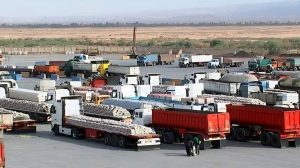
TEHRAN — Pressure on Iran’s economy has spread beyond the currency market and now extends to foreign trade, transportation and domestic costs, as reduced access to foreign-currency resources and higher costs of moving goods raise the risk of additional pressure being passed on to producers and consumers.
The dollar rose on the free market from around 178,000 tomans in mid-Tir to about 228,570 tomans on 15 Shahrivar, at times entering the 230,000-toman range — an increase of nearly 29% in about two months. The gap between the free-market rate and the exchange center’s remittance rate has also widened to more than 40%, with the dollar trading at around 229,000 tomans on the open market compared with a remittance rate of about 161,000 tomans.
The rial’s decline has come even as foreign-trade data show no sign of a sharp increase in official import demand. In the first five months of the year, Iran imported about 12.5 million tons of goods worth $16.8 billion, compared with $22.3 billion in imports during the same period last year. The value of imports therefore fell by about 25%, while their volume declined by nearly 16%.
Freedom-Loving Iranians in Oslo Commemorate 61st Anniversary of PMOI’s Founding
Oslo, Norway – September 5, 2026: Freedom-loving Iranians and supporters of the People’s Mojahedin Organization of Iran (PMOI/MEK) in Oslo, Norway, held a series of ceremonies to commemorate the 61st anniversary of the organization’s founding.

Mr. Parviz Khazaei, the representative of the National Council of Resistance of Iran in the Nordic countries, also attended the ceremonies and commemorative events marking the 61st anniversary of the founding of the People’s Mojahedin Organization of Iran.
MEK Supporters in Antwerp, Belgium Celebrate the 61st Anniversary of the PMOI’s Founding
Antwerp, Belgium – September 5, 2026: Supporters of the People’s Mojahedin Organization of Iran (PMOI/MEK) gathered in Antwerp to celebrate and commemorate the 61st anniversary of the PMOI’s founding.
Alongside celebrating and commemorating the anniversary, they reaffirmed their unwavering support for the PMOI’s struggle to achieve freedom, democracy, and equality in a free and democratic republic in Iran.

They also emphasized their continued support for the PMOI’s Resistance Units inside Iran and for the courageous political prisoners who continue to stand against the regime from within its prisons and voice their support for the PMOI.
MEK Supporters in Bern Celebrate the 61st Anniversary of the PMOI’s Founding
Bern, Switzerland – September 5, 2026: Supporters of the People’s Mojahedin Organization of Iran (PMOI/MEK) gathered in Bern to celebrate and commemorate the 61st anniversary of the PMOI’s founding.
Alongside celebrating and commemorating the anniversary, they reaffirmed their unwavering support for the PMOI’s struggle to achieve freedom, democracy, and equality in a free and democratic republic in Iran.

They also emphasized their continued support for the PMOI’s Resistance Units inside Iran and for the courageous political prisoners who continue to stand against the regime from within its prisons and voice their support for the PMOI.