

Three-minute read
The regime’s latest gasoline increase moved from announcement to implementation at midnight on September 8, 2026, when fuel purchased through station cards doubled from 5,000 to 10,000 tomans per liter. The regime insists that the subsidized 1,500- and 3,000-toman quotas remain unchanged, with the National Iranian Oil Refining and Distribution Company claiming they cover 85 percent of motorists. More revealingly, its chief Mohammad-Sadegh Azimifar said the government deliberately designed the changes to be “step-by-step” to give society time to adjust and “prevent any shock,” while allowing officials to assess “social feedback” before proceeding further.
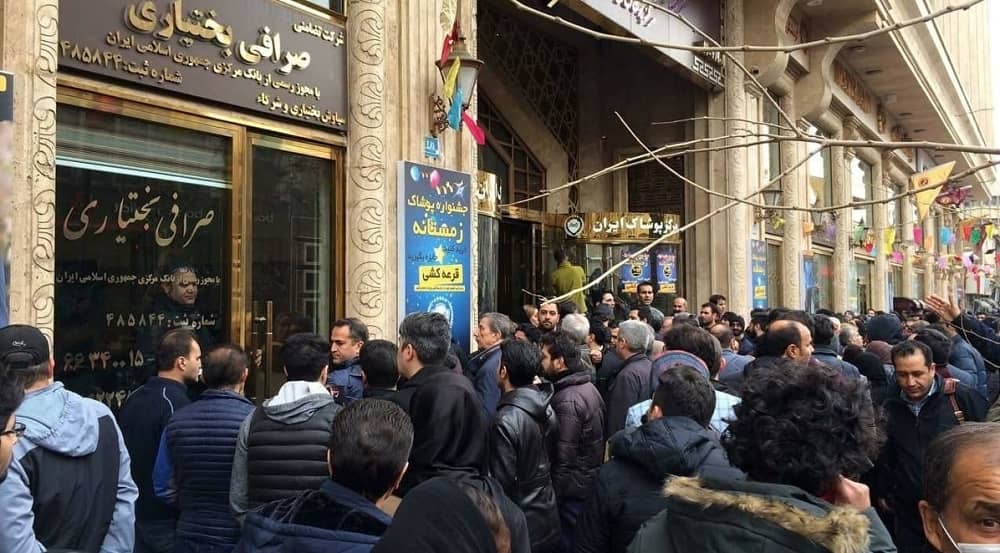
The execution itself nevertheless exposed how hurried the measure was. ISNA reported that many gasoline-pump displays are technically incapable of showing a five-digit price such as 10,000 tomans because they were built for four digits. Rather than replace the equipment, station operators were instructed to remove one zero from the displayed prices and calculate the final amount with a fixed additional zero. In Tehran, Karaj, Isfahan and other cities, motorists had already formed queues before the increase took effect, seeking the last supplies at the previous rate.
The government is also signaling that the adjustment may not end here. First Vice President Mohammad-Reza Aref said on Tuesday that imported gasoline would eventually be liberalized through further gradual price reform, arguing that fuel bought abroad at roughly 70 cents per liter cannot indefinitely be sold domestically for only a few cents. He simultaneously acknowledged another structural problem: the state cannot ask motorists to pay more while continuing to supply them with what he called “junk cars.”
"#Economic hardship, fear of renewed unrest and the unresolved dispute over war versus negotiation are increasingly feeding the same internal struggle that Mojtaba Khamenei has repeatedly tried to suppress," @MansoreGolestan writes.https://t.co/eeeSgCy87J
— NCRI-FAC (@iran_policy) September 7, 2026
A Worker’s Protest Ends in Self-Immolation
A separate event in Ahvaz offered a stark indication of the pressures accumulating beneath those policy debates. ILNA reported that a roughly 40-year-old security worker on the long-stalled Ahvaz urban-rail project set himself on fire outside the city’s central municipality building on September 6 after months of unpaid wages and losing his job. Colleagues extinguished the flames and he was hospitalized with burns.
The circumstances make the incident particularly significant. According to ILNA, the worker had spent 17 years on the project and had gone five months without wages. He and colleagues protested outside the municipality the previous day over their unpaid salaries. When they returned to work, the contractor dismissed him and four others. He came back to the municipality with the dismissed workers seeking an answer; after officials failed to respond, he poured gasoline over himself and ignited it. The attached brief records the same sequence.
The episode turns an abstract livelihood crisis into something more immediate. It was not simply an individual facing unemployment: according to the domestic labor agency’s account, months of unpaid work were followed by dismissal after a collective protest. Coming as the government introduces higher marginal fuel costs and acknowledges that further energy-price adjustments are necessary, the case illustrates how little financial margin remains for sections of the workforce.
Soaring Costs and Renewed Protests Expose Iran's Regime Fear of Another #IranProtests
by @shahriarkia https://t.co/M4YSnNRODX— NCRI-FAC (@iran_policy) September 6, 2026
Security Pressure in the Southeast
Economic and social pressures are coinciding with a separate deterioration in security in Sistan and Baluchistan. On September 8, domestic media reported that Abdolraouf Eshaqi, commander of the Shahid Fadaei Basij district in Parud, Rask County, was shot dead by unidentified gunmen. Mehr reported that the attack occurred outside his home. No organization had claimed responsibility at the time of publication.
It was the second fatal attack on regime personnel in the province in two days. A day earlier, provincial security officials told IRNA and ISNA that gunmen attacked a vehicle carrying supplies for local Basij forces in the Korin area of Zahedan, killing two members of the Shahid Mirhosseini operational headquarters.
These developments are not necessarily connected, but their simultaneity matters. In barely 48 hours, the clerical dictatorship has implemented a politically sensitive fuel increase, improvised around technical problems at filling stations, confronted an extraordinary manifestation of labor desperation, and lost security personnel in two attacks in the southeast. The regime’s problem is increasingly not one isolated crisis but the number of pressure points it must manage at the same time.