

THIS PAGE WILL BE UPDATED WITH THE LATEST NEWS
UPDATE: 7:30 AM CEST
Why Iran’s Universities Remain a Bastion of Protest and Uprising Against the Regime
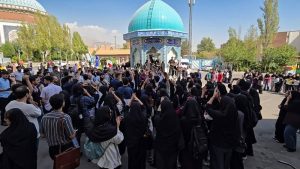
As Iran’s universities begin a new academic year, student protests are once again emerging as a source of concern for authorities.
On September 28, students at Allameh Tabataba’i University in Tehran protested rising educational costs, restrictions imposed by university security—particularly against female students—and the growing security presence on campus. Their demands also addressed compulsory hijab and imprisoned students. The slogan “Neither barracks nor business enterprise; long live the university” brought together opposition to both securitization and commercialization of the campus.
The protest came as senior university officials were publicly warning about renewed unrest. Mahmoud-Reza Aghamiri, president of Beheshti University, described university-age students as particularly susceptible to political influence. Masoud Tajrishi, president of Sharif University, warned that forces outside Iran would look for universities they could “stir up.” Their remarks reflected a concern rooted in the experience of the past year: universities have repeatedly become important centers of protest.
In Memory of PMOI Member Noushin Namvar: 49 Years of Resistance Against Two Dictatorships
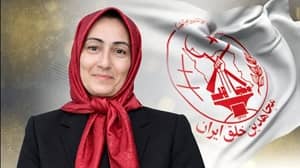
It is with heavy hearts that we declare the passing of Noushin Namvar, a member of the Central Council of the People’s Mojahedin Organization of Iran (PMOI/MEK) in Albania, after 49 years of struggle against two dictatorships.
Born in Tehran in 1960, Noushin Namvar became acquainted with the ideals of the Mojahedin in 1977, during her final years of high school. In 1978, together with her friends, she actively participated in demonstrations and the uprising against the monarchical dictatorship. Following the anti-monarchical revolution in 1979, Noushin Namvar became a full-time activist within the PMOI and was at the forefront of the organization’s awareness-raising campaigns against Khomeini’s reactionary forces.
Among her first responsibilities was her active participation and extensive efforts in launching and establishing the first Association of Muslim Women in the Khazaneh district of Tehran. She was also responsible for distributing Mojahed, the PMOI’s newspaper. In August–September 1980, while selling the publication, she was arrested and imprisoned by the regime’s repressive Committee, but was released after three days following protests by women supporters.
Justice for Iran: 37,000 Protest Videos to Hold Mullahs’ Regime Accountable for Crimes Against Humanity
The Justice for Iran (JFI) human rights organization announced on September 30, 2026, that on the fourth anniversary of the Iranian people’s nationwide uprising in 2022, more than 37,000 videos and photographs of the clerical regime’s violent crackdown on the uprising were now available through “Jina Database” to international investigators, prosecutors and lawyers.
By making this collection of documents accessible, JFI seeks to use the evidence it has gathered, preserved, and systematically organized on widespread human rights violations to support investigations and efforts to hold Iran’s ruling clerical regime accountable for crimes against humanity.
According to Justice for Iran, since the death of Jina (Mahsa) Amini on September 16, 2022, through June 2024, “the archive, gathered from 31 provinces and 233 cities, documents street protests, strikes and demonstrations at schools and universities, as well as shootings, beatings and other violence by state forces.”
To the extent possible, each item has been catalogued and preserved with information about the time and location of the incident, the type of violence, the weapons used, the security forces involved, and details about its original source, the JFI said. A copy of the original source in which each item was first published, including all associated details, has also been preserved.
Iran Regime Hails U.S. Withdrawal From Iraq as “Historic Victory”
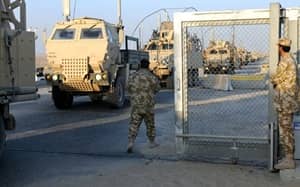
The Iranian regime has welcomed the completion of the U.S. military withdrawal from Iraq, with the Islamic Revolutionary Guard Corps (IRGC) describing the departure as a “historic victory” for what it calls the Islamic Resistance Front.
The United States completed the withdrawal of its remaining forces from Iraq on September 30, marking the formal end of the U.S.-led coalition’s military mission in the country. The final American personnel and equipment left Erbil, while Washington said its mission against ISIS in Iraq had formally concluded.
The departure followed the gradual drawdown of coalition forces under a U.S.-Iraqi agreement. Britain and Italy also completed the withdrawal of their remaining military personnel from Iraq as the coalition mission came to an end.
In a statement carried by Iranian state-affiliated media, the IRGC congratulated what it described as the Iraqi people, the “united front of the Islamic Resistance,” and the “revolutionary fighters of the Islamic world” over the U.S. withdrawal.
Obtaining Medication Is Becoming Impossible for Patients in Iran
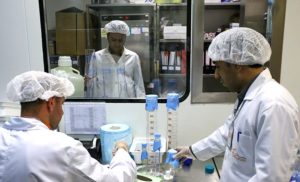
Patients at Social Security Organization clinics in Iran often leave their appointments with prescriptions for which some medications are unavailable, not covered by insurance, or provided only as Iranian brands; the rest of their treatment must be paid for out of pocket.
For many patients visiting Social Security Organization clinics, seeing a doctor and obtaining a prescription is not the end of the treatment process. After waiting for hours, a patient may receive only some of the prescribed items at the clinic’s pharmacy and then have to go to outside pharmacies for the rest.
Sometimes the medication is unavailable at the clinic pharmacy; sometimes the quantity provided is less than what is needed; sometimes the prescribed item is not covered by insurance; and sometimes only an Iranian brand is provided, leaving the patient to purchase an imported version at the full market price.
Cold medicine and antibiotics can usually be found at the clinic pharmacy and obtained through insurance. According to patients, the problem begins when prescriptions involve more specialized medications or drugs that must be taken over a long period.
Inflation In Iran in Summer: Even Bread and Cheese Have Disappeared from People’s Tables
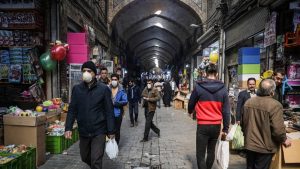
In September 2026, monthly inflation reached 4.2%. Year-on-year inflation was also recorded at 89.8%, while annual inflation reached 73.6%. Simply put, a similar basket of goods and services cost, on average, nearly 90% more in September this year than it did last year.
The severity of the crisis becomes clearer when we look at the composition of inflation. Year-on-year inflation for food, beverages, and tobacco reached 121.8% in September. Annual inflation for this group was also 108.8%. Therefore, a temporary slowdown in the rate of food price increases does not mean that food has become cheaper. Prices are still rising, but the pace of the increase has slowed over the course of one month.
Among food items, oils and fats have placed an extremely heavy burden on households. Year-on-year inflation for this group has exceeded 257%. Milk, cheese, and eggs have also experienced very sharp price increases.
The 2025 household expenditure and income report provides another picture of the same pressure. The average annual net expenditure of an urban household was about 3.92 billion rials, an increase of 45.4% from the previous year. During the same period, the average reported income of an urban household was about 4.85 billion rials, growing by 41.2%. Thus, expenditure growth outpaced income growth.
Iran Household Costs Rose 45.4% As Dollar Reached About 258,000 Tomans

New household spending data, a surge in the open-market exchange rate and the government’s plan to expand food vouchers to as many as 44 million people, alongside central bank intervention and new sanctions on major automotive and rail companies, show the extent of pressure on Iran’s economy.
A series of reports published in Iran on October 1 and 2 show that household costs have risen faster than incomes, the dollar has reached around 258,000 tomans on the open market, and the government is seeking to increase food-voucher credit for 40 million to 44 million people to offset part of the pressure on living standards — a move that would require hundreds of trillions of tomans in additional funding to continue. The developments were reported on the same day that the United States also targeted major Iranian automotive and rail companies with new sanctions.
According to the latest results of the Statistical Center of Iran’s Household Expenditure and Income Survey, the average annual net expenditure of an urban household in 1404 reached about 392 million tomans, an increase of 45.4% from the previous year. The average reported income of an urban household during the same period was about 485 million tomans, up 41.2%. Urban household costs therefore grew 4.2 percentage points faster than income.
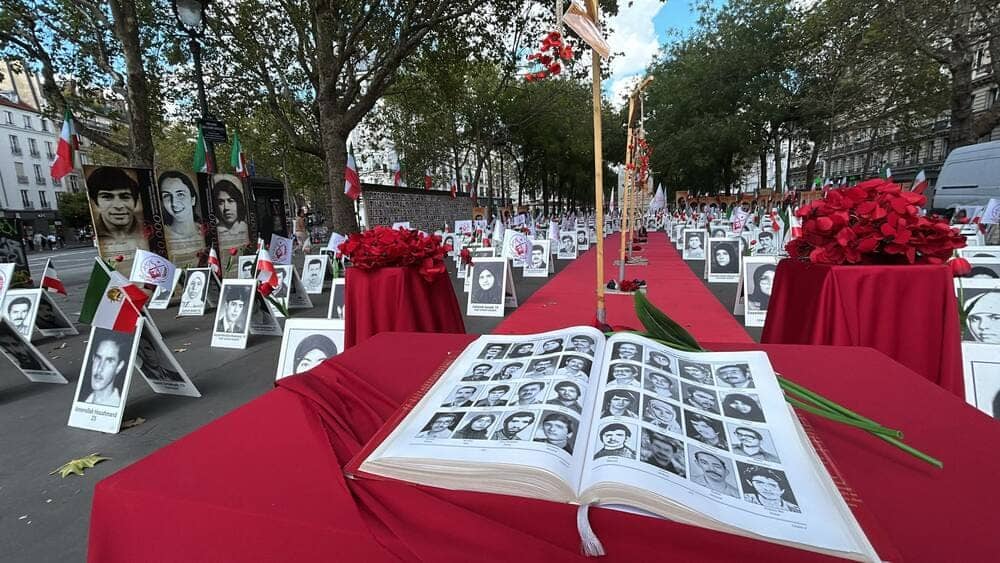
Paris: PMOI Supporters Stage Exhibition to Condemn Iran Regime’s Executions and Demand a Democratic Iran
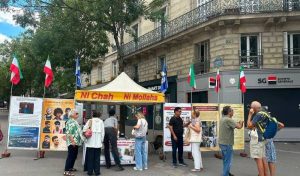
Paris – October 1, 2026 — Supporters of the People’s Mojahedin Organization of Iran (PMOI/MEK) set up a public book table and photo exhibition in Paris, spotlighting the worsening human rights crisis in Iran. The event underscored the regime’s systematic use of executions and the death penalty against political prisoners and protesters arrested during nationwide uprisings.
Organizers said the gathering reflected the Iranian people’s demand for a democratic republic and their aspirations for peace, freedom, justice, and fundamental rights. They also underscored the Iranian Resistance’s call for greater international solidarity with the people of Iran.
They urged the French public and the international community to recognize the suffering of Iranians and their rejection of dictatorship in both monarchical and theocratic forms.
Photographs, personal testimonies, and other materials showcased the courage and sacrifices of those who took part in the Iranian uprisings. The exhibition also pointed as the Iranian regime’s ongoing human rights violations, including executions of political prisoners and the continued imprisonment of protesters.