

THIS PAGE WILL BE UPDATED WITH THE LATEST NEWS
UPDATE: 7:00 AM CEST
Letter to the UN Secretary-General on the Occasion of the World Day Against the Death Penalty
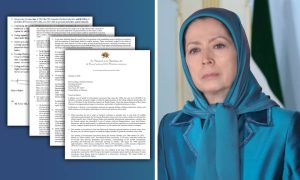
On the eve of 10 October, the World Day Against the Death Penalty, Mrs. Maryam Rajavi, in a letter addressed to United Nations Secretary-General António Guterres, called for urgent international action to stop executions and the killing of protesters in Iran.
Mrs. Rajavi urges the UN Secretary-General to take the lead in a coordinated international initiative aimed at the immediate cessation of executions and the killing of protesters. The demands outlined in her letter include:
• Recognition of the crimes described as genocide and crimes against humanity;
• Establishment of an independent international criminal justice mechanism;
• Prosecution of those responsible for these crimes, including through the application of the principle of universal jurisdiction;
• Referral of Iran’s human rights violations to the United Nations Security Council, and referral of related criminal cases to the International Criminal Court and other competent judicial bodies;
• Ensuring unhindered access for UN investigative bodies to prisons, victims, and witnesses.
Iran’s Regime Fears Another Uprising as Economic Crisis Deepens
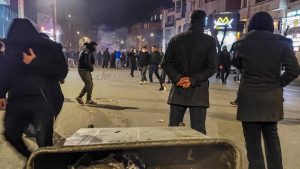
WASHINGTON, Oct. 7, 2026 — Senior officials of Iran’s ruling regime are increasingly warning about public anger as inflation surges, the rial trades near record lows, and economic hardship deepens months after the nationwide January 2026 uprising posed the most serious domestic challenge to the ruling clerical regime in years.
Alireza Jafarzadeh, Deputy Director of the NCRI Washington Office (NCRI-US), said, “The Iranian society, despite the killings and repression, remains explosive. The economic problem in Iran is fundamental and systemic. The next round of uprising is imminent, as the society sees overthrowing the regime as the only cure.”
Gholam-Hossein Mohseni-Ejei, head of the regime’s judiciary, warned officials this week against actions that could “anger the people” or deepen divisions in society. His remarks, carried by regime-aligned media, also stressed maintaining cohesion and preventing adversaries from exploiting internal discontent.
The warning comes amid rapidly worsening economic indicators. Reuters reported Saturday that the rial had fallen to about 2.69 million to the U.S. dollar, losing more than half its value over the previous year, while inflation had risen above 70 percent. Rising prices have increasingly put rent, food, and other basic necessities beyond the reach of many households.
Resistance Units Respond to Execution of January Uprising Protesters With 20 Operations Across Iran
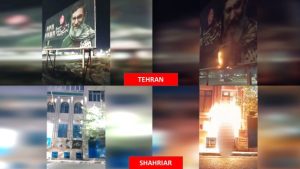
On October 3, PMOI/MEK Resistance Units carried out 20 operations against the Iranian regime’s centers and symbols of repression in response to the execution of Ali Hemmati and Majid Nik-Andish, two young protesters arrested during the January 2026 uprising.
The operations were reported in Tehran, Karaj, Mashhad, Shahriar, Yazd, Gorgan, Birjand, Aligudarz, and Hamidiyeh. They included actions against Basij and security force facilities, propaganda billboards and banners, and a Ministry of Intelligence billboard promoting surveillance of citizens and dissidents.
The campaign came three days after Hemmati, 21, and Nik-Andish, 25, were executed following their arrest in connection with protests in Mashhad. The timing highlighted the contrast between the regime’s use of executions to intimidate society and the continued activities of Resistance Units across the country.
Several operations were directed at institutions involved in repression and control. In Tehran, Resistance Units targeted an IRGC Basij base. In Karaj, they set fire to the entrance of another Basij base. In Hamidiyeh, they targeted the command headquarters of the regime’s security forces.
Iran: 201 Protest Actions in One Month as Economic Pressure Fuels Social Unrest
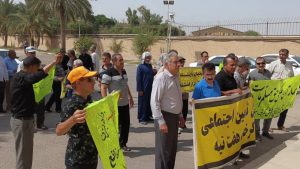
Iran is witnessing a sustained expansion of social protests as economic pressure continues to erode living standards and the regime responds with greater security mobilization.
According to a compilation of protest activities over the past month, 201 protest actions were recorded across different sectors of Iranian society. The largest share came from retirees, with 79 actions, followed by workers with 51, other social groups with 41, bazaar merchants with 16, nurses with five, and students with four.
The breadth of these protests is significant. They involve people whose grievances arise from different circumstances, but whose demands increasingly converge around the same underlying problems: poverty, inflation, unpaid or inadequate benefits, corruption, economic mismanagement, and the absence of meaningful responses from the regime.
Retirees accounted for the largest number of recorded protest actions, including pensioners from the Social Security Organization, telecommunications sector, and steel industry.
Their demands include wages that remain far below the poverty line, pensions that fail to keep pace with inflation, the failure to implement the third stage of pension equalization, unresolved employment regulations, outdated food allowances, and deductions from pensions for supplementary insurance.
Iran Oil Minister Resigns as Questions Mount Over Oil Sales and Missing Revenues
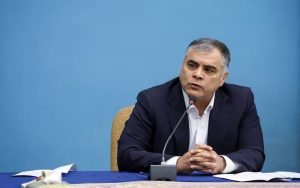
Iran regime’s Oil Minister Mohsen Paknejad has resigned, with the government officially citing personal and family reasons for his departure. The regime’s president Masoud Pezeshkian accepted the resignation and appointed Hamid Bovard, the chief executive of the National Iranian Oil Company, as acting oil minister. According to the president’s office, Paknejad had submitted his resignation some time earlier and pressed for its acceptance.
The official explanation, however, comes as the Ministry of Oil faces increasing scrutiny over the way Iran sells oil and transfers the resulting revenues under sanctions. Parliamentary investigations and reports concerning oil intermediaries (trusts) have placed the ministry under growing pressure, while questions remain about revenues from oil sales that allegedly have not returned to the country.
Because Iran faces restrictions on international banking and financial transactions, oil sales have increasingly relied on intermediary networks designed to facilitate transactions and transfer revenues outside conventional banking channels.
These intermediaries have become an important component of the regime’s sanctions-evasion system. But their expanding role has also generated questions over transparency, oversight, qualifications, and accountability.
Iran’s Teachers Face Poverty, Repression, and Resignation as Education System Unravels

World Teachers’ Day is meant to recognize the central role educators play in shaping the future of society. In Iran, however, the occasion has highlighted a starkly different reality: teachers are increasingly speaking of resignation and leaving their profession rather than celebrating their status.
The reports of teachers submitting resignations have become sufficiently widespread that even regime-linked media have been forced to acknowledge the issue, while officials have attempted to dismiss the reports as rumors. Yet images and documents showing teachers’ resignations have circulated publicly, exposing the growing gap between official claims and conditions inside Iran’s schools.
The crisis is not simply about salaries. It reflects the cumulative impact of economic hardship, insecurity, repression, overcrowded classrooms, inadequate facilities, and the transformation of education into an increasingly class-based system.
The international standards concerning teachers emphasize the importance of professional dignity and employment security. The 1966 UNESCO Recommendation concerning the Status of Teachers specifically recognizes permanent employment and job security as essential to encouraging teachers to devote themselves to education.
The reality facing Iranian teachers is increasingly the opposite.
Tehran Municipality’s Effort to Stabilize Food Prices

Tehran Municipality has been implementing its “Zero Inflation” plan since September 29. According to the official pledge, the prices of 12 essential goods will remain fixed for six months. Some reports have said that this period will last until the end of the current Persian calendar year (March 22, 2027). However, rice, meat, cooking oil, and legumes are being sold at prices ranging from several hundred thousand to even millions of tomans. The main question is: How do these fixed prices differ from market prices? Alireza Zakani, the mayor of Tehran, announced the launch of the “Zero Inflation” plan at the Sadeghieh fruit and vegetable market. In the first phase, rice, frozen meat, cooking oil, sugar, dates, pasta, soybeans, and five types of legumes will be offered. In the Persian month of Aban [October-November], chicken, tomato paste, and cheese will be added, bringing the total number of items to 15.
Each household’s allocation is determined using the head of the household’s national identification number and based on household size. For a four-person household, the monthly allocation is eight kilograms of rice, two kilograms of meat, and four kilograms of legumes. The allocation is one kilogram and 600 grams of cooking oil and two kilograms of soybeans.
The goods will be offered at 108 fruit and vegetable markets and 18 Shahrvand stores, a municipal retail chain. Tehran’s mayor has described the prices as being at least 5% to 50% below current market rates. The municipality has also promised to increase the number of distribution centers to more than 200 in November.
Iran’s Economy on a Downward Spiral of Recession and Declining Living Standards

Iran’s economy is facing a combination of deep recession, declining exports, falling real household incomes, and mounting economic pressures, painting a troubling picture of the country’s economic future. Economic data released on conditions in spring 2026 show that the issue is no longer merely rising prices or declining purchasing power; production, trade, and household incomes are also under simultaneous pressure. This situation has made the livelihood prospects of millions of Iranians more uncertain than ever.
One of the most important signs of the worsening economic situation is the collapse of economic growth to negative 10.1% in spring 2026. At the same time, growth in exports of goods and services has fallen to negative 35.7%. These figures point to a deep recession whose consequences are not confined to economic indicators but are directly affecting people’s lives and the country’s productive capacity.
The gap between the goals set in the Seventh Development Plan and the current situation is also striking. The plan had set an economic growth target of 8%. Yet Iran’s economy is now experiencing negative 10.1% growth. Meanwhile, approximately 79.84 quadrillion rials (about $31 billion) in financial resources were needed for investment in 2025. Available capacity was estimated at around 52.91 quadrillion rials (about $20.3 billion), leaving a resource shortfall of 26.93 quadrillion rials (about $10.4 billion).
Reports from Iran Describe Increased Security Measures in Tehran, Mashhad and Other Cities
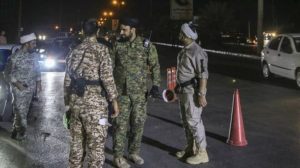
Reports sent exclusively from inside Iran describe searches of metro passengers in Tehran, nighttime movements by motorcycle units in Mashhad, the deployment and storage of security equipment at several locations, and the start of training for tens of thousands of personnel; meanwhile, a group of students in Tehran have staged a sit-in over disciplinary rulings.
Security forces and Basij units in several Iranian cities have implemented new field measures and preparations, including identity checks on passengers, deployments at urban locations, the positioning of personnel and equipment, and a large-scale training program. Exclusive reports sent from inside Iran also describe a student sit-in in Tehran protesting the suspension of a number of students from their studies.
According to reports sent from Tehran, police officers at metro stations had moved beyond their usual presence and were stopping passengers on station platforms. According to the report, officers searched belongings, took the national identification cards of some individuals, and entered their details into a device.
Paris Exhibition Highlights Iran’s Executions and Human Rights Crisis
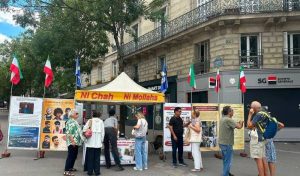
Paris – October 6, 2026 — Supporters of the People’s Mojahedin Organization of Iran (PMOI/MEK) held a public book table and photo exhibition in Paris, drawing attention to Iran’s worsening human rights crisis and the regime’s systematic use of executions against political prisoners and protesters detained during nationwide uprisings.
The event also promoted a symbolic 3.5-kilometer run on Saturday, October 10, at Parc Montsouris in Paris, marking the World Day Against the Death Penalty and calling for public support for the campaign to #StopExecutionsInIran.
Organizers said the gathering reflected the Iranian people’s demand for a democratic republic and their aspirations for peace, freedom, justice, and fundamental rights. They also underscored the Iranian Resistance’s call for greater international solidarity with the people of Iran.
They urged the French public and the international community to recognize the suffering of Iranians and their rejection of dictatorship in both monarchical and theocratic forms.
Photographs, personal testimonies, and other materials showcased the courage and sacrifices of those who took part in the Iranian uprisings. The exhibition also pointed as the Iranian regime’s ongoing human rights violations, including executions of political prisoners and the continued imprisonment of protesters.
Gothenburg Rally Supports 141st Week of “No to Execution Tuesdays” in 66 Prisons Across Iran
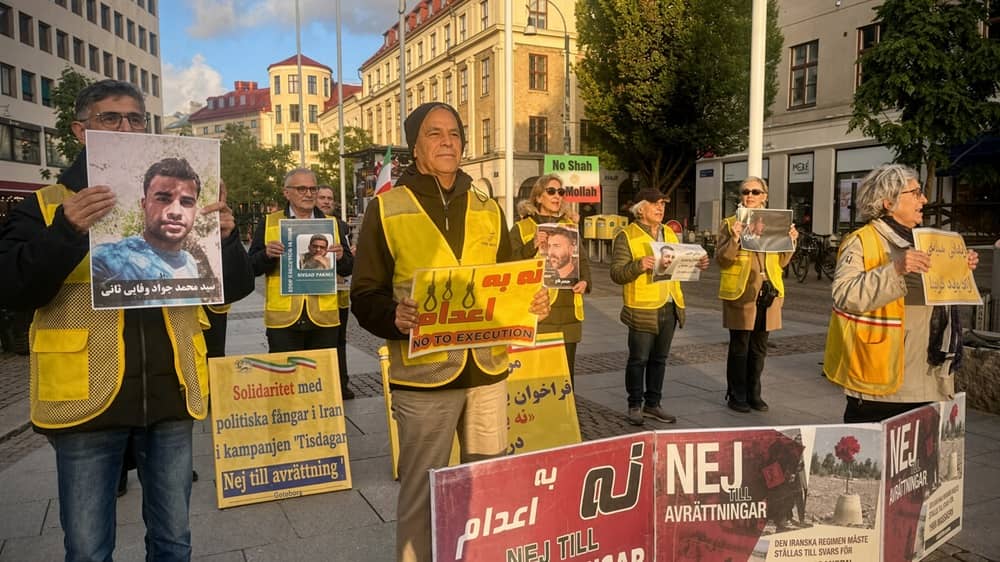
Gothenburg, Sweden — October 6, 2026: Supporters of the People’s Mojahedin Organization of Iran (PMOI/MEK) held a rally in solidarity with the 141st consecutive week of the “No to Execution Tuesdays” campaign, a movement protesting the Iranian regime’s escalating executions and systematic repression.

At the Gothenburg gathering held in solidarity with the “No to Execution Tuesdays” campaign, protesters warned that political prisoners in Iran face an increasingly grave risk of execution amid an escalating wave of repression. They expressed deep concern over the growing number of death sentences against political detainees and protesters, arguing that the Iranian authorities are using executions to silence dissent and spread fear across society. Calling for urgent international action, the demonstrators urged the global community to help prevent further executions and protect the lives of prisoners facing death sentences.