


THIS PAGE WILL BE UPDATED WITH THE LATEST NEWS
UPDATE: 1:30 PM CEST
UN Human Rights Chief Sounds Alarm on Iran’s Soaring Executions and Crackdown

United Nations High Commissioner for Human Rights Volker Türk issued a stark warning on Monday, highlighting the Iranian regime’s alarming surge in executions and ongoing repression during his Global Human Rights Update to the 60th session of the Human Rights Council in Geneva. Türk revealed that over 840 people have reportedly been executed in Iran since the start of 2025, a figure more than double that of the same period last year. He called the spike “an alarming escalation of state-sanctioned killings” and urged the international community to take “urgent and coordinated action to halt this trajectory.”
In addition to the executions, Türk condemned Iran’s widening crackdown on dissent and minorities, stating that authorities have “arrested hundreds of people, including ethnic minorities, on vague charges of collaboration or espionage.” He warned that these actions are deepening fears among citizens and fueling instability.
The UN rights chief also linked the developments in Iran to a broader global trend of declining respect for human rights and international law, stressing that governments are “picking and choosing which rights to respect as if they were items on a menu.” He cautioned that such selective enforcement threatens the very foundation of international norms.
Türk urged member states to increase pressure on Tehran, ensure accountability for rights violations, and support mechanisms that document abuses for future legal action.
“History has shown time and again that no one is safe when human rights are under attack,” he said. “Abuses committed against one group are always part of a broader pattern of oppression.”
The High Commissioner called on the Human Rights Council and the broader international community to “refuse silence in the face of systemic repression” and to “stand with the Iranian people in their demand for dignity and justice.”
UPDATE: 8:00 AM CEST
Appeasing Tehran Has Failed. It’s Time to Back the Iranian People’s ‘Third Option’

The massive rally of the Iranian Resistance in Brussels on September 6, 2025, was more than just a gathering; it was a powerful and public verdict on decades of failed Western policy toward Iran. For too long, the international community has pursued a strategy of appeasement, hoping to moderate a regime that is fundamentally incapable of reform. This policy has not only failed to bring about change but has actively emboldened the theocracy in Tehran, making it a greater threat to its own people, the region, and the world.
The rally, celebrating the 60th anniversary of the People’s Mojahedin Organization of Iran (PMOI/MEK), showcased the enduring power of the only viable alternative: the Iranian people and their organized Resistance. It is time for the West to abandon its failed policies and embrace the “Third Option” of regime change by the people of Iran.
World Suicide Prevention Day: Annual 10% Increase in Deaths from Suicide in Iran

On World Suicide Prevention Day, it is an opportunity to address one of the hidden and overlooked crises in Iranian society: the suicide of women and girls. According to Hamid Yaghoubi, head of the Suicide Prevention Association, in the past four years, deaths from suicide in Iran have increased by 10% annually. In 2011, the rate was 7.4; it rose to 8.1 in 2022 and reached 8.9 in 2023. Emphasizing that the rate is even higher in 2024, he said it will likely reach 9.7 in 2024. Hamid Yaghoubi admitted that Iran told the world its suicide rate was 4.3%, which placed the country at rank 160 among 160 countries.
NCRI-US Celebrates 60th Anniversary of PMOI in Washington, D.C., Highlighting Iran’s Struggle for Freedom
On September 7, 2025, the National Council of Resistance of Iran (NCRI) office in Washington, D.C., hosted a momentous event at the Mayflower Hotel to commemorate the 60th anniversary of the founding of the People’s Mojahedin Organization of Iran (PMOI/MEK). The celebration brought together Iranian-Americans, members of the Organization of Iranian-American Communities (OIAC), supporters of the Iranian resistance, and distinguished political figures.
WASHINGTON, DC, Sept 7 – NCRI-US celebrates the 60th anniversary of the founding of the People’s Mojahedin Organization of Iran
Distinguished Iranian-American scholars and professionals reflect on the MEK's six decades of struggle and sacrifice for freedom in Iran. #MEK60 pic.twitter.com/C1zhstzSVD— NCRI-U.S. Rep Office (@NCRIUS) September 9, 2025
The event highlighted the MEK’s enduring legacy of resistance against oppression, featuring a blend of artistic performances and compelling speeches that underscored the organization’s six decades of struggle for freedom, justice, and sovereignty for the Iranian people.
Continued Detention and Torture of Mohammad Banazadeh Amirkhizi
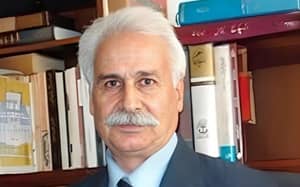
Mohammad Banazadeh Amirkhizi, a 79-year-old political prisoner and a survivor from the justice-seeking families of the 1980s, is still being held under very difficult conditions in the Qom Ministry of Intelligence detention center. Despite multiple illnesses and a critical physical condition, he not only has no access to medical care, but is also kept in solitary confinement under interrogation and severe psychological pressure. On the morning of Monday, July 28, security forces entered the home of Mohammad Banazadeh Amirkhizi in Tehran without presenting a judicial warrant and forcibly took him away. After his transfer to the Ministry of Intelligence detention center in Qom, his family was left in complete uncertainty and has only been able to have a few short phone calls with him under the control of security agents.
Reserves of Five Main Dams in Iran Have Dropped to Zero

The latest data from Iran’s Water Resources Management Company shows that between September 22, 2024, and September 6, 2025, the reserves of five major dams in Iran have fallen to zero. With the worsening water crisis and the regime’s inability to manage resources, new official reports indicate that 19 large dams in the country are facing severe drought. Voshmgir, Golestan, and Boostan dams in Golestan province, Rudbal Darab dam in Fars, and Shamil and Niyan dams in Hormozgan have completely dried up. In Gilan, the Sefidrud dam holds only 3% of its capacity, while in Zanjan, the Taham dam has reached a warning level with just 9% of reserves.
Expanding Protests in Iran Highlight Deepening Political and Economic Crisis
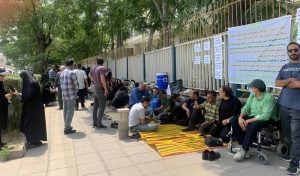
With 313 protests recorded in August 2025, workers, retirees, students, farmers, and other social groups escalate demonstrations amid worsening economic stagnation and systemic failures. As Iran’s regime faces widening fractures and systemic failure, public protests across the country have surged. More than a year into the presidency of Masoud Pezeshkian, it is increasingly evident that the regime has no solution to the country’s worsening crises. The recent 12-day war delivered heavy blows to the regime’s already fragile economy, deepening stagnation and triggering new rounds of demonstrations. In August 2025 alone, at least 313 protest movements were recorded in cities across the country, reflecting broad-based unrest and the regime’s preparation for what appears to be an inevitable final confrontation with its people.
Iran’s Electricity Crisis: Regime Turns to Solar Panels Amid Structural Failures

As power outages worsen, Tehran promotes solar projects as a quick fix—despite technical, financial, and environmental barriers that make real solutions unlikely. Iran is experiencing an intensifying electricity crisis, with rolling blackouts hitting many cities several times a day. Instead of addressing systemic issues in the energy sector, the regime has turned solar energy into a central propaganda theme—portraying it as a short-term solution to the country’s growing power deficit. During his September 7 visit to China, regime president Masoud Pezeshkian instructed his scientific deputy to prioritize building solar power plants in urban areas. His comments echoed previous claims from government officials that solar development could ease the electricity shortage in just a few months. Energy experts, however, dismiss these assurances as unrealistic. They argue that while solar power fits Iran’s climate potential, it cannot meet the country’s immediate and massive demand.