

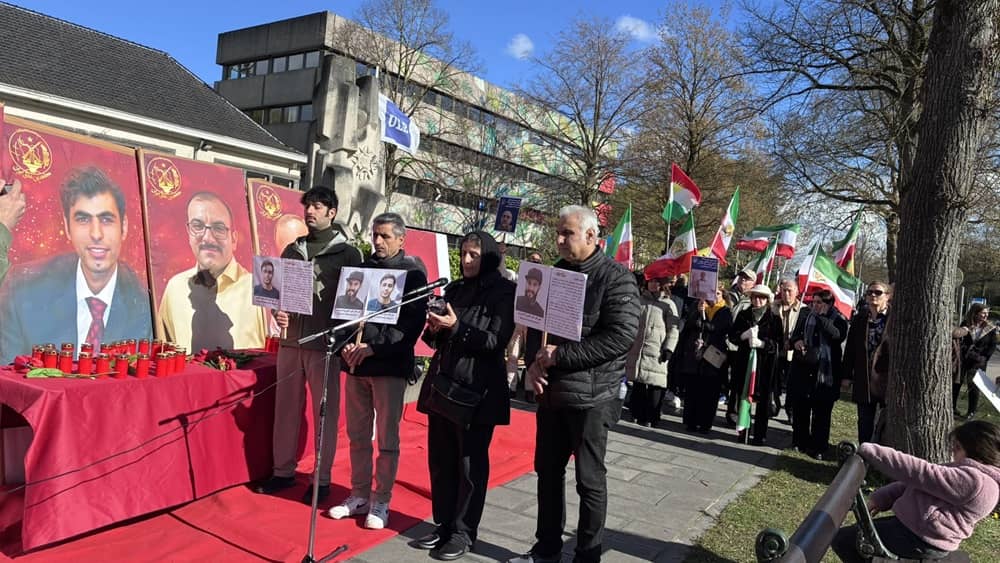
THIS PAGE WILL BE UPDATED WITH THE LATEST NEWS
UPDATE: 08:00 PM CEST
Senior IRGC Figures Killed, Gulf Energy Sites Hit, and Hormuz Traffic Controlled as Conflict Intensifies
Over the past 24 hours, the Iran conflict was marked by targeted strikes on senior Iranian figures and strategic infrastructure, continued missile exchanges with Israel, coordinated attacks on Gulf energy facilities, and sustained disruption of maritime traffic through the Strait of Hormuz. While Iran absorbed significant losses to its leadership and internal infrastructure, it maintained retaliatory pressure across multiple fronts and continued to leverage its position over critical shipping routes. Internal repression measures also persisted amid wartime conditions, while diplomatic efforts failed to produce immediate de-escalation.
Iranian regime losses centered on leadership and infrastructure strikes. In Tehran, targeted attacks killed Maj. Gen. Majid Khademi, head of the Islamic Revolutionary Guard Corps intelligence organization, along with Ashgar Bakeri, a senior Quds Force figure associated with external operations. These losses represent a direct disruption to the regime’s intelligence and covert operational command. Additional strikes hit aviation-related facilities in and around the capital, including Mehrabad, Bahram, and Azmayesh airports, where infrastructure and aircraft support assets were damaged.
A missile struck a market in Tel Aviv following a barrage of missiles that launched from Iran as the war rages on pic.twitter.com/WMboDXZtzd
— Reuters (@Reuters) April 6, 2026
Beyond Tehran, strikes extended to multiple areas across the country, including Ahvaz, Karaj, Shiraz, and Bandar Lengeh, indicating a geographically dispersed targeting pattern. Industrial and energy-linked sites were also affected, contributing to cumulative degradation of operational capacity. Civilian areas were impacted alongside strategic targets, with casualties reported in several locations, though precise figures remain fluid.
U.S. and Israeli losses during the same 24-hour period were limited but reflected ongoing exposure to Iranian retaliatory capabilities. Iranian missile strikes continued to hit Israeli urban areas, including central regions and Haifa, where residential structures were damaged and fires broke out in industrial zones. Several civilians were reported injured. No new confirmed U.S. aircraft losses or personnel incidents were reported during this period.
At a roadside cafe in downtown Cairo, Abu Ali was mid domino throw when the lights snapped off under new early-closing orders enacted to curb Egypt's soaring energy bill due to the US-Israel war on Iran. https://t.co/aRFzUJr0PX
— AFP News Agency (@AFP) April 6, 2026
Iranian retaliation continued across multiple domains. Missile and drone attacks targeted Israeli towns and infrastructure, maintaining pressure on population centers and industrial regions. In parallel, Iran expanded its operational reach across the Gulf. In Kuwait, strikes affected oil-related infrastructure and government-linked facilities. In Bahrain, sites in the Sitra industrial and refinery area were hit, with fires reported in storage and processing facilities. In the United Arab Emirates, debris from incoming or intercepted projectiles caused fires in the Ruwais petrochemical complex. These attacks reflect a coordinated approach aimed at regional energy systems rather than isolated military targets.
Maritime developments remained central to the conflict’s economic dimension. The Strait of Hormuz continued to operate under partial restriction, with the Iranian regime allowing controlled transit rather than enforcing a full closure. Approximately 15 vessels were reported to have passed through the strait within the last 24 hours under monitored conditions. This controlled flow indicates a calibrated strategy designed to maintain pressure on global shipping while avoiding a complete shutdown. At least one commercial vessel in or near the strait was struck and caught fire, with crew members reported injured, highlighting the growing risks to civilian maritime traffic.
BREAKING: Israel's military says it killed the leader of the Iranian Revolutionary Guard's undercover unit in its expeditionary Quds Force. https://t.co/Y9m1nzftJd
— The Associated Press (@AP) April 6, 2026
Inside Iran, internal conditions reflected continued tightening of state control. Reports from within the last 24 hours indicate executions linked to security-related charges, alongside continued arrests and enforcement actions. The country also remained under an extended nationwide internet disruption, severely limiting communication and information flow. These measures suggest sustained concern within the leadership over internal stability amid ongoing military pressure.
The internal information environment in Iran remained severely restricted over the past 24 hours, with the country continuing under what appears to be one of the most extensive nationwide internet shutdowns in the current phase of the conflict. Connectivity remained heavily disrupted across major urban centers, with access to international platforms largely blocked and domestic networks operating in a limited, state-controlled mode.
⚠️ Update: The internet blackout in #Iran is entering its 38th day with the general public now cut off from international networks for over 888 hours.
The measure leaves Iranians without access to independent sources of information relating to the war or global news events. pic.twitter.com/btcHZsyzck
— NetBlocks (@netblocks) April 6, 2026
The global economic impact remained pronounced. Oil markets continued to react to uncertainty surrounding supply routes and infrastructure security, with volatility driven by disruptions in Hormuz transit and strikes on Gulf energy facilities. Refiners and traders adjusted sourcing strategies in response to constrained flows and elevated risk, underscoring the broader strain on the global energy system.
Trump claimed victory in Iran. Leaks hint at months of retaliation https://t.co/dOc2Ix58rG
— The Times and The Sunday Times (@thetimes) April 6, 2026
Diplomatic efforts continued without immediate resolution. A proposed ceasefire framework involving phased de-escalation remained under discussion, with regional intermediaries maintaining communication channels between the parties. At the same time, pressure surrounding the status of the Strait of Hormuz persisted, with warnings that continued restrictions could trigger further escalation. Tehran’s position appeared to remain conditional, linking maritime access to broader strategic considerations.
Taken together, the 38th day of the Iran War reflects a conflict that is both intensifying and expanding across multiple domains. Targeted losses to Iranian leadership and infrastructure indicate sustained external pressure, while Iran’s continued ability to strike across Israel and the Gulf demonstrates ongoing operational reach. The controlled restriction of Hormuz traffic highlights the strategic use of economic leverage, while internal repression signals concern over domestic stability. With no diplomatic breakthrough and multiple escalation pathways active, the conflict continues to move toward a more entrenched and system-wide phase.
The dismissal, which Iran said it conveyed to the U.S. via Pakistan, comes on the eve of U.S. President Donald Trump’s deadline to attack Iran’s power plants and transport infrastructure. https://t.co/OU9Yalxrob
— TIME (@TIME) April 6, 2026
UPDATE: 07:00 AM CEST
Iran’s Regime Executes Protesters in Desperate Bid to Stave Off Another Uprising

At dawn on Sunday, April 5, 2026, the Iranian regime committed another horrific crime by executing two brave rebellious youths, 31-year-old Shahin Vahedparast and 19-year-old Mohammad-Amin Biglari. Both were key participants in the massive December 2025–January 2026 nationwide uprisings that brought the clerical establishment to its knees. Reeling from recent uprisings and the death of Supreme Leader Ali Khamenei, the paralyzed regime is systematically purging political dissidents and spread terror among the public. The consecutive executions of these young protesters highlight the sheer brutality of a state terrified of its own people and desperate to prevent another imminent revolt.
Vahedparast and Biglari were sentenced to death on fabricated charges of “moharebeh” (waging war against God) and “corruption on earth” by the notorious executioner Judge Abolqasem Salavati in Branch 15 of the Tehran Revolutionary Court. Their sentences were later upheld by Branch 9 of the Supreme Court of the regime’s judiciary.
Iran’s Regime Fails to Silence Resistance Units with Execution Spree of PMOI Members
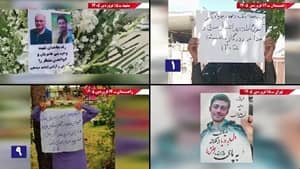
In a brutal attempt to crush dissent, the Iranian regime recently launched a horrific execution spree, hanging six political prisoners and members of the People’s Mojahedin Organization of Iran (PMOI/MEK) in the span of a single week. On March 30 and 31, authorities executed Mohammad Taghavi, Akbar Daneshvarkar, Babak Alipour, and Pouya Ghobadi. Days later, on April 4, the regime executed Vahid Bani Amerian and Abolhassan Montazer.
These state-sanctioned murders were designed to physically eliminate the regime’s organized opposition and terrorize a restless society into submission. However, this desperate campaign of intimidation has spectacularly backfired. Instead of silencing the opposition, the executions have ignited a fresh wave of defiance across Iran, with PMOI Resistance Units immediately taking to the streets to honor the martyrs and vow to continue their righteous cause.
Bloodshed as Strategy: Tehran’s Desperation Behind a New Wave of Executions
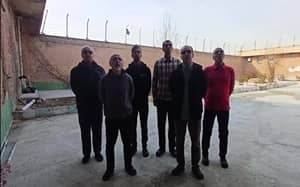
The ruling system of Velayat-e Faqih, long sustained through coercion and ideological control, has once again exposed the depths of its fragility. By exacting revenge on the Iranian people and their organized resistance, the regime demonstrates a stark reality: its survival increasingly depends on the systematic deployment of violence, even at the cost of escalating crimes against humanity.
The recent executions of six political prisoners—Mohammad Taghavi, Akbar Daneshvar Kar, Pouya Ghabadi, Babak Alipour, Vahid Bani Amerian and Abolhassan Montazer—must be understood within this broader strategic framework. These individuals, described by supporters as symbols of defiance, reportedly maintained unwavering resolve in the face of repression. Their final messages, imbued with calls for resistance, reflect not only personal conviction but also the persistence of a broader oppositional current within Iranian society.
Iran Executes Nine Protesters ‘Under Shadow of War’ With Clock Ticking for Four More

Iran executed nine protesters in seven days this week, including a teenager who was hanged after being ‘tortured’ into confession, his lawyer said.
Mohammad Amin Biglari, 19, and Shahin Vahedparast Kolor, 30, were hanged on Sunday after being convicted of attacking a military base during protests in January, according to Iran Human Rights (IHRNGO).
The men were among at least nine political prisoners executed in Iran since the end of March including six members of the dissident People’s Mojahedin Organisation of Iran (MEK).
Four more people being tried in the same case are still on death row in the country and are said to be facing imminent execution.
Supporters of Iranian Resistance Hold Vigil Near White House to Protest Executions of PMOI Political Prisoners
Washington, DC — April 4, 2026 — Supporters of the Iranian Resistance gathered on April 4, 2026, near the White House following the execution of two PMOI political prisoners, Vahid Bani-Amerian, and Abolhassan Montazer, carried out earlier that day. The demonstration was held in response to these latest executions, which participants described as part of a broader wave of repression that has intensified in recent days. They also pointed to the execution of four other PMOI political prisoners—Mohammad Taghavi, Akbar Daneshvar Kar, Babak Alipour, Pouya Ghobadi—who were put to death between March 30 and April 4.
4- #Pairs– April 4, 2026: Iranian Resistance supporters rallied to condemn the execution of six PMOI political prisoners by the mullahs’ regime, urge regime change, & call on France to take action.#StopExecutionsInIran #NoImpunity4Mullahs pic.twitter.com/bRdixRsim1
— Iran Freedom (@4FreedominIran) April 5, 2026
The demonstration, organized by Iranian-American supporters of the National Council of Resistance of Iran (NCRI) and backers of Maryam Rajavi, took place along Pennsylvania Avenue and included a candlelight vigil honoring those executed in recent days.
Iran’s Regime Executes Six MEK Members as MEK Resistance Units Continue Nationwide Activities
Iran’s regime executed six political prisoners affiliated with the People’s Mojahedin Organization of Iran (PMOI/MEK) within one week, according to reports. The executions took place on March 30, 31, and April 4, involving Mohammad Taghavi, Akbar Daneshvar Kar, Babak Alipour, Pouya Ghobadi, Vahid Bani-Amerian, and Abolhassan Montazer.
#Iran’s Regime Executes Six MEK Members as #MEKResistanceUnits Continue Nationwide Activities #StopExecutionsInIran #WeSupportMEKhttps://t.co/M9pONbbpUo
— Iran Freedom (@4FreedominIran) April 5, 2026
Following the executions, MEK Resistance Units carried out activities in several cities, including Tehran, Mashhad, Karaj, Varamin, Khorram Abad, Bandar Abbas, and Zahedan. These actions included placing flowers and images of those executed, along with messages stating that their path would continue.