


THIS PAGE WILL BE UPDATED WITH THE LATEST NEWS
UPDATE: 7:00 AM CEST
Iranian Security Forces Kill Youth Under Torture

Iranian regime authorities in a police station in Langarud, northern Iran, have killed a youth under torture and beating. Regime authorities refused to reveal the youth’s name but locals reported that he was Mohammad Mirmousavi, a 36-year-old man from Lahijan.
The regime only admitted to Mirmousavi’s death after images published on social media showed his body at a morgue, with evident signs of severe torture.
According to reports, he was arrested by special unit forces of the county’s police and died after being “severely beaten” at the Langarud police station. His burial ceremony was held on August 27.
Iran’s Rebellious Youth Respond to Regime Repression and Corruption

On August 12, Iranian regime authorities in Tangak, a small town in Bushehr province, attacked and demolished the small home of an impoverished family. The authorities attacked at 2 am without prior notice and without showing a warrant.
This is a scene that is happening frequently across different parts of Iran, as regime officials deliberately decide to claim lands and destroy the homes of villagers under different pretexts.
The Rising Cost of Bread in Iran: A Growing Concern for the Population

Despite official claims from Iranian regime authorities that bread prices in Tehran have not been authorized to increase, recent evidence suggests otherwise. In various parts of the capital, the price of bread has surged, in some cases doubling within just a few days. This development has sparked widespread concern and confusion among the populace, who rely heavily on bread as a staple food.
Mizan News Agency, which is affiliated with the Iranian regime’s judiciary, reported on Wednesday that the price of bread in certain bakeries had indeed doubled. According to their field surveys, the price of Sangak bread—previously sold for 5,000 tomans—has now risen to 10,000 tomans. Similarly, Barbari bread, which was priced at 3,000 tomans, now costs 5,000 tomans, and Taftoon bread has seen its price increase from 1,000 tomans to 2,000 tomans.
Ukraine Opens Criminal Case Against Iranian Military Officer for Aiding Russia’s War Efforts

Ukraine’s Attorney General, Andriy Kostin, has announced the opening of a criminal case against an Iranian Revolutionary Guard Corps (IRGC) Brigadier, Abbas Mousavi Sharifi Molasarai. The officer is suspected of assisting Russia in its war against Ukraine and committing war crimes against Ukrainian civilians. The announcement, made on social media platform X (formerly Twitter), marks a significant escalation in Ukraine’s efforts to hold Iran accountable for its alleged role in the ongoing conflict. Yuriy Bylosov, head of the war crimes department in the Ukrainian Prosecutor General’s Office, stated in a televised interview that this move effectively recognizes Iran as an active participant in the war on Ukrainian territory.
Heatstroke-Related Deaths Among Workers in Southern Iran: A Growing Concern

In a recent report, Iran’s state-run newspaper Etemad highlighted the tragic deaths of two workers from heatstroke in August 2024. This report sheds light on a worrying trend, revealing that since the summer of 2016, at least 12 workers in the construction, metalworking, and oil and gas industries across Khuzestan, Bushehr, and Hormozgan provinces have succumbed to heatstroke while on the job.
The report, published on August 29, 2024, detailed the fatal incidents involving two workers. Alireza Abdollahzadeh, a petrochemical worker at Bandar-e Emam, experienced a seizure due to the extreme heat on August 20 and tragically died before he could be transported to the hospital. Just days earlier, on August 15, Mohammad Saeed Safaifard, a project worker at the South Pars Gas Complex, also died from heatstroke while at work.
Khamenei Consolidates Power Over Iran’s Security Forces, Tightens Grip on Protest Suppression
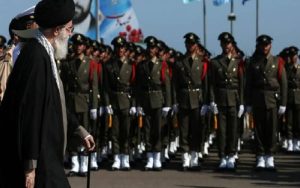
In a significant move that further consolidates the Iranian regime’s control over internal security, Supreme Leader Ali Khamenei has appointed Eskandar Momeni, the regime’s Interior Minister, as the Deputy Commander-in-Chief of the Armed Forces in the Police Force. This appointment, made through a formal decree, signals a critical shift in the regime’s approach to quelling street protests and maintaining order within the country.
This decision effectively places the Ministry of Interior, which also holds the responsibility of heading the National Security Council, under the direct supervision of the Supreme Leader. The implications are clear: the Interior Minister, now empowered by this dual role, will be directly responsible for suppressing street protests, with Khamenei closely overseeing these operations.
Commemorating The Leading Women of Ashraf Slain on September 1, 2013

The struggle by the Iranian opposition movement is being led by selfless women who have sacrificed everything in their own lives to bring freedom and democracy to their people in Iran. Over the years, these leading women have become indispensable to the Iranian opposition in its struggle for regime change and democracy. So, at every crucial juncture, Iran’s leading women are seen playing a crucial role in the movement.
One such watershed moment took place on September 1, 2013, in Ashraf.
Ashraf represented the spirit and symbol of the democratic struggle for regime change in Iran. On September 1, 2013, as the Iranian regime was preparing to sit at the negotiating table in Geneva over its nuclear program, hitmen raided the unarmed, innocent, and legally protected civilians at Camp Ashraf, the 30-year seat of the Iranian opposition, the People’s Mojahedin Organization of Iran (PMOI/MEK), in Iraq.
Afshin Baymani’s Critical Health Condition Ignored

Afshin Baymani, a political prisoner held in Ghezel Hesar Prison, suffered a heart attack on the night of August 28, 2024, marking a significant deterioration in his health. Baymani, who is serving his 25th year of imprisonment, was urgently transferred to an external medical facility after showing critical symptoms of heart failure. Specialist doctors had previously stressed the need for immediate heart surgery due to Baymani’s blocked arteries. However, prison officials repeatedly obstructed his medical furlough, endangering his life. Recent reports indicate that his condition worsened significantly, culminating in the emergency transfer. The delay in providing necessary medical care has drawn sharp criticism from human rights advocates.
Solidarity in Paris: Exhibition Supporting Iranian Revolution and Condemning Regime’s Crimes

On August 29, 2024, in Paris, France, supporters of the People’s Mojahedin Organization of Iran (PMOI/MEK) and freedom-loving Iranians organized a compelling photo and book exhibition. This event was held in solidarity with the ongoing Iranian Revolution and served as a protest against the alarming rise in executions by the Iranian regime.