

THIS PAGE WILL BE UPDATED WITH THE LATEST NEWS
UPDATE: 08:00 AM CET
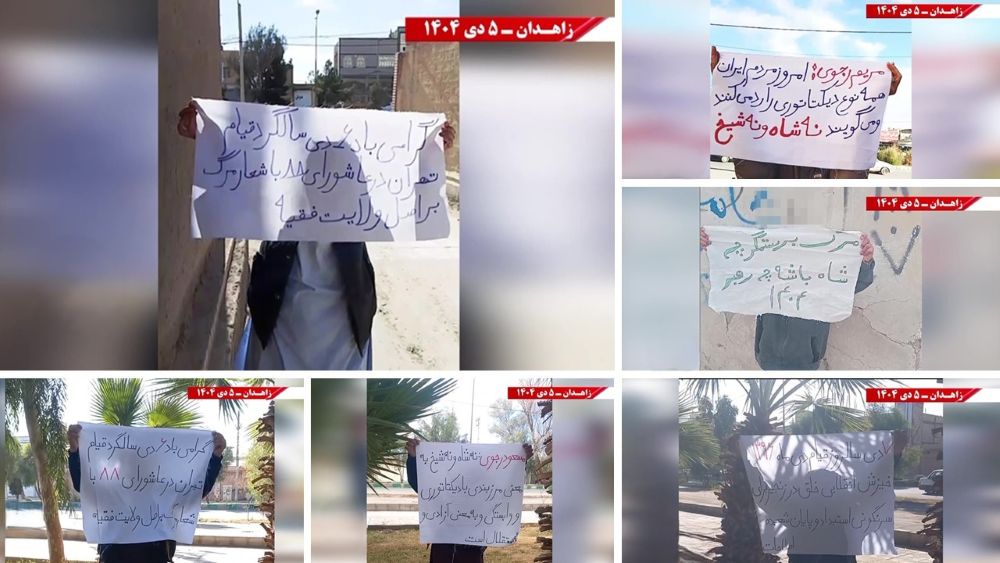
PMOI Resistance Units in Zahedan Honor Anniversaries of Iran’s 2009 and 2017 Uprisings
On December 26, members of the PMOI Resistance Units in Zahedan, southeast Iran, organized activities to mark the anniversaries of two pivotal moments in the Iranian people’s struggle for freedom: the Ashura uprising of December 27, 2009, and the nationwide uprising of December 2017. Braving the regime’s suppression, these activists displayed placards and slogans vowing to continue the fight against tyranny until the establishment of a free Iran. The Resistance Units in Zahedan described the December 2009 protests as a moment that “brought Iran’s regime to its knees.” Their messages emphasized that the only path forward is a “democratic revolution,” rejecting the regime’s attempts to frame the people’s legitimate resistance as criminal behavior. One placard defiantly read: “If the meaning of rioting and breaking structures is to rise up and resist for revolution and freedom, then yes we are all rioters and we will break the structure of the criminal mullahs’ regime.”
Iran’s Regime Prevents Gathering of Families of 1980s Massacre Victims
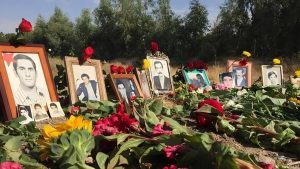
Reports indicate that security and law enforcement agents of Iran’s regime prevented a group of families of political prisoners executed in the 1980s, including during the summer of 1988, from commemorating their loved ones at Khavaran Cemetery, a burial ground in Tehran associated with mass graves of executed political prisoners. Law enforcement and security agents who had been deployed at the site since the early hours of Friday, December 26, once again blocked families from entering Khavaran Cemetery by closing its gates. In addition, they prevented families from gathering at the cemetery entrance and from placing photographs of their loved ones and laying flowers. Khavaran Cemetery is the burial site of thousands of political prisoners executed in 1988, most of whom were members of the People’s Mojahedin Organization of Iran.
Iran’s “Invisible Citizens”: How Millions Live Without Legal Identity

A rare admission by a state-affiliated outlet exposes a century-long failure that has left millions without birth certificates, rights, or recognition. A rare and revealing admission by a state-affiliated media outlet has once again exposed one of Iran’s most entrenched and devastating structural crises: the existence of millions of people living without legal identity. On December 24, 2025, the government-linked outlet Rokna published a report titled “The Limbo of the Undocumented,” openly acknowledging the scale and human cost of Iran’s undocumented population. These are people without birth certificates—citizens whose identities have effectively been erased. They are born, grow up, work, age, and die without ever being officially recognized by the state. More than a century after Iran issued its first birth certificates, the country in 2025 still hosts a vast population for whom legal identity remains out of reach.