

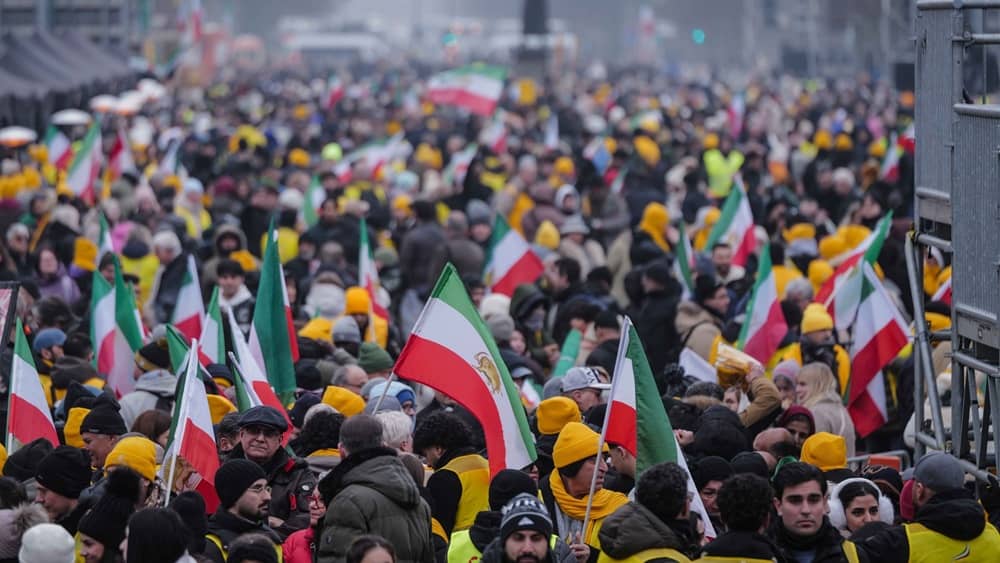
THIS PAGE WILL BE UPDATED WITH THE LATEST NEWS
UPDATE: 07:00 PM CET
US Announces Seizure of Veronica III, Which Was Transporting Sanctioned Oil

The US Indo-Pacific Command intercepted the Panamanian-flagged tanker Veronica III, which was transporting Iranian oil in violation of sanctions. The vessel was tracked from the Caribbean Sea to the Indian Ocean.
The tanker Veronica III is registered under the flag of Panama. At the same time, the last signal from its automatic identification system was recorded more than two months ago.
The U.S. Indo-Pacific Command intercepted the oil tanker Veronica III, which, according to the American side, was transporting Iranian oil in circumvention of sanctions. This was reported by UNN with reference to the official page of the U.S. Department of Defense on the social network X.
UPDATE: 09:30 AM CET
Field Reports: Rebellious Youth Shatter Regime Crackdown During Iran’s January Uprising
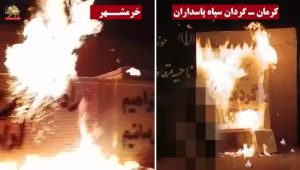
Despite the Iranian regime’s frantic efforts to conceal the scale of the nationwide uprising through severe internet blackouts and censorship, reports continue to leak out, revealing a volatile society determined to overthrow the religious dictatorship. New field reports, received with delay due to these disruptions, detail a week of intense confrontations in early January 2026, showing that the rebellious youth held their ground against heavily armed suppression forces.
The current wave of protests, which erupted on December 28, 2025, initially began as an economic stoppage by bazaari shopkeepers and merchants in central Tehran. Triggered by the rial’s sharp plunge, price spikes, and fears of bankruptcy, the movement quickly expanded geographically to hundreds of locations and socially to include universities, abd the messaging rapidly shifted. What began as livelihood grievances transformed into explicit chants for regime change.
Rebellious Youth Keep the Flame of Freedom Alive on Anniversary of 1979 Revolution
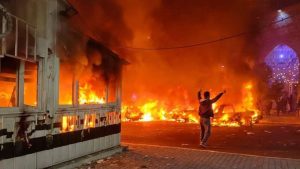
As the clerical regime attempted to stage its annual propaganda rituals marking the “Fajr Decade” and the 47th anniversary of the 1979 anti-monarchical revolution, the streets of Iran witnessed a different kind of fire. Across the country, the rebellious youth carried out 15 operations, targeting the regime’s symbols of repression and honoring the memory of those who fell for freedom.
In a resounding rejection of the ruling dictatorship, brave youths carried out a series of operations coinciding with the anniversary of the fall of the Shah’s regime. These actions were not only a defiance of the mullahs’ authority but a tribute to the martyrs of the recent nationwide uprising. The scope of these activities—spanning from north to south—signals that the spirit of the 1979 revolution, which sought to end dictatorship in all its forms, remains the driving force of the Iranian street today.
Esmat Najafi, A Female Prisoner, Executed in Qom Prison

On the morning of Sunday, February 15, 2026, a female prisoner identified as Esmat Najafi was executed in Qom Prison on charges of murder.
Esmat Najafi had previously been arrested on charges of murder and was subsequently sentenced to death by the regime’s criminal courts. As of the time of publication, prison authorities and relevant official bodies have not publicly announced or confirmed the execution.
Many of the women executed by the Iranian regime are themselves victims of domestic violence and discriminatory family laws. A significant number have acted in self-defense.
Iran’s Regime Expands School Repression After Bloody January Crackdown

In the aftermath of the bloody January uprising, Iran’s clerical regime—fully aware of the political and social consequences of its violent crackdown—has turned to maximum intimidation to contain mounting public anger.
According to a report published on Thursday, February 12, 2026, by the Coordinating Council of Teachers’ Trade Associations of Iran, authorities have initiated what it describes as a “silent expansion of repression in schools following the nationwide January uprising.”
The report outlines what it calls a systematic national pattern. Schools, it warns, have increasingly become extensions of the state’s repressive apparatus. Individuals operating under the labels of Basij forces, religious propagandists, and plainclothes agents have entered educational institutions across the country.
Iranian Regime Official Rejects Zero Nuclear Enrichment

Majid Takht-Ravanchi, deputy foreign minister of Iran’s regime, announced that the Iranian government does not accept zero enrichment, but if the lifting of sanctions is placed on the agenda, it is ready to consider “compromise” in nuclear negotiations. Speaking on Sunday, February 15, in an interview with BBC World, Takht-Ravanchi said that if the United States is willing to engage in talks about lifting sanctions, Iran’s regime will consider compromise to reach a nuclear agreement.
He added that the ball is in America’s court to prove that it seeks an agreement. If they are sincere, I am confident we will move toward reaching a deal.
Iran’s Regime Arrests Nurses, Tries to Conceal the January Massacre

Following the January 8 and 9 massacre, a wave of arrests targeting nurses began in various cities across Iran. State-run media outlets have only made limited references to these arrests. Grassroots sources had previously reported that several nurses were detained for providing medical care to individuals injured during the protests. No official statistics have been released, and the legal status of those detained remains unclear. This ambiguity has raised serious questions.
According to remarks by Mohammad Sharifi-Moghaddam, Secretary-General of the Iranian Nurses House, published on February 11 by the state-run Tosee Irani news outlet, several nurses have been arrested in Tehran, Isfahan, and other cities. He emphasizes: “He does not have exact statistics. Calls from families and colleagues are his only source of information. The arrest of nurses has continued even in the days after the protests. Last week, a nurse working at a home nursing care center was also arrested at her residence.”
Freedom-Loving Iranians in Winterthur Back Iran Uprising, Call for an End to Executions in Iran
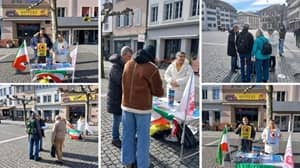
Winterthur, Switzerland – February 14, 2026 – Freedom-loving Iranians and supporters of the People’s Mojahedin Organization of Iran (PMOI/MEK) held a photo and book exhibition in Zurich in solidarity with the nationwide uprising in Iran and its courageous protesters. Displaying banners that read “No to Executions,” participants also expressed support for the growing campaign to abolish the death penalty in Iran.
The exhibition shed light on the Iranian regime’s worsening record of human rights abuses, emphasizing the grave dangers faced by political prisoners. It featured photographs of martyrs from ongoing protests, powerfully denouncing the regime’s violent repression, mass arrests, executions, and massacres. The organizers strongly condemned the regime’s systematic use of the death penalty and urged the international community to press for its abolition. They reaffirmed their unwavering solidarity with the brave people of Iran who continue to rise against tyranny and injustice.
Supporters of the Iranian Resistance Rally in Los Angeles in Support of Iran Uprising, Call for Democratic Republic

Santa Monica, Los Angeles – February 14, 2026 — Members of the Iranian American community held a rally to express solidarity with the nationwide uprising in Iran. The rally brought together supporters of the Iranian Resistance, including the National Council of Resistance of Iran (NCRI) and the People’s Mojahedin Organization of Iran (PMOI/MEK). Participants expressed strong support for the Iranian people’s struggle for freedom and democracy.