

THIS PAGE WILL BE UPDATED WITH THE LATEST NEWS
UPDATE: 03:00 PM CET
Iran’s Future Is Being Shaped by Fake Accounts

When a single figure is cast as the “face of the opposition,” the many Iranian voices that have carried out genuine resistance for years are pushed aside. While the Iranian people are fighting against a brutal clerical regime, a less visible but very real struggle is simultaneously unfolding in the digital sphere. An investigation published in Le Figaro reveals coordinated influence operations on social media targeting Iran — operations aimed at shaping narratives about regime change and promoting one specific political actor.
Tens of thousands of fake accounts, automated activity, and AI-generated content (artificial intelligence, editor’s note) have reportedly been used to create the impression of broad popular support for Reza Pahlavi, the son of Iran’s former Shah. This is according to analyses by independent research groups such as Social Forensics and the Citizen Lab at the University of Toronto. What appears at first glance to be spontaneous support instead looks like orchestrated influence.
UPDATE: 12:00 PM CET
Iran Remains on the Financial Action Task Force (FATF) “Blacklist”

Mexico City, Mexico – The Financial Action Task Force (FATF), in its concluding statement following its plenary meeting held in Mexico City from February 11-13, announced that it would keep Iran on its “blacklist” of high-risk countries. This decision stems from Tehran’s failure to complete the majority of the action plan required of it internationally.
The organization confirmed that Iran remains on its list of “countries requiring action,” the most stringent category under its standards.
The statement noted that Iran’s obligations under the Palermo Convention (Combating Transnational Organized Crime) and the Convention on Combating the Financing of Terrorism remain inconsistent with international standards.
Canada Wants Iran Government Change, Increases Sanctions
TORONTO, Feb 14 (Reuters) – Canadian Foreign Affairs Minister Anita Anand said Canada wants a change of government in Iran but would not say whether it would support a U.S. military strike, the Globe and Mail reported on Saturday.
“We will not open diplomatic relationships with Iran unless there is a regime change. Period,” Anand told the Globe and Mail in an interview in Germany, where she is attending the Munich Security Conference.
Canada has particularly poor relations with Iran and cut off diplomatic ties in 2012.
Anand on Saturday announced further sanctions against seven individuals who are connected with the Iranian government and said Canada’s focus in the region is on the repression of human rights.
UPDATE: 08:00 AM CET
From Zahedan to Tehran: Resistance Units Draw the Red Line against All Dictatorships
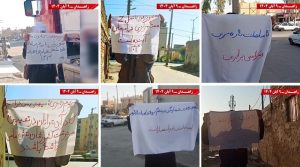
On February 13, 2026, amid the volatile political atmosphere of southeast Iran, PMOI Resistance Units in Zahedan resumed their weekly anti-regime campaigns. These activities serve as a poignant reminder of the Iranian people’s resolve to overthrow the clerical regime while firmly rejecting any return to the monarchical dictatorship of the past. Brave activists displayed placards in public spaces emphasizing that the Iranian nation has moved beyond the cycle of tyranny, seeking a future defined by freedom rather than a choice between “the turban or the crown.”
Mai Sato Warns of Escalating Executions and Repression Following Nationwide Protests

Amid mounting international concern over intensified repression in the aftermath of Iran’s recent nationwide protests, Dr. Mai Sato, the United Nations Special Rapporteur on the situation of human rights in Iran, has issued a stark warning. In a public statement on Twitter, she disclosed that in the weeks leading up to the protests that began on December 28, 2025, she and other UN experts had sent multiple formal communications to Iranian authorities regarding several execution cases and deteriorating prison conditions.
At the center of these concerns is the case of Zahra Tabari, a 67-year-old electrical engineer sentenced to death on charges of baghi (“armed rebellion against the state”). The ruling was reportedly issued following a hearing lasting less than ten minutes. Sato noted that the primary evidence presented against Tabari consisted of a fragment of material bearing a protest slogan, raising serious concerns about the absence of due process and the violation of fair trial standards in capital cases.
When the Architects of Slaughter in Iran Become the Authors of Truth
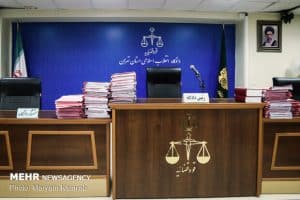
While monitoring the Islamic Republic’s state media, a headline appeared on ISNA (dated February 13, 2026): “Government Spokesperson Explains Actions of the Fact-Finding Committee for the January Incidents.” The brief report stated: “The government spokesperson, referring to the ongoing activities of the Fact-Finding Committee for the January incidents, announced that the final report would be published following the completion of legal measures.” Fatemeh Mohajerani, in an interview with ISNA, noted: “The Fact-Finding Committee, comprising representatives from relevant institutions, is currently gathering documents and hearing testimonies.” She further emphasized: “The final report will be released to the public and for subsequent legal actions once the process is complete.” Previously, in the first press briefing following the events of January 8th and 9th, she had announced that the formation of this committee was on the agenda.”
Iranians in Sydney Hold Exhibition Supporting Iran’s Uprising, Calling for a Democratic Republic

Sydney, Australia – February 12, 2026 – Supporters of the People’s Mojahedin Organization of Iran (PMOI/MEK) held a photo exhibition to honor the martyrs of Iran’s nationwide uprising and to express solidarity with the Iranian people’s ongoing quest for freedom and democracy. The exhibition featured portraits and stories of those killed during the uprising, paying tribute to their courage and sacrifice.
The Shadow of Anxiety Over Iran’s Education, School Seats Are Emptying

In recent months, the link between security and educational stability in Iran has faced an unprecedented challenge. The continuation of regional tensions and the provocations of the mullahs’ regime, along with fears of potential military conflict and the inaction of responsible institutions in ensuring psychological safety, have led many families to refrain from sending their children to schools and educational centers. This report examines the roots of this widespread absenteeism and its devastating consequences for the country’s education system.
Today, instability and anxiety overshadow daily life, and for many families, school is no longer considered a safe place. Following the escalation of tensions and growing concerns about external conflicts, parents face serious doubts every morning. They ask themselves whether sending their child to school under such conditions is safe or not.
Beyond the “Power Vacuum” Myth: Why Iran’s Democratic Alternative Makes an Orderly Transition Possible
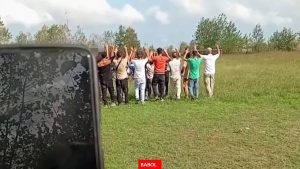
The fear of chaos after regime collapse has long been used to justify tyranny—but Iran’s organized resistance offers a structured roadmap for a peaceful transfer of power. For decades, the specter of a “power vacuum” has functioned as a strategic instrument in the arsenal of authoritarian regimes. In the Middle East, the traumatic experiences of state collapse—from Iraq to Libya—are routinely invoked to instill fear: without the incumbent ruler, the state will implode, society will fracture, and civil war will follow. This narrative has been repeatedly deployed by Iran’s regime. The underlying message is clear: however flawed the regime may be, its removal would unleash uncontrollable chaos. Yet this framing rests on a deliberate false equivalence. It ignores the structural and political particularities of Iran—and, crucially, the existence of a coherent democratic alternative.