

THIS PAGE WILL BE UPDATED WITH THE LATEST NEWS
UPDATE: 10:30 PM CET
No Mullahs. No King: What Do Iranians Want?
Do Iranians want their king back now? or are they fighting for something entirely different?
As Iran faces its most serious uprising in decades, a fundamental question has returned to the global spotlight: Is the future of Iran a restored monarchy, or a new democratic republic? In this episode of Interference, we explore that question with rare insight from inside the Iranian opposition. Alex and Justin are joined by Shahin Gobadi, a senior member of the Foreign Affairs Committee of the National Council of Resistance of Iran (NCRI), to break down what is really happening on the ground.
Shahin explains why protesters across Iran are chanting “No Mullahs, No Shah” rejecting both the ruling theocracy and a return to monarchy and why he believes the idea of restoring the Shah’s son is largely a Western media narrative. We examine reports that thousands of protesters have been killed, the role of the Islamic Revolutionary Guard Corps (IRGC) in suppressing dissent, and whether the regime has already crossed a point of no return.
UPDATE: 03:30 PM CET
Who are the Resistance Units in Iran inspired by Jean Moulin?

History has shown on numerous occasions that, regardless of the military power or technological level of repressive forces, they are incapable of defeating an organised movement rooted in its people and driven by the ideal of freedom. The fall of the Syrian dictatorship perfectly illustrates this truth, just as the Nazis failed to extinguish the flame of the French Resistance.
For some time now, a new phenomenon has emerged in the Iranian people’s struggle against tyranny. This phenomenon, called Resistance Units, was created by the People’s Mujahideen of Iran (PMOI/MEK), the main Iranian opposition movement and a member of the National Council of Resistance of Iran (NCRI).
Today, these units have reached maturity. For ten years, the Iranian dictator has been using all his resources to prevent the international community from discovering the existence of these Resistance Units, which are present throughout Iranian territory. Despite the imprisonment and execution of thousands of their members by the mullahs, these units continue to grow, both in number and influence.
Iran’s Future Requires Democratic Transition, Not Dynastic Restoration

As Iran’s ruling theocracy faces its deepest legitimacy crisis in decades, a familiar question has resurfaced in Western policy circles: who is the alternative? The answer is not academic. History shows that when authoritarian systems collapse without a credible democratic roadmap, the result is often instability or the recycling of power rather than genuine change.
According to a January 12, 2026, statement issued by the National Council of Resistance of Iran (NCRI), the death toll from the nationwide uprising has surpassed 3,000. Since then, CBS News has reported that the toll may be far higher, with estimates exceeding 12,000. If accurate, such a surge within days would reflect a level of state violence on a scale rarely seen in contemporary history. It also reinforces a central reality of authoritarian breakdown: when a regime resorts to mass killing to survive, it accelerates the loss of legitimacy that makes long-term survival impossible. Far from restoring control, repression at this scale deepens public outrage, expands resistance networks, and strengthens the logic of fundamental political change.
UPDATE: 08:00 AM CET
Day 18 Of Iran Uprising: Judiciary Chief Visits Prisons to Expedite Executions; 38 More Martyrs Identified
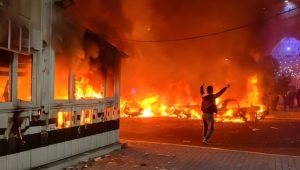
The nationwide uprising against the religious dictatorship in Iran has reached its eighteenth day on Wednesday, January 14, 2026. Following a seventeenth day marked by the regime erecting concrete walls in Ahvaz and evacuating universities to stifle dissent in tandem with an ongoing nationwide internet blackout, the confrontation has escalated significantly. On Wednesday, the regime’s desperation became palpable as Judiciary Chief Gholamhossein Mohseni Eje’i personally visited Tehran prisons, issuing orders for the immediate execution of detained protesters. While the regime attempts to enforce a digital blackout by raiding homes for Starlink equipment, the resistance continues to grow, with fierce clashes reported in Tehran, Mashhad, and Kermanshah.
Why Iran’s Nationwide Uprising Continues Despite Brutal Repression

On Tuesday, January 13, 2026, Iran’s nationwide uprising entered its 17th consecutive day, with protests and clashes reported across Tehran and numerous provincial cities. The events highlight the regime’s inability to contain a society determined to challenge tyranny. In Tehran, thousands gathered in the Sadeghieh district, chanting “Death to the dictator.” Rebellious youths confronted special units in Haft Howz, Piroozi, Teatr-e Shahr, Ashrafi Esfahani, Tehranpars, and Valiasr. Nighttime demonstrations also took place in Ekbatan Town. In Naziabad, regime forces fired pellet guns indiscriminately, injuring several protesters. Earlier in the day, mourners at Behesht-e Zahra cemetery carried the bodies of slain protesters while chanting “Death to Khamenei,” turning funerals into acts of renewed defiance.
Washington, DC – Iranian Americans Rally at Capitol Hill in Solidarity with Iran’s Nationwide Uprising

Washington, DC – January 13, 2026: Iranian Americans and freedom-loving Iranians gathered outside the US Capitol to show solidarity with the ongoing nationwide protests in Iran. Supporters of the People’s Mojahedin Organization of Iran (PMOI/MEK) and the National Council of Resistance of Iran (NCRI) chanted anti-regime slogans and called for an end to dictatorship in all its forms.
Rallies in Ottawa, Toronto, and Vancouver Support Iran Protests, Call for a Democratic Republic

Ottawa, Toronto, and Vancouver, Canada — January 10, 2026 — Once again, despite freezing and subzero temperatures, freedom-loving Iranians and supporters of the People’s Mojahedin Organization of Iran (PMOI/MEK) in Ottawa, Toronto, and Vancouver held rallies in solidarity with the nationwide uprising in Iran and its brave protesters. Participants held pictures of the martyrs of the ongoing nationwide protests and chanted anti-regime slogans to express their support for compatriots who have risen up inside Iran.
Statement by the Iran Freedom Association – The Urgent Need for Action on Human Rights Violations in Iran
The Iran Freedom Association, as a human rights organization, expresses its deep concern over the intensifying violent crackdown on public protests in cities across Iran. These actions have reportedly been accompanied by horrific crimes and the killing of thousands of innocent protesters. According to initial reports and information received from sources on the ground, as well as disturbing accounts from inside Iran, security and law enforcement forces have used extreme and lethal force to suppress demonstrations. This has included direct live fire at protesters, alongside sweeping communication restrictions and internet shutdowns, which have facilitated the commission of these grave abuses.
Imminent Execution of Detained Protester, Erfan Soltani

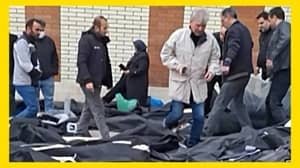
As the regime’s killing machine accelerates following recent suppression orders, a harrowing video smuggled out of Iran on January 10 reveals the true scale of the carnage. In the footage from the Kahrizak Medical Examiner’s Office, the citizen journalist reports seeing approximately 2,000 bodies on the ground awaiting identification. Amidst this slaughter, the case of Erfan Soltani, a 26-year-old arrested during protests in Fardis, Karaj, has become a grim symbol of “systematic vengeance.” Only days after his arrest, he was sentenced to death without due process—a verdict issued with such speed it constitutes “State-Sanctioned Murder.” According to his family, security agents contacted them with a chilling ultimatum: Erfan has been sentenced to death, and they are granted a brief “final visit” this coming Wednesday (today, Jan. 14). His entire detention, interrogation, and sentencing occurred in a vacuum of legality—no lawyer, extreme torture, and forced confessions. This rapid execution timeline is a clear attempt to intimidate the nation through blood.
Reports and Horrific Accounts of the Massacre of Protesters and Coup-De-Grace Shots in Hospitals

New images released from the grounds of the Kahrizak Forensic Medicine building in Tehran show the bodies of people killed on Thursday and Friday, January 8 and 9. The bodies of men who were shot—in the head, abdomen, or chest—are seen, along with hundreds of family members waiting to receive the remains of their loved ones. In these images, the bodies of killed women are not seen. In the mentioned footage, a member of the forensic medical staff says that before handing over the bodies of women, the uterus must be opened, which is described as a routine process for issuing death certificates. While such horrific images have only been released from Tehran, reports from other parts of Iran—from north to south—indicate that many protesters have been killed, a process that Human Rights Watch, an international human rights organization, has described as “widespread killing.”
Iran’s Democratic Uprising: A Revolution Rooted in History, Organization, and the Will of the People

What is unfolding today in Iran is not a momentary protest wave or an emotional reaction to a single crisis. It is a democratic uprising shaped by sacrifice, historical memory, and organized resistance. For observers unfamiliar with Iran, it is essential to understand that this movement is not accidental—it is the culmination of more than a century of struggle for freedom, justice, and popular sovereignty. From the Constitutional Revolution of the early 20th century to the present day, one truth has remained consistent in Iran’s modern history: no dictatorship—monarchical or religious—has been able to permanently suppress the conscious will of the Iranian people. Both the former absolute monarchy and the current clerical regime attempted to portray themselves as inevitable products of history. Iran’s experience proves otherwise. Dictatorships come and go. What endures is the people’s determination to reclaim their rights.