

THIS PAGE WILL BE UPDATED WITH THE LATEST NEWS
UPDATE: 01:00 PM CET
Iranian Opposition Leader to Newsmax: Rebellion Is ‘Unabated and Irreversible’

Amid the recent government shutdown of the internet and all electronic communications from Iran, and subsequent reports that the three-week-old uprising was subsiding, the leader of the largest Iranian exile group told Newsmax that the rebellion against the 47-year-old theocratic regime continues “unabated.”
“Even now, clashes and running battles between the people and rebellious youth on one side, and the regime’s repressive forces on the other continue,” said Maryam Rajavi, president-elect of the National Council of Resistance of Iran (NCRI).
In an exclusive interview with Newsmax, Rajavi insisted, “Iranian society has entered an irreversible phase of its political life.”
UPDATE: 09:00 AM CET
Iran Accused of Sex Assaults on Teenage Prisoners, While Families Charged to Recover Remains of Loved Ones

Reports have emerged from eyewitnesses in Iran alleging sexual assaults on teenagers held in custody, as well as authorities forcing families of those protesters killed to pay as much as 10 billion rials to recover their bodies.
The National Council of Resistance of Iran (NCRI-US) also told Fox News Digital Wednesday that the “barbarity continues” across the nation, with prison detainees allegedly being killed and their bodies burned.
The reports came as Iran’s government claimed it had successfully crushed weeks of unrest that swept the country.
Beginning Dec. 28, the protests erupted amid deep public anger over political repression, economic hardship and state violence before rapidly expanding nationwide.
UPDATE: 08:00 AM CET
Day 25 of Iran Uprising: PMOI Releases Names of 103 More Martyrs; Judiciary Chief Demands ‘Decisive’ Executions

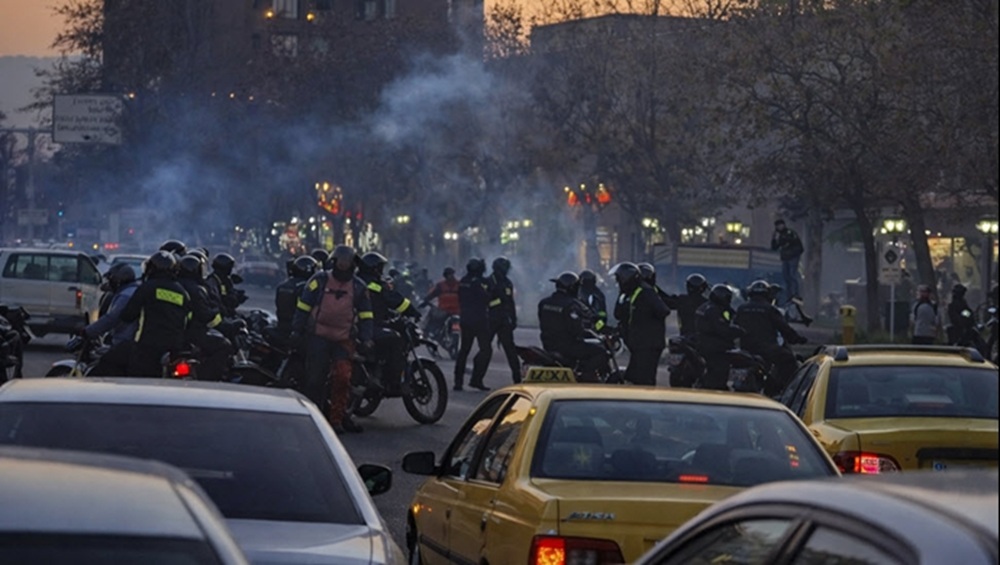
The nationwide uprising against the religious dictatorship in Iran has reached its twenty-fifth day on Wednesday, January 21, 2026. On Day 25, the regime’s Judiciary Chief, Gholamhossein Mohseni Eje’i, openly called for swift and harsh sentences against protesters, signaling a new wave of potential executions. Meanwhile, the People’s Mojahedin Organization of Iran (PMOI/MEK) has released the names of 103 additional martyrs. Despite a suffocating internet blackout now exceeding 300 hours, reports from Tehran, Isfahan, and Kermanshah confirm that the youth are holding their ground, with women playing a leading role in the street battles.
MEK Supporters Rally in Gothenburg to Support the Iran Uprising and Reject All Forms of Dictatorship

Gothenburg, Sweden — January 17, 2026 — Once again, supporters of the People’s Mojahedin Organization of Iran (PMOI/MEK) rallied in Gothenburg to show solidarity with the ongoing nationwide uprising inside Iran. Defying freezing, snowy weather, participants chanted anti-regime slogans and voiced their support for their fellow Iranians rising up against tyranny.
Iranians Rally in London to Support the Iran Uprising and Reject Dictatorship in All Forms

London, United Kingdom — January 17, 2026 — For yet another time, freedom-loving Iranians and supporters of the People’s Mojahedin Organization of Iran (PMOI/MEK) rallied outside the British Prime Minister’s Office in London to express solidarity with the nationwide uprising in Iran that began on December 28, 2025.
Iran: “And the Streets Became a Bloodbath”

“And the streets became a bloodbath. It was war; a full-scale war between people who had come with bare hands and forces firing live military weapons.” This testimony, provided by an eyewitness to Iran’s nationwide uprising, was repeated across cities and towns throughout the country. Witnesses described direct gunfire into crowds, execution-style shots fired at wounded protesters lying on the ground, the rapid removal of bodies, and a climate of terror that transformed public streets into killing fields within hours. What unfolded was not crowd control, but organized and unrestrained violence that erased any remaining boundary between repression and mass killing. By 10 January 2026, the nationwide uprising had spread to at least 220 cities and towns across Iran. Protests erupted in major metropolitan centers including Tehran, Mashhad, Isfahan, Shiraz, Tabriz, and Rasht, as well as in smaller but highly defiant towns such as Abdanan, Fardis (Karaj), Lordegan, and Malard.
Why Iran’s Economic Crisis Is Turning the Traditional Bazaar Restless

In October 2025, official Iranian statistics showed annual inflation had surged to about 48.6%, one of the highest rates in recent years, and remained above 40% by December 2025, significantly eroding household purchasing power and intensifying economic stress nationwide. These persistent price pressures have played a central role in transforming Iran’s traditional bazaar — once a stable economic and social institution — into a site of pronounced discontent. For decades, Iran’s bazaar was more than a commercial marketplace; it served as a hub of informal credit networks, guild structures, and community cohesion. Its economic activities were grounded in longstanding norms of trust, reputation, and personal relationships, which helped the bazaar exert influence beyond pure commerce.
‘Bullet Money’ for Releasing Bodies; Repression of Protests in Iran Continues
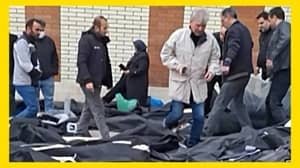
As the repression of protests continues, reports indicate that large sums of money are being demanded from the families of victims in order to release the bodies of their loved ones—an action observers describe as psychological torture, a clear violation of human rights, and a continuation of crimes against humanity. While the suppression of protests has reached a bloody stage with direct gunfire at civilians, new accounts show that the Iranian regime continues to harass families even after killing protesters. According to field reports, security and judicial agents have conditioned the release of victims’ bodies on the payment of sums demanded as “bullet money,” an action that observers assess as psychological torture of families, a gross violation of human rights, and part of crimes against humanity in the repression of protests.
Six Uprisings in 26 Years: How Iran’s Society Moved from Protest to a Unified Demand for Regime Change

Over the past 26 years, Iran has witnessed six major uprisings, each with distinct characteristics yet deeply interconnected in their political and historical impact. Rather than isolated eruptions of unrest, these movements functioned as complementary phases in Iran’s social and political evolution, gradually transforming public dissent into a unified national demand for the overthrow of the ruling regime. Each uprising contributed independently to reshaping political consciousness, eroding the regime’s legitimacy, and redefining the relationship between state and society. The July 1999 student uprising marked the first major rupture. It shattered nearly two decades of enforced silence on university campuses, where absolute ideological control had prevailed since the early years of the regime.