


THIS PAGE WILL BE UPDATED WITH THE LATEST NEWS
UPDATE: 01:30 PM CET
The Irreversible Tide: Iran’s Steady March toward Democratic Revolution

In the third week of Iran’s ongoing nationwide uprising, the landscape of resistance has shifted dramatically. Protesters in Ilam Province have reportedly gained effective control over two cities, driving back security forces and demonstrating a level of tactical organization that threatens the very survival of the clerical dictatorship.
This is not an isolated outburst of anger; it is the culmination of a momentum that brought the regime to the brink of collapse in September 2022, building upon the foundations of defiance laid during the mass uprisings of 2018 and 2019.
These successive movements have systematically chipped away at the mullahs’ hold on power. While international observers categorized the 2022 protests as the greatest challenge to the ruling system since the 1979 revolution, the current uprising is poised to exceed its predecessor in both scale and intensity.
UPDATE: 10:30 AM CET
Armed Militias Fire Heavy Machine Guns Through Tehran Streets in Deadly Night Attacks

Gunfire echoed through Tehran Tuesday as heavily armed militias were deployed across the Iranian capital, transforming some districts into fortified zones under intense security. Video footage showed bursts of automatic weapons after dark as government buildings, state media sites and major intersections were reportedly placed under guard, with armored pickups and masked fighters patrolling the streets in Toyotas. The trucks were mounted with heavy machine guns and were moving in convoys with weapons firing into the darkness as armed men shouted commands.
“There has been a deployment of dozens of Toyotas mounted with heavy machine guns (DShK) and other heavy weapons in Tehran,” Ali Safavi, a senior official with the National Council of Resistance of Iran (NCRI), told Fox News Digital.
“They are reportedly being used by elements linked to Lebanese Hezbollah and Iraqi Popular Mobilization Forces (PMF),” he said.
Iranian Opposition Leader: Foreign Military Power Won’t Topple Clerical Regime, only ‘Nationwide Resistance’ Will

Iranian opposition leader Maryam Rajavi warned that the Islamic Republic’s escalating violence against protesters has exposed a regime under strain — but not one on the verge of collapse — arguing that Tehran will not fall through foreign military intervention or external pressure alone, but only through an organized, nationwide resistance capable of dismantling its repressive core.
Speaking in an exclusive interview with Breitbart News, Rajavi — the president-elect of the National Council of Resistance of Iran (NCRI) — said recent developments have made clear that while Iran’s clerical rulers are increasingly vulnerable, their weakening alone will not bring about the regime’s downfall.
Blood Is the Last Currency of Iran’s Failing Theocracy

For half a century the Islamic Republic of Iran has clung to power by smoke and mirrors, basing their medieval tyranny on ideology, terror, economic mismanagement and repression. But the recent genocide under digital darkness is different. According to a harrowing report in The Sunday Times, between 16,500 and 18,000 mostly young Iranians have been slaughtered by the Islamic Revolutionary Guard Corps (IRGC) and Basij militia in the nationwide uprising that erupted in late 2025. A staggering 360,000 have been injured, with thousands shot in the face by shotgun pellets and blinded. Many wounded have avoided hospitals entirely for fear of being arrested and dragged off to prison, torture and execution. The main Iranian opposition movement the Mujahedin-e Khalq (MEK), puts the proven figure of those killed at 3,000, including seven of its members, whose identities have been confirmed, and arrests at 50,000.
Massacres in Iran Expose the Regime’s Weakness — and the Danger of False Alternatives

According to the People’s Mojahedin Organization of Iran (PMOI/MEK), the number of people killed in the ongoing nationwide uprising in Iran has exceeded 3,000 between December 28 and January 11. The figures are based on investigations drawing on local sources, hospitals, forensic institutions, and the families of both the dead and the disappeared across 195 cities.
This is not merely a tragedy. It is a large-scale crime against humanity.
As the scale of the killings has become impossible to conceal, the regime has taken an unusual and revealing step: state television has displayed the bodies of some of those killed. At the same time, the authorities have attempted to portray the victims as “rioters” or “enemies of the state.”
This is not an expression of transparency, but a sign of desperation. When a regime must display dead bodies to intimidate its population, it reveals above all that it has lost control over both reality and the narrative.
UPDATE: 08:00 AM CET
Day 24 of Iran Uprising; UN to Hold Emergency Session, MPs Attack Pezeshkian

The nationwide uprising against the religious dictatorship in Iran has reached its twenty-fourth day on Tuesday, January 20, 2026. On Day 24, while the internet blackout continues to isolate the nation, the international community is mobilizing for an emergency session at the UN, and internal infighting among regime officials has reached a boiling point. On Tuesday, January 20, 2026, the twenty-fourth day of the uprising, the regime’s desperate attempts to stifle the protests through censorship and brutality were met with continued resistance in the streets and growing condemnation abroad.
Field Reports: Intense hit-and-run clashes were reported in Tehran’s Valiasr Street and Kermanshah. In Kerman, the regime is reportedly using the Afghan Fatemiyoun division to suppress protesters.
Kimia Khani, Fourth Woman Executed in Iran in 2026
She is the fourth woman executed in Iran during the first month of the 2026. Kimia Khani had been sentenced to death on drug-related charges. As of the time of this report, Iranian prison authorities and relevant state institutions have not issued any official announcement confirming the execution. Under the mullahs’ rule in Iran, the operatives of the Revolutionary Guards’ network, who traffic vast quantities of narcotics and addict the youth of Iran and the Middle East, openly supply prisoners in the regime’s jails with drugs to break their resistance. Those responsible not only face no punishment but enjoy lives of extreme luxury, while vulnerable individuals such as Kimia Khani, driven by extreme poverty and unemployment, are sentenced to death and executed.
Iranian Resistance Rally in Oslo Backs Iran Uprising, Urges Accountability for Regime Crimes

Oslo – January 17, 2026: Supporters of the Iranian Resistance gathered for several consecutive days in front of the Iranian regime’s embassy in Norway to express their strong support for the nationwide protests in Iran. The demonstrators strongly condemned the massacre of thousands of protesters by the clerical regime and called for holding the regime accountable for crimes against humanity.
Iranians Rally in Brussels Backing Iran Uprising, Calling for a Democratic Republic

Brussels, Belgium — January 17, 2026 — Freedom-loving Iranians and supporters of the Iranian Resistance and their Kurdish compatriots held a rally in Brussels in solidarity with the nationwide protests in Iran that erupted on December 28, 2025. They called on the European Union to list the Iranian regime’s Islamic Revolutionary Guard Corps (IRGC) as a terrorist organization for its crimes against the Iranian people and its brutal suppression of protests, and to end the EU’s appeasement policy toward Tehran.
Iranians in Hamburg Honor Martyrs of the Iran Uprising and Call for a Democratic Republic

Hamburg, Germany — January 17, 2026 — Once again, despite the snowy and subzero temperatures, freedom-loving Iranians and supporters of the People’s Mojahedin Organization of Iran (PMOI/MEK) held a rally to express solidarity with the nationwide protests in Iran that began on December 28, 2025. Braving the freezing weather, participants echoed the call of their compatriots inside Iran for a free and democratic republic.
World Awaits Updates as Iran Maintains Internet Blackout on Day 24 of Protests

Twenty-four days after nationwide demonstrations began, protests coinciding with Iran’s internet shutdown continue with limited visibility outside the country, according to a media analyst. The expert says ongoing communications restrictions have reduced independent reporting, leaving state-affiliated outlets among the main sources of information accessible inside Iran. That admission came from Mohammad Bagher Ghalibaf, the speaker of Iran’s parliament. In remarks that drew wide attention, Ghalibaf described the situation as “very violent urban warfare,” acknowledging armed clashes in multiple cities. He said that “several thousand people” had been killed, including civilians, members of the Basij militia, and security forces. Such language marked a sharp departure from earlier official statements that portrayed the protests as limited disturbances brought under control.
Iranian Authorities Sentence Soldier to Death for Refusing to Fire at Protesters
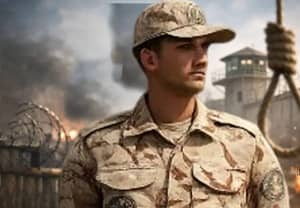
Javid Khales, a young man who refused orders to fire on people during the nationwide protests of January 2026, has been sentenced to death. As protests continue and the repression of the population intensifies, news of the death sentence issued against Javid Khales, a young soldier who refused to fire at protesters, has increased concerns about a new wave of judicial massacres. This sentence has been issued at a time when officials of the judiciary have openly spoken about summary trials and the rapid implementation of death sentences against those arrested in the protests. According to received information, Javid Khales is a young soldier who, during the nationwide protests of January, was arrested for refusing orders to fire at protesters and was transferred to Isfahan Prison.
Iran’s Ruling Establishment Admits to “Urban Warfare” as Internal Crisis Deepens

Recent statements by senior Iranian officials and state-affiliated media outlets have offered an unusually candid glimpse into the depth of the crisis engulfing the Iranian regime. Far from projecting stability, these admissions reveal a system grappling with violent urban conflict, internal disarray, economic collapse, and growing international isolation. In a striking acknowledgment, Iran regime’s parliamentary speaker Mohammad Bagher Ghalibaf described the current situation as “very violent urban warfare,” referring to armed clashes and the “brutal killing of several thousand people,” including civilians, members of the Basij militia, and security forces. Such language, unprecedented in its bluntness, directly contradicts months of official claims that unrest had been contained. By labeling the situation as urban warfare, the regime implicitly concedes that it is no longer dealing with sporadic protests but with a sustained internal conflict in multiple cities. Admits to “Urban Warfare” as Internal Crisis Deepens.