

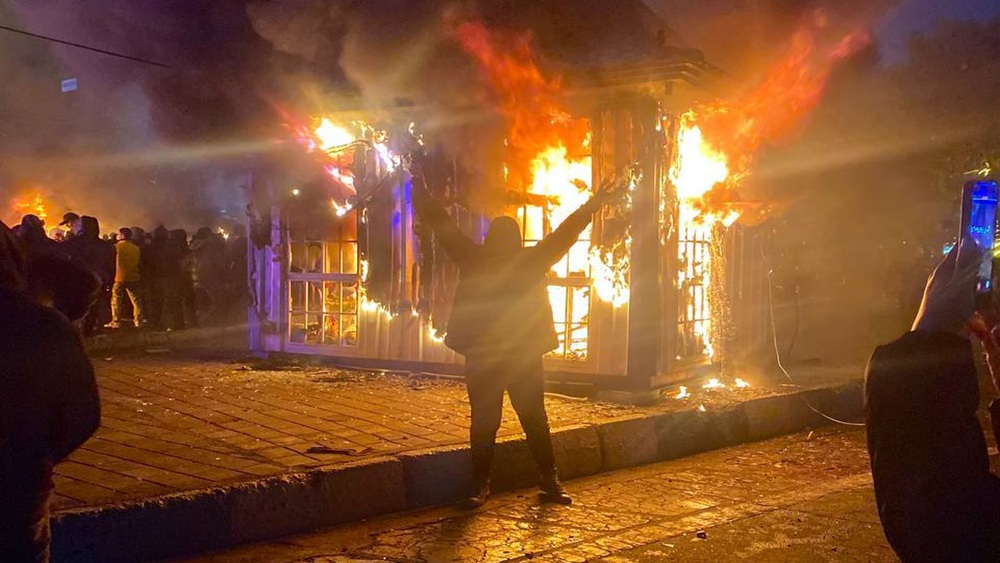
THIS PAGE WILL BE UPDATED WITH THE LATEST NEWS
UPDATE: 09:00 PM CET
Can Iran Finally Break From 100 Years of Autocracy?

Iran’s brutal theocracy under Supreme Leader Ali Khamenei shows signs of a failing and flailing dictatorship in its dying days. His crackdown on the resistance will not hold. The question is, when the end comes, what’s next? What kind of government will lead Iran beyond its bitter past toward a better future for the country, the region, and the world?
The once-wealthy Iranian economy, powered by petroleum, is faltering. Iranians lack food and fuel while Khamenei’s mullahs and their families live like royalty. Iran is isolated with its terror networks, regional alliances, nuclear ambitions, and influence shattered. Its brutal crackdown on public protests, which worsened daily with ever-more violent suppression, mass arrests and killings, only inflamed the resistance.
UPDATE: 10:00 AM CET
Iranian Opposition Leader to Newsmax: Rebellion Is ‘Unabated and Irreversible’
Amid the recent government shutdown of the internet and all electronic communications from Iran, and subsequent reports that the three-week-old uprising was subsiding, the leader of the largest Iranian exile group told Newsmax that the rebellion against the 47-year-old theocratic regime continues “unabated.” “Even now, clashes and running battles between the people and rebellious youth on one side, and the regime’s repressive forces on the other continue,” said Maryam Rajavi, president-elect of the National Council of Resistance of Iran (NCRI). In an exclusive interview with Newsmax, Rajavi insisted, “Iranian society has entered an irreversible phase of its political life.” Of the regime’s blackout of communications and its stepped-up repression of protesters in the streets throughout the nation, Rajavi said “[s]ocial uprisings never follow a linear or uniform trajectory, and a temporary decline in street demonstrations never signifies their end.”
Iran Protests: ‘Death to Khamenei’ Chants in Zahedan as UN Condemns Regime’s Atrocities
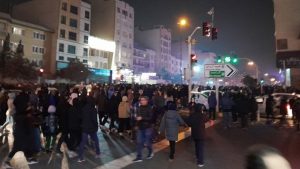
The nationwide uprising against the religious dictatorship in Iran continues to shake the pillars of the regime on Saturday, January 24, 2026. Following widespread protests in Sistan and Baluchestan province yesterday, rebellious youth have intensified their attacks on the regime’s suppression centers in Isfahan, Arak, and Shiraz. On the international front, the Iranian people achieved a major victory as the UN Human Rights Council adopted a resolution by a clear majority, condemning the clerical regime’s brutal suppression and extending the mandate of the Fact-Finding Mission. Meanwhile, regime officials are openly admitting to the scale of the uprising, acknowledging that the protests have engulfed over 400 cities and are aimed directly at overthrowing the supreme leader, Ali Khamenei.
Iran’s Nationwide Uprising: Rights of Detainees Systematically Violated

As the crackdown on popular protests intensifies, incoming reports about those detained during Iran’s nationwide uprising point to systematic pressure and widespread, organized violations of detainees’ most basic rights. These violations include the mass detention of protesters without minimum humane standards, confinement in isolated wards without access to family contact or legal counsel, failure to register detainees’ names in official systems, and the denial of medical care to the injured. In many cases, the number of detainees far exceeds the capacity of detention facilities. Severe overcrowding has forced many prisoners to sleep on the floor without blankets or heating equipment. Prison capacity has been fully exhausted, and prison authorities have resorted to mass, hasty, and unlawful transfers to make room for newly arrested individuals.
Supporters of the Iranian Resistance Rally in Geneva Amid UN Human Rights Council Session
Geneva, Switzerland — January 23, 2026: Freedom-loving Iranians and supporters of the People’s Mojahedin Organization of Iran (PMOI/MEK) gathered outside the UN headquarters in Geneva to show solidarity with the nationwide uprising in Iran and call for international action against the mullahs’ regime.
Kermanshah; A Field Report on the Organized Suppression of the January 2026 Uprising

Atrocities that remained hidden from the eyes of cameras turned Kermanshah into one of the darkest scenes of repression during the January 2026 uprising. What unfolded in the city during the peak days of the protests was not a series of isolated security incidents, but a set of deliberate and coordinated acts carried out under conditions of enforced silence, internet shutdowns, and systematic intimidation of families, preventing public documentation and global scrutiny. This report is based on field testimonies, direct eyewitness accounts, and information obtained from internal sources. It seeks to reconstruct part of the reality of the suppression of the January 2026 uprising in Kermanshah; a reality marked by extrajudicial killings of protesters, systematic torture of detainees, concealment of bodies, and organized pressure on the families of victims.
Iran: Emergency UN Rights Council Session to Review Crackdown on Freedoms in Iran
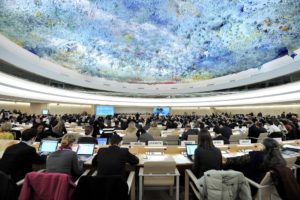
GENEVA, Jan. 24, 2026 — The UN Human Rights Council convened an emergency session on Friday to address Iran’s violent suppression of nationwide protests, intensifying international pressure on Tehran over what officials and rights groups describe as grave and systematic human rights violations. The special session, held in Geneva on Jan. 23, came after weeks of unrest across Iran that began in late December 2025. Demonstrations initially erupted over worsening economic conditions, including rising inflation and declining living standards. They quickly expanded into broader protests demanding political freedoms and accountability from the state.
US Increases Pressure on Iraq to Curb Influence of Iran’s Regime

Washington warned Baghdad that the presence of armed groups close to Tehran in Iraq’s future government could have severe economic consequences for the country. Reuters news agency reported on Friday, January 23, citing four informed sources, that over the past two months the United States has warned senior Iraqi political officials that sanctions will be imposed on the Iraqi government if armed groups backed by the Iranian regime participate in the future government. Accordingly, these sanctions are likely to target Iraq’s oil revenue flows, which are managed through the Federal Reserve Bank of New York.
Iran at the Point of No Return: A Radical Uprising Against Dictatorship

Iran stands at one of the most critical—and at the same time most hopeful—moments in its contemporary history. Just as the Iranian people once overthrew the Pahlavi dictatorship, the theocratic system of Velayat-e Faqih now finds itself facing an accumulated popular fury and an iron determination that point unmistakably toward its downfall. The nationwide uprising that began in January 2026 is no longer a temporary wave of protest. It is a radical, organized, and irreversible movement whose declared objective is the complete end of dictatorship in Iran—without substitution, cosmetic reform, or recycled authoritarianism. Some observers focus on the role of foreign actors; others speculate anxiously about regional consequences. But the central and undeniable fact is the resolve of the Iranian people themselves. Society has crossed a historic threshold—from what can be described as a phase of endurance into a phase of victory. At this stage, no force appears capable of pushing the movement back into silence.