


THIS PAGE WILL BE UPDATED WITH THE LATEST NEWS
UPDATE: 10:30 PM CEST
Iran – The Widening Cracks

As a fragile ceasefire is maintained between Israel, America, and the Islamic Republic, the world holds its breath. Following the series of critical setbacks that have impacted on the mullahs’ regime in the past year, including the continuing protests in Iran and the economy teetering on the verge of bankruptcy coupled with the virtual collapse of Tehran’s so-called ‘Axis of Resistance’, including Bashar al-Assad in Syria, Hamas in Gaza and Hezbollah in Lebanon, there is an almost unprecedented opportunity for regime change.
Ninety million impoverished Iranians have had enough. Cruelly repressed by a misogynist and medieval theocratic regime that is unable to provide even basic services such as electricity, gas, and water, Resistance Units are burgeoning nationwide. Controlled and coordinated by the People’s Mojahedin of Iran/Mujahedin-e Khalq (PMOI/MEK), the Resistance Units are actively fighting for Iran’s destiny, to overthrow the tyranny of the mullahs and introduce a secular democratic republic. Placards declaring: “Down with the oppressor, be it the shah or the mullahs” and “No to the crown, no to the turban, the mullahs’ time is over,” are appearing regularly on the regime’s bridges and buildings across Iran.
UPDATE: 2:30 PM CEST
Iran Accelerates Executions: ‘Time to Repeat a Historic Purge’

Maryam Fakhar was six years old when her mother was executed in 1988. Her earliest memory begins that year, during one of the most horrific crimes against humanity since World War II. The Iranian regime killed more than 30,000 political prisoners at the time, most of them members of the opposition group People’s Mojahedin Organization of Iran (PMOI/MEK). Her mother, an electrical engineering student and resistance fighter, was one of them.
Today, history is repeating itself. Under President Pezeshkian, at least 1,344 executions have been carried out in just eleven months. This marks an alarming acceleration, confirmed by UN Special Rapporteur Dr. Mai Sato. The regime is using recent tensions with Israel as cover for a domestic campaign of terror. Political prisoners are disappearing into solitary confinement or being quietly executed.
On July 7, 2025, the Fars News Agency—affiliated with the Revolutionary Guard—openly praised the 1988 massacre. In an editorial, it called the mass executions a “brilliant chapter.” The article urged repetition: “Today it is time to relive this historic success.”
UPDATE: 9:00 AM CEST
Support for Resistance Within Iran Can Bring Peace, Freedom

Following the 12-day war (in June) with Israel and a series of repeated military and intelligence defeats, the Iranian regime’s authority has crumbled. Mistrust and paranoia now permeate its power structure like a fast-spreading virus. Former Foreign Minister Mohammad Javad Zarif recently acknowledged that the issue is no longer just “infiltration,” but an entire “system of infiltration.”
With the prospect of the regime’s collapse more visible than ever, various factions have begun proposing different solutions to avert its downfall.
On one side, Fars News Agency — affiliated with the Revolutionary Guards (IRGC) — published an editorial, “Why Should the 1988 Executions Be Repeated?”
Treasury Sanctions Houthi-Linked Petroleum Smuggling and Sanctions Evasion Network
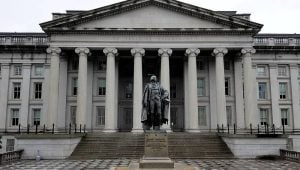
WASHINGTON — Today, the U.S. Department of the Treasury’s Office of Foreign Assets Control (OFAC) is designating two individuals and five entities that profit through money laundering and importing petroleum products into territory controlled by Ansarallah, commonly known as the Houthis. The Iran-backed Houthis gain hundreds of millions of dollars annually by working with Yemeni businessmen to tax petroleum imports, generating critical revenue that funds the Houthis’ destabilizing activities in the region.
Today’s action targets a network of individuals and their companies located across Yemen and the United Arab Emirates (UAE) who are among the most significant importers of petroleum products and money launderers that benefit the Houthis.
Hackers Who Breached Arizona Election Website Aimed at Other Targets, Too

Arizona officials say they have “moderate confidence” that the Iranian government or its affiliates are responsible for a cyberattack that breached the state’s candidate web portal last month, and say the same actors attempted to breach servers for other agencies in Arizona and elsewhere.
The hacker gained access to a server at the Arizona Secretary of State’s Office on June 23 and began changing candidate profile photos that appear on the state’s election results website, according to office officials.
The hacker changed all of the photos to the same image — a red and black image of Ayatollah Ruhollah Khomeini, leader of the 1979 revolution that established Iran as an Islamic republic.
UPDATE: 8:00 AM CEST
How Regime Corruption Is Draining Iran Dry

As temperatures soar past 50 degrees Celsius, a new wave of public anger is rising across Iran. On July 21, the people of Nasimshahr, Tehran, took to the streets to protest being left without any water for three days in the scorching summer heat. This is not an isolated incident. Across the capital and in other cities, the regime is imposing long, rolling blackouts, creating unbearable living conditions for millions. In a brazen display of contempt for the public, the regime’s officials are placing the blame squarely on the victims. Tehran’s Water and Wastewater Company shamelessly blames “increased temperatures and peak consumption” while threatening citizens with 24-hour water cuts and exponential price hikes if they use “too much” water. On July 16, citizens were warned to cut consumption by 20% or face “strict policies.”
Bookstand and Photo Exhibition in Oslo Condemn Executions, Demand Release of Political Prisoners

Oslo, Norway – July 19, 2025 – Supporters of the People’s Mojahedin Organization of Iran (PMOI/MEK) held a Bookstand and Photo Exhibition to condemn the wave of death sentences and intensified repression targeting political prisoners by Iran’s regime. Organizers demanded the immediate cancellation of death sentences and the unconditional release of all political prisoners.
Participants denounced the regime’s recent threats to transfer Saeed Masouri—one of Iran’s longest-imprisoned political prisoners—to the notorious Zahedan Prison. They described this threat as a clear signal of danger to his life and part of the regime’s broader strategy of intimidation and isolation.
Cologne Rally Demands Action to Stop Executions of Iranian Political Prisoners

Cologne, Germany – July 19, 2025 – Supporters of the People’s Mojahedin Organization of Iran (PMOI/MEK) held a rally and exhibition to protest the Iranian regime’s ongoing human rights abuses, particularly its use of systematic torture and the death penalty against political prisoners. The rally focused on the urgent situation of prisoners of conscience who face imminent execution for supporting the PMOI.
Participants denounced the regime’s recent threats to transfer Saeed Masouri—one of Iran’s longest-imprisoned political prisoners—to the notorious Zahedan Prison. They described this threat as a clear signal of danger to his life and part of the regime’s strategy of intimidation and isolation.
Copenhagen Rally Demands Action to Stop Executions of Iranian Political Prisoners

Copenhagen, Denmark– July 19, 2025 – Supporters of the People’s Mojahedin Organization of Iran (PMOI/MEK) held a rally and exhibition to protest the Iranian regime’s ongoing human rights abuses, particularly its use of systematic torture and the death penalty against political prisoners. The rally focused on the urgent situation of prisoners of conscience who face imminent execution for supporting the PMOI.
Participants denounced the regime’s recent threats to transfer Saeed Masouri—one of Iran’s longest-imprisoned political prisoners—to the notorious Zahedan Prison. They described this threat as a clear signal of danger to his life and part of the regime’s strategy of intimidation and isolation.
Statement by Political Prisoners of Gilan

A group of political prisoners in Gilan Province have issued a statement strongly condemning the sudden and unjust decision to exile the political prisoner Saeed Masouri to Zahedan Prison. The statement reads: “We, a group of political prisoners from Gilan Province, strongly condemn the sudden and unjust [sentence to] exile the political prisoner Saeed Masouri to Zahedan Prison.”
Saeed Masouri, who has been imprisoned for 25 years in various prisons without a single day of furlough, is now being subjected to the continuation of the regime’s security-based strategy of enforced disappearances, similar to the case of Ali Younesi…
Iran: Son of Khamenei’s Senior Advisor Sanctioned by the European Union

On Monday, July 21, 2025, the European Union imposed sanctions on Hossein Shamkhani, the son of Ali Shamkhani, a senior advisor to Iran’s Supreme Leader Ali Khamenei. The sanctions were introduced due to Hossein Shamkhani’s reported involvement in oil trade activities with Russia and his role in the so-called “shadow fleet” that allegedly facilitates covert oil transfers. These measures are part of a broader EU sanctions package targeting the Kremlin over the ongoing war in Ukraine. According to the official EU statement, Hossein Shamkhani, along with affiliated companies operating in Dubai, has been subjected to asset freezes and a travel ban across EU member states. The companies “Admiral” and “Milavus” are among the entities sanctioned
At Least 56 Prisoners in Iran Face Execution on Political Charges

According to a report by HRANA (Human Rights Activists News Agency), at least 56 prisoners across Iran’s prisons currently face execution sentences on political or security-related charges. In a report published on Monday, July 21, HRANA stated that the largest number of these death sentences were issued by Tehran’s Revolutionary Courts. Branch 15 presided over by Abolghasem Salavati; Branch 26, led by Iman Afshari; and Branch 28, headed by Mohammadreza Amoozad, played prominent roles in handing down these rulings. Fifteen of these prisoners are supporters of the People’s Mojahedin Organization of Iran (PMOI/MEK), the largest opposition group to Iran’s regime.
Sabzevar Erupts in Protest Over Water and Power Outages Amid Government Inaction

Residents chant in defiance: “No water, no power — and the governor sleeps!”
Sabzevar, Iran — July 22, 2025 — For the second consecutive night, the streets of Sabzevar became the scene of growing unrest, as frustrated residents gathered outside the governor’s office to protest worsening living conditions. Repeated power outages, a deepening water crisis, and continued government indifference have pushed the people to the brink.
Iran Plunges into Deepening Water and Power Crisis Amid Record Heatwave

Iran is grappling with a worsening water and electricity crisis as a historic heatwave sweeps across the country, disrupting daily life in more than half of its provinces. According to official reports, at least 18 of Iran’s 31 provinces, including the capital Tehran, have been severely affected by power outages, reduced water pressure, and widespread office closures aimed at conserving energy resources. The crisis comes amid an unprecedented drop in water reservoir levels. The Tehran Provincial Water Supply Company announced that dam water levels supplying the capital have plunged to their “lowest point in a century,” urging residents to install water tanks and pumps to mitigate the impact. Many neighborhoods in Tehran have reported daily water outages lasting several hours. The company attributed the crisis to prolonged drought and a severe reduction in rainfall across the region.
Iran’s Expanding Digital Repression: From Domestic Surveillance to Global Cyber Threats

The Iranian regime’s digital repression has grown into a transnational threat, targeting not only dissidents inside Iran but also political opponents, journalists, and academics across borders. Employing sophisticated surveillance tools and offensive cyber tactics, the regime is waging a digital war on free expression, privacy, and dissent. While internet filtering, bandwidth throttling, and social media blackouts have long been part of Tehran’s digital arsenal, recent developments reveal a more targeted, covert, and far-reaching cyber strategy. Spyware such as Pegasus, and localized variants reportedly developed or deployed by regime-linked security agencies, have enabled the regime to gain near-total control over victims’ smartphones — accessing photos, messages, location data, and even activating microphones and cameras without user interaction.
Third Glasgow Islamic Centre Linked to Iranian Regime Sparks National Security Concerns

A third Islamic center in Glasgow has come under scrutiny for its ties to the Iranian regime, intensifying concerns over Tehran’s growing influence in Scotland and prompting urgent calls for investigation by UK authorities.
The Ark, a registered charity and community hub located in Govanhill, Glasgow, served as an official polling station for the Iranian regime during its most recent presidential election, according to documents and images obtained by The Sunday Times. The building, which also houses the Muslim Council of Scotland — an advisory body to the Scottish government — was used by the Iranian embassy in London to collect ballots in both rounds of the 2021 election.
Images from the election show Iranian flags displayed throughout The Ark’s main hall, with voters queueing to cast their ballots under the banner of a regime accused by human rights organizations of severe repression. Amnesty International has reported that Iran executed nearly 1,000 people last year alone, including children and political prisoners.
Iran on the Brink of a Super Crisis: Domestic Collapse, Diplomatic Isolation, and the Risk of War

The Iranian regime is on a collision course with a multifaceted crisis that could erupt in the coming months, shaking its political and economic foundations. Widespread power and water shortages, economic freefall, increasing international isolation, and the ever-present threat of military conflict are converging into what observers are calling a looming “super crisis.”
The situation in Iranian cities has become dire. Power outages have become routine, disrupting not only everyday life but also critical infrastructure. Hospitals face equipment failures, elevators and air conditioners cease functioning, and internet blackouts leave millions disconnected. The regime’s response — blaming high public consumption and deploying euphemisms like “blackout management” or “water pressure regulation” — has only deepened public resentment.