

THIS PAGE WILL BE UPDATED WITH THE LATEST NEWS
UPDATE: 8:30 AM CEST
Resistance Units Commemorate PMOI Martyr Mehdi Khanaki, Shatter Regime’s Campaign of Terror
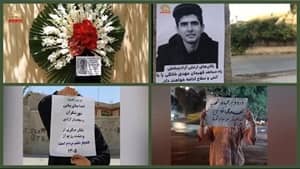
The Iranian regime systematically relies on the gallows to suppress youth uprisings and spread terror across the nation. However, the immediate and widespread response from the Iranian streets proves this desperate strategy is entirely failing.
Following the execution of 26-year-old Mehdi Khanaki this week, Resistance Units of the People’s Mojahedin Organization of Iran (PMOI/MEK) swiftly organized nationwide activities. Their bold actions honored his sacrifice and underscored an unwavering vow: to continue the struggle to overthrow the mullahs’ brutal rule. Rather than breeding fear, the regime’s brutality is only strengthening the resolve of Iran’s rebellious youth.
At dawn on Wednesday, July 22, 2026, the regime executed Khanaki, a law graduate and PMOI member. Following his active participation in the massive January 2026 nationwide uprising, he was actively pursued by security forces and eventually arrested on February 10, 2026, in Karaj. After enduring months of severe physical and psychological torture, Khanaki was sentenced to death in a sham trial by the Karaj Revolutionary Court.
Obituary: Reza Olia, Iranian Sculptor and Activist Who Targeted the Islamic Republic from Italy

ROME — Reza Olia was a rebel as an artist. While others fought with a clinched fist he fought with the tools of an artist who used his hands to craft works that drew attention to the injustices he saw. Often with the painters brush and more often as a sculptor. The author and political activist built public monuments across Italy as a surrogate for Iran. The long time exile died in Rome on 9 July 2026. He was 87. For more than six decades, Olia combined an accomplished artistic career with political activism. First as an angry young man he opposed the rule of Mohammad Reza Shah and Iran’s native monarchy. Later his target was the Ayatolllahs of the Islamic Republic. Art he held should bear witness to injustice and preserve the memory of those who struggled against tyranny. And throughout his life his native country would see more than his fair share of tyranny. Born in Tehran in 1939, Olia inherited his artistic talent from his father, Professor Mahmoud Olia.
Tehran’s “Great Revenge”: Beyond Open War, the Covert Threat

The memorandum signed on June 17 by Donald Trump and Iranian President Massoud Pezeshkian was intended to steer the United States and Iran away from direct confrontation. However, during the funeral of his father—the regime’s former Supreme Leader, who was assassinated last February in the course of the new war—the new Supreme Leader, Mojtaba Khamenei, delivered remarks that sounded like a declaration of a different kind of war.
“We swear to avenge your pure blood and that of all the martyrs of these two wars,” he declared, presenting this vengeance as a national imperative that “must be fulfilled without fail.” He then added: “Whether we are here or not, this will be carried out. Soon, free men from all over the world will each fulfill a part of this divine mission.”
This could be interpreted as evidence that diplomacy has failed and that the most bellicose factions have regained control in Tehran. But it is worth examining the opposite hypothesis: the “great revenge” could be the ideological cover that allows the regime to suspend direct warfare, while redirecting its most radical forces toward a more discreet confrontation that is harder to officially attribute to Iran.
Reza Pahlavi’s Claims of IRGC Support Challenged in Washington Examiner Analysis
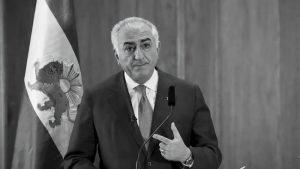
A new opinion article published by the Washington Examiner examines what its authors describe as major inconsistencies in Reza Pahlavi’s longstanding claims regarding contacts with members of Iran’s military and security apparatus.
The article, “Iran crown prince’s phantom army of the Revolutionary Guard defectors exposed,” was written by Dr. Kazem Kazerounian, professor of mechanical engineering and former dean of the School of Engineering (2012–2024) at the University of Connecticut, and Dr. Hossein Saiedian, professor of computer science at the University of Kansas.
The authors review Reza Pahlavi’s public statements over more than two decades, comparing them with his recent interview with Reuters following the United Kingdom’s decision to designate Iran’s Islamic Revolutionary Guard Corps (IRGC) under new state-threat legislation. According to the article, Pahlavi’s latest explanation significantly departs from his earlier assertions about communication with members of Iran’s military and security institutions.
Thirteenth Day of the Hunger Strike By 1,500 Prisoners, Condition of the Strikers Is Critical
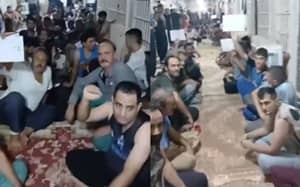
The collective hunger strike by around 1,500 death-row prisoners in Unit 2 of Ghezel Hesar Prison in Karaj entered its 13th day on Saturday, July 25. As the protest continues, a new video from inside the prison has been released, showing a number of prisoners holding signs reading “No to Execution” while reaffirming their determination to continue the hunger strike.
According to received reports, the strike continues in protest against the ongoing implementation of execution sentences and what the prisoners describe as the “intensification of executions.” The strikers are demanding an immediate halt to executions, respect for the right to life, and that the authorities address their demands.
The video released from Unit 2 of Ghezel Hesar Prison shows that despite nearly two weeks having passed since the hunger strike began, the prisoners remain steadfast in their demands and have declared that they will continue their hunger strike until their demands are addressed.
Death Fatwa: Salman Rushdie’s Attacker Coordinated with an Individual in Iran
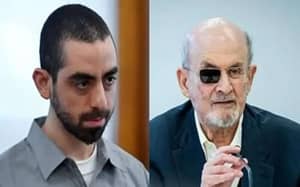
The attack on Salman Rushdie was carried out in connection with the death fatwa issued against him by Ruhollah Khomeini, the founder of Iran’s regime. A new report by The New York Times has revealed additional details about the attempted assassination of Rushdie. According to the report, prosecutors in the case against Hadi Matar allege that before carrying out the attack, he communicated with an individual in Iran identified as “Kamyar” and discussed implementing the death fatwa against the author. The allegation was presented during court proceedings and forms part of the evidence submitted by prosecutors. According to The New York Times, prosecutors said that in May 2022, Hadi Matar sent a message to an individual in Iran identified as “Kamyar.” According to prosecutors, Matar wrote that he knew Rushdie’s location but had questions about how to carry out the attack.
According to the same court documents, Matar also asked whether the death fatwa against Salman Rushdie remained valid. Prosecutors say that after the individual assured him the fatwa was still in effect, Matar decided to carry out the attack. These allegations were presented as part of the prosecution’s evidence and legal arguments in court, and The New York Times based its report on those filings.
Why Bandar Abbas and Chabahar Have Become Central to Military Developments
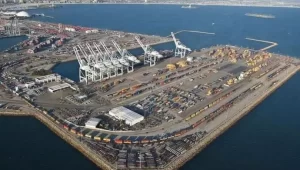
In Iran, the southern ports occupy a position that extends beyond their role as commercial hubs due to their unique geographic location. Situated along the Strait of Hormuz, the Gulf of Oman, and major global shipping routes, Bandar Abbas and Chabahar have become two strategically sensitive points in the region’s economic and geopolitical landscape.
However, the importance of these two ports is not the same. Bandar Abbas—particularly Shahid Rajaee Port—is the current heart of Iran’s trade, while Chabahar is viewed more as a long-term geopolitical asset. As a result, any disruption at either location could have consequences far beyond localized damage, affecting trade, industrial production, transportation, and the livelihoods of millions of people.
Bandar Abbas consists of several port facilities, the most important of which is Shahid Rajaee Port. According to statistics published by port authorities and maritime transport studies, approximately 85% to 90% of Iran’s container operations are handled at Shahid Rajaee Port. The port processes more than 81 million metric tons of cargo annually, and more than 50% of Iran’s maritime trade depends on it.
State-Backed Iranian Hackers Using Fake VPN Apps to Deploy Spyware Against Persian Speakers Worldwide, Researchers Report
 Exploiting users’ desperate need for an open internet, hacker groups linked to security agencies are distributing malicious surveillance tools disguised as “free, high-speed VPNs” across social media networks—a targeted campaign to monitor and eavesdrop on Persian speakers both inside and outside the country.
When access to the open internet is blocked or severely disrupted, the instinctual first response of any online user is to search for a functional virtual private network (VPN). Yet precisely at this critical juncture, a digital trap is laid ahead of them. New analytical reports indicate that cyber groups affiliated with the Iranian government, employing Trojan tactics, are disguising sophisticated spyware as VPN applications to subject Persian-speaking users worldwide to continuous surveillance [1].
By combining social engineering techniques with infected installation files, these complex campaigns completely obliterate the privacy of users seeking to bypass censorship filters.