


THIS PAGE WILL BE UPDATED WITH THE LATEST NEWS
UPDATE: 6:00 PM CEST
“At Night, They Tore My Mother from My Arms”: The Painful Memories of Azadeh Alemi, Imprisoned in Evin at Age 6

The bitter taste of over-steeped tea has never left her. Azadeh Alemi, now 46, experienced the infamous Evin Prison in Iran as a young child. Born in 1979, three months after the revolution, she grew up in a family of resisters caught in the web of the Islamic repression. Two of her uncles were executed by firing squad. At the time, the mullahs’ justice system charged families the cost of the bullet. Her father and mother eventually fled the country. Now a naturalized French citizen, Azadeh Alemi is an activist with the Committee in Support of Human Rights in Iran.
UPDATE: 2:30 PM CEST
A Protest for the Thousands Executed by Iran’s Theocratic Regime

The first time I encountered a member of Iran’s main democratic opposition was in 1995, on a street in London. A man approached me with a large three-ring binder filled with photographs of women. He told me that every one of them had been executed by the Iranian regime. They were women who had dared to resist the mullahs’ dictatorship—and had paid for their defiance with their lives.
At the time, I was active in Women Against Fundamentalism in the UK, deeply concerned about the rise of Islamic fundamentalism and its violent suppression of women’s rights. But I hadn’t fully grasped the scope of the atrocities—especially the executions.
UPDATE: 10:00 AM CEST
How Hezbollah Fundraisers Helped Finance the €157m MV Matthew Drug Operation

THE KINAHAN CRIME group and international drug criminals partnered up with Iranian fundraisers for Hezbollah and paid €5 million up front for the cocaine that was to be shipped to Ireland on board the MV Matthew, The Journal has learned. The money was handed over to a South American drug cartel and an agreement was made that the estimated €152 million in profit from distributing the drug would be split between the various entities who put the cash up.
Irish authorities – including the specialist forces of the Army Ranger Wing – intercepted the cargo ship off the Waterford coast and staged a dramatic raid in September 2023.
To date, the shipment – worth around €157 million in total – is the biggest drug seizure in the history of the Irish state.
Eight men found guilty of playing a part in the operation were sentenced today at the Special Criminal Court, they were sentenced to between 13 to 20 years in jail.
UPDATE: 9:00 AM CEST
Iran’s Resistance Units in Zahedan Turn Regime Brutality into A Rallying Cry for A Democratic Republic

On July 4, the streets of Zahedan, the capital of Sistan and Baluchestan province, became a stage for organized defiance. Members of the People’s Mojahedin Organization of Iran (PMOI/MEK) Resistance Units took to public spaces, holding placards with powerful anti-regime messages. This was not a random protest but a strategic action to condemn the regime’s escalating suppression, particularly against the Baluch people, and to reiterate the unwavering commitment of the Iranian Resistance to overthrow the clerical dictatorship. Their actions demonstrated a cohesive, nationwide network capable of turning the regime’s atrocities into a platform for political change.
Even with Power of Attorney, Iranian Women Face Barriers to Divorce

In Iran, a woman’s right to initiate divorce is not granted by default. Legally, that power rests solely with men. Yet even in rare cases where husbands voluntarily agree to grant their wives the legal authority—through a document known as vakālat-e ṭalāq (power of attorney for divorce)—the clerical regime’s apparatus finds ways to obstruct and undermine it.
According to a report by the state-run Tabnak website, notary offices across Iran—including in major cities like Tehran, Isfahan (central Iran), Tabriz (northwest), and Karaj (just west of Tehran)—are systematically refusing to register these divorce rights for women. Even in smaller towns, the same discriminatory practice is prevalent.
European Parliament’s FOFI Group Backs Maryam Rajavi’s “Third Option” Amid Iran Crackdown

The Friends of Free Iran (FOFI), a cross-party group in the European Parliament, has issued a powerful statement condemning the Iranian regime’s recent wave of repression and aligning itself with Maryam Rajavi’s “Third Option” for democratic change.
In a tweet posted on July 2, 2025, FOFI reaffirmed its support for Iran’s organized resistance and denounced the regime’s escalating violence, arbitrary executions, and suppression of dissent.
The full statement, co-signed by FOFI Co-Chairs Petras Auštrevičius (Lithuania) and Milan Zver (Slovenia), strongly condemns Iran’s newly adopted espionage law, which criminalizes dissent, journalism, and online discussions related to human rights or political opposition. Alarmingly, the law allows for the death penalty under charges classified as national security threats, including discussions held in venues like the European Parliament.
Motaleb Ahmadian in Critical Health During 15th Year of 30-Year Sentence

Kurdish political prisoner Motaleb Ahmadian is in extremely poor health during the fifteenth year of a 30-year prison sentence. Currently held in Fashafouyeh Prison (aka the Greater Tehran Penitentiary), Ahmadian was transferred there following the bombing of Evin Prison. He suffers from multiple serious medical conditions, including duodenal cancer, diaphragmatic hernia, spinal canal stenosis, and a urinary tract infection. Despite medical confirmation from both prison doctors and outside specialists, he has been repeatedly denied access to essential medications.
Despite prescriptions issued by outside doctors and numerous efforts by his family to deliver the medications to the prison, authorities have refused to accept the medication on four separate occasions. The prison’s own medical staff at Fashafouyeh has described Ahmadian’s condition as urgent, and the prison physician claims to be unaware of the refusals.
Death Sentence for Political Prisoner Rezgar Beigzadeh Babamiri

The Iranian judiciary has sentenced Rezgar Beigzadeh Babamiri, a Kurdish political prisoner, to death—a ruling his family and rights groups say exemplifies the state’s increasing use of capital punishment to silence civil resistance.
Zhina Babamiri, the prisoner’s daughter, made the sentence public in a post on X (formerly Twitter), stating simply and painfully: “My father has been sentenced to death.” The charges against him, she wrote, stem largely from allegations that he provided medication to injured protesters during the 2022 nationwide demonstrations. His only proven actions appear to be anonymous humanitarian aid and the purchase of a Starlink satellite internet device for personal use—neither of which involves violence or armed activity.
Alarming Lack of Information on the Whereabouts of Naser Akbari Rezaqeshlaqi

Naser Akbari Rezaqeshlaqi, a media activist from Shahin Dezh and a political prisoner held in Miandoab Prison, has been completely deprived of contact with his family and denied in-person visits for over 40 days. This total lack of communication, combined with the prison authorities’ refusal to provide answers and the reported intimidation of his family, has significantly heightened concerns over a possible enforced disappearance, torture, and the fabrication of new charges against him.
Akbari Rezaqeshlaqi, who had previously come under pressure from security agencies due to his peaceful online activities and involvement in community aid efforts, has not had any contact with his family since May 19, 2025. There has been no information available regarding his location or his physical and mental condition. Existing evidence—including the sudden cutoff of phone calls and the ban on visits—strongly suggests that he may have been transferred to an unofficial detention center affiliated with either the IRGC Intelligence Organization or the Ministry of Intelligence.
The Arrest of Nader Teymoori: A Recurrent Cycle of Repression

Nader Teymoori, born in 1963 and a survivor of the widespread crackdowns in the 1980s, was arrested by security forces in the city of Qods at midnight on June 21, 2025. He had previously been imprisoned from 1981 to 1987 due to his political activities in the prisons of the Islamic Republic. Now, after years of withdrawing from political activism, he has once again become the target of security measures.
According to reliable reports, at around 3 a.m., six plainclothes security agents raided Teymoori’s home without presenting a judicial warrant or search order and conducted a thorough search of the premises. During the search, the agents found no evidence of any criminal activity. The only items confiscated were a few books and several photographs of Safigholi Ashrafi, a well-known figure executed in the 1980s and a former comrade of Teymoori.
The Brave Baluch People Rise Up Against Khamenei’s Repressive Forces

On Friday, July 4, 2025, in the Jaghin district of Rudan County, located in the Baluchistan region, courageous men and women delivered an unforgettable lesson to the repressive forces of the Iranian regime. This day marked a golden chapter in the history of their resistance—one defined by unwavering defiance against tyranny and injustice. The confrontation began when repressive units from Rudan’s Emergency Forces and the Jaghin police station, using two Toyota Hilux vehicles, began pursuing a fuel carrier. Like many others in Baluchistan, this driver had turned to the dangerous job of fuel transportation due to the lack of employment opportunities. The regime’s forces attempted to seize the vehicle with unrestrained violence, but the long-suppressed anger of the people of Rudan erupted into a fierce outcry.
UN Rapporteur Expresses Concern Over Possible Enforced Disappearance of Evin Prison Detainees

The United Nations Special Rapporteur on the situation of human rights in Iran, Mai Sato, published a post on the social media platform X on Friday, July 4, expressing concern about the potential “enforced disappearance” of several political prisoners in Evin Prison, including Ahmadreza Djalali, an Iranian-Swedish researcher. Mai Sato wrote in part of the post: “I continue to receive reports of deteriorating conditions faced by prisoners transferred from Evin Prison to the Great Tehran Penitentiary and to Qarchak Prison after Israeli attacks on its facilities. The whereabouts of some prisoners detained at Evin Prison remain unknown, raising fears of enforced disappearances.”
Severe Air Pollution in Various Cities of Iran
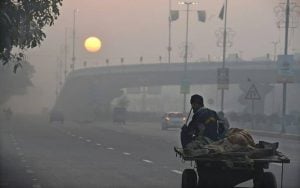
As severe air pollution persists in Tehran and other cities in Iran—including 21 cities in Khuzestan Province that are currently in red and orange alert levels—people are growing increasingly frustrated with the authorities’ continued disregard for public health.
Tehran’s Air Quality Control Company announced on Saturday, July 5, that the air quality index (AQI) in the capital has reached 159, indicating a “red” level of pollution that is unhealthy for the entire population.
The company added that over the past 24 hours, the average AQI in Tehran stood at 153, which is dangerous for vulnerable groups such as the elderly, children, and individuals with cardiovascular and respiratory illnesses.
Power Outages Return in Iran After the 12-Day War

With rising temperatures and a return to normal conditions after the 12-day war between Israel and Iran’s regime, Mostafa Rajabi Mashhadi, the CEO of Tavanir (Iran Power Generation, Transmission and Distribution Management Company), announced the resumption of power outages in the residential sector across Iran.
Rajabi Mashhadi stated that electricity demand exceeds supply, and due to the rise in consumption and limited generation capacity, two-hour daily blackouts are being imposed in residential and public sectors. He added that reducing outages depends on reducing electricity usage.
He further said that once the energy shortage crisis subsides, the outages will also decrease.
Iran’s Deepening Water Crisis: Mismanagement, Deception, and the Risk of Revolt

With over 50 million people facing the threat of thirst, Iran’s water crisis exposes not just environmental collapse—but a regime clinging to power through neglect and repression.
A silent catastrophe is brewing beneath the surface of Iran, pushing the country to the brink of a humanitarian and ecological disaster. As summer intensifies, a devastating water crisis looms—one that threatens the lives of tens of millions of Iranians and lays bare the regime’s chronic mismanagement, corruption, and misplaced priorities.
According to official reports, Iran is withdrawing a staggering 44 billion cubic meters of groundwater annually, far exceeding the natural recharge rate. This unsustainable extraction has led to land subsidence in more than 350 plains—a geotechnical red flag signaling irreversible environmental degradation.
Hezbollah Weakened by War: Military Losses, Internal Crisis, and International Pressure

After the Israel-Hezbollah conflict, the group faces mounting internal and external challenges as international calls for disarmament grow.
In the wake of the recent war between Israel and Hezbollah, the Iranian-backed militant group is reportedly undergoing one of the most serious crises in its history. According to an exclusive report by Al-Hadath, the conflict has not only inflicted heavy losses on Hezbollah’s military capabilities but has also triggered a dramatic internal unraveling—marked by widespread defections, financial strain, and declining territorial control.
Citing informed sources, Al-Hadath reports that Hezbollah has lost a substantial portion of its fighting force. In 2021, the group’s Secretary General Hassan Nasrallah claimed it had over 100,000 professional militants. However, only around 60,000 remain in active ranks today.