

THIS PAGE WILL BE UPDATED WITH THE LATEST NEWS
UPDATE: 6:00 PM CEST
Treasury Targets Entities Procuring Sensitive Machinery for Iran’s Defense Industry
WASHINGTON — Today, the U.S. Department of the Treasury’s Office of Foreign Assets Control (OFAC) is designating one individual and eight entities, and identifying one vessel as blocked property, for their involvement in the procurement and transshipment of sensitive machinery for Iran’s defense industry. The vessel, SHUN KAI XING, owned by Hong Kong-based Unico Shipping Co Ltd, was carrying this machinery for OFAC-designated Rayan Roshd Afzar Company (RRA) and Towse Sanaye Nim Resanaye Tarashe, a company controlled by RRA executives. Today’s action is being taken in furtherance of National Security Presidential Memorandum-2, which directs that Iran be denied the development of missiles and other weapons capabilities and that the Islamic Revolutionary Guard Corps (IRGC) and its surrogates be disrupted, degraded, or denied access to the resources that sustain their destabilizing activities.
UPDATE: 8:00 AM CEST
4 Decades of Resistance for Freedom by Generation Equality in Iran

June 20 marks the beginning of the Iranian people’s resistance for freedom and democracy in 1981. Iran’s women pioneer their people’s movement against the mullahs’ religious dictatorship.
Generation Equality has been playing a significant role in the Iranian people’s resistance for freedom from the Shah’s time until today. Women who sacrificed their lives for freedom in the 1970s opened the way for women’s largescale participation in the movement. Then came another generation of women in the 1980s whose sacrifices and unsubmissive struggle shook the foundations of the mullahs’ misogynous regime.
Femicide in Iran: Women’s Blood on the Ground, Justice in Ruins

Femicide in Iran: Iran has witnessed the horrifying murders of at least 9 women by their close male relatives in just 20 days, from May 23 to June 11, 2025. Husbands, partners, or male relatives of the victims predominantly committed the murders. These women were killed for reasons as harrowing as requesting a divorce, seeking economic and social independence, or simply resisting coercion, discrimination, or robbery.
These murders are not merely stains on the hands of individual killers; they are glaring indictments of a misogynistic regime, where laws grant men ownership over women, decriminalize domestic violence, and define women as subordinates and property. A system where legal and social mechanisms are not designed to protect women, but rather to preserve patriarchal control.
MEK Supporters in California Call for Global Action Against Iran’s Executions and Human Rights Violations
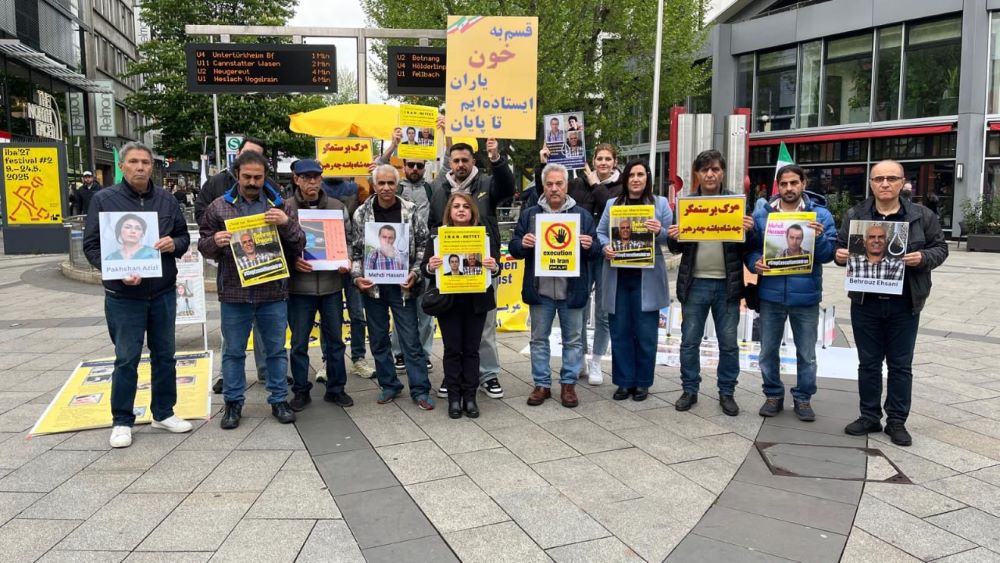
California – June 17, 2025: Freedom-loving Iranians and supporters of the People’s Mojahedin Organization of Iran (PMOI/MEK) gathered to protest the Iranian regime’s escalating human rights abuses, particularly the death sentences imposed on political prisoners.
MEK Supporters in #California Call for Global Action Against #Iran’s Executions and #HumanRightsViolations.#StopExecutionsInIran #FreePoliticalPrisoners #FreeIran2025 https://t.co/6e8oYN6ZHo
— Iran Freedom (@4FreedominIran) June 19, 2025
Participants condemned the regime’s ongoing repression and demanded the immediate release of all political prisoners, while honoring the martyrs of the Iranian Revolution—those executed or killed during popular uprisings.
Freedom-loving Iranians in California also reaffirmed their commitment to establishing a democratic republic, firmly rejecting all forms of dictatorship, whether from the current clerical regime or any return to monarchical rule.
A New Wave of Arbitrary Arrests in Iran

Amid escalating regional tensions and growing public dissatisfaction, a new wave of mass arrests has begun in Iran. According to reports, on Monday, June 16, 2025, at least 30 citizens were detained by security and law enforcement forces in the provinces of Ardabil, North Khorasan, Kerman, and Mazandaran. These arrests are part of a systematic policy by the Iranian authorities aimed at preemptive repression and controlling the public sphere in anticipation of potential mass protests.
Officials in North Khorasan Province have reported the arrest of five social media users on charges of “spreading public anxiety.” According to the deputy police commander of the province, the individuals were arrested for posting content following the Israeli military strike on Iran, which security agencies deemed “anti-security.” The official claimed that these individuals aimed to disrupt the “psychological security of society” by spreading rumors. No information has been provided regarding their identities or whereabouts.
Security Lockdown at Mahabad Prison: A Humanitarian Crisis Amid War and State Neglect

As Iran enters the sixth day of an active war situation, alarming reports have emerged regarding the intensification of security measures in the country’s prisons—most notably in Mahabad Prison. According to local sources, the prison has been placed under full alert, with authorities enforcing stringent security protocols out of fear of a potential uprising. Reports indicate that the prison shop inside Mahabad Prison—which normally supplies inmates with essential goods—has been completely emptied. Prisoners are now facing acute shortages of food, hygiene products, and other vital necessities. This economic strain, combined with an already tense security atmosphere, has significantly raised the risk of internal unrest or riots.
What Happened on the Sixth Day of the Israel-Iran War?

On the sixth day of the war between Israel and Iran, which began on Friday, military operations continued on both sides. A reported strike on Iran’s state broadcasting facilities was among the developments of the day.
The Israeli military announced that over 50 fighter jets targeted a centrifuge production site and several weapons factories in Tehran. Additional targets included missile and nuclear-related facilities, such as the Khajir missile development complex near Parchin and a special forces base in southeastern Tehran. Strikes were also reported at Mehrabad Airport, the Tehran oil refinery, and sites in the cities of Tabriz and Shiraz.
Widespread Disruptions and Shortages Across Iran Amid Ongoing Israeli Strikes

On the seventh day of Israeli strikes targeting the Iranian regime’s positions, several citizens reported widespread problems across the country, including disruptions in the banking system, total or severe internet outages, water cuts, and shortages of gasoline and bread in some cities. Additionally, yesterday the state-run television was hacked, broadcasting footage of past uprisings by the Iranian people. In these videos, people were urged to rise up for their freedom and overthrow Iran’s regime.
On Tuesday, June 17, a large number of citizens reported that Sepah Bank had become entirely inaccessible, with all online access to accounts disabled.
Iran’s Internet Blackout: A Digital Gag on a Nation in Crisis

Since Thursday, June 19, the Iranian regime has imposed a near-total internet shutdown across the country, effectively cutting off communication between Iranians and the outside world. This blackout has not only silenced independent voices but also left the global community in the dark about the current conditions inside Iran, particularly amid growing regional tensions between the regime and Israel.
The timing and scope of this shutdown have heightened concerns. As of June 17, restrictions began intensifying, culminating in a complete blockade just two days later. The regime’s Cyber Police (FATA) claimed the disruptions were the result of cyberattacks. However, widespread skepticism persists. Many Iranian users on social media assert that the regime has deliberately curtailed internet access to prevent the dissemination of real-time updates and suppress potential protests sparked by recent developments.