

THIS PAGE WILL BE UPDATED WITH THE LATEST NEWS
UPDATE: 07:00 AM CET
Heaviest Strikes Yet Hit Tehran on Day 11 of the Iran War as Both Sides Harden Positions
The U.S.-Israeli war on Iran entered its 11th day with what both the Pentagon and residents in Tehran described as the most intense strikes of the conflict so far, as Israel announced a new wave of air attacks on the Iranian capital and Washington said Tuesday would be its “most intense day of strikes inside Iran.” Reuters reported that the latest bombardment came as markets bet President Donald Trump may still try to end the war quickly, even as military pressure continues to rise.
Reuters reported that 40 people were killed on Monday in an Israeli strike on a residential area in Tehran, and the agency’s latest casualty roundup said at least 1,270 people have been killed in Iran since the war began, according to state-media reports. Iranian state media also pushed a broader damage estimate, with Press TV reporting Tuesday that the Iranian Red Crescent said more than 19,000 civilian buildings across Iran had been damaged in U.S.-Israeli strikes. That figure is attributable to Iranian authorities and should be read as their claim, not an independently audited count.
Inside Iran, the war’s operational picture remained mixed. One of the clearest new officially attributed reports came from Kerman airport, where Tasnim, citing the provincial security deputy, said part of the airport had been damaged and two old aircraft were hit. Broader online claims of simultaneous major strikes in Shiraz, Bandar Abbas, Parchin, Doushan Tappeh and multiple other sites were circulating widely, though real damage accounts remain difficult for verification.
President Trump's administration said it used $5.6 billion in munitions during the first two days of strikes against Iran in a report provided to US congressional committees, a source familiar with the information told Reuters https://t.co/N3WrmvUVr7
— Reuters (@Reuters) March 10, 2026
Iranian state media continued to frame the day as one of defiance and effective retaliation. Parliament speaker Mohammad-Baqer Qalibaf said Iran was “definitely” not seeking a ceasefire and IRGC spokesman Ali Mohammad Naeini boasted Tehran, not Washington, would determine when the war ends. Another IRGC spokesman said Iran would not allow Gulf oil shipments to reach the United States or its allies while attacks continue.
Iranian regime’s Foreign Minister Abbas Araghchi told PBS that renewed talks with Washington were unlikely to be “on our agenda anymore,” while U.S. President Donald Trump told Fox News it was possible he would be willing to talk with Iran, depending on the terms. At the same time, Israeli Foreign Minister Gideon Saar said Israel was not seeking an endless war and would coordinate with Washington on when to stop. The result is a war still escalating militarily while the public messaging on a possible off-ramp remains confused and conditional.
Defense Secretary Pete Hegseth said Tuesday morning that “today will be yet again our most intense day of strikes inside Iran.” Follow AP's live updates. https://t.co/GCYXCoBgC7
— The Associated Press (@AP) March 10, 2026
Meanwhile, NetBlocks said Iran’s nationwide internet shutdown had reached 240 hours, placing it among the most severe government-imposed nationwide blackouts on record globally.
The economic stakes remained high even as oil prices gave back much of Monday’s surge. Reuters reported that Brent, after briefly nearing $120 a barrel, fell back below $90 on Tuesday as traders concluded Trump might cap the war before a full global energy shock takes hold. That rebound in sentiment came despite the Iranian regime’s continued threat to choke off Gulf oil flows through the Strait of Hormuz and despite the fact that shipments through the waterway remain effectively halted.
⚠️ Update: At 240 hours, #Iran's internet blackout is now among the most severe government-imposed nationwide internet shutdowns on record globally, and the second longest registered in Iran after the January protests, with the country having spent a third of 2026 offline. pic.twitter.com/LPoVkOI9MM
— NetBlocks (@netblocks) March 10, 2026
Beyond the strikes on Tehran, the war’s strategic risks widened on Tuesday. The Pentagon said U.S. forces had begun hitting Iranian mine-laying vessels and mine storage sites and were examining options for escorting tankers through the Strait of Hormuz, even as it said more than 5,000 targets and over 50 Iranian naval vessels had already been struck. In Europe, German Chancellor Friedrich Merz warned there was “clearly no joint plan” to bring the war to a swift end. At the same time, the environmental toll in Tehran deepened, with Conflict and Environment Observatory reporting that fires at fuel depots had produced toxic smoke and acid-rain warnings. Pakistani forecasters have warned pollutants could drift into western Pakistan.
UPDATE: 07:30 AM CET
Thousands Rally in Washington D.C. Supporting NCRI’s Provisional Government for Iran

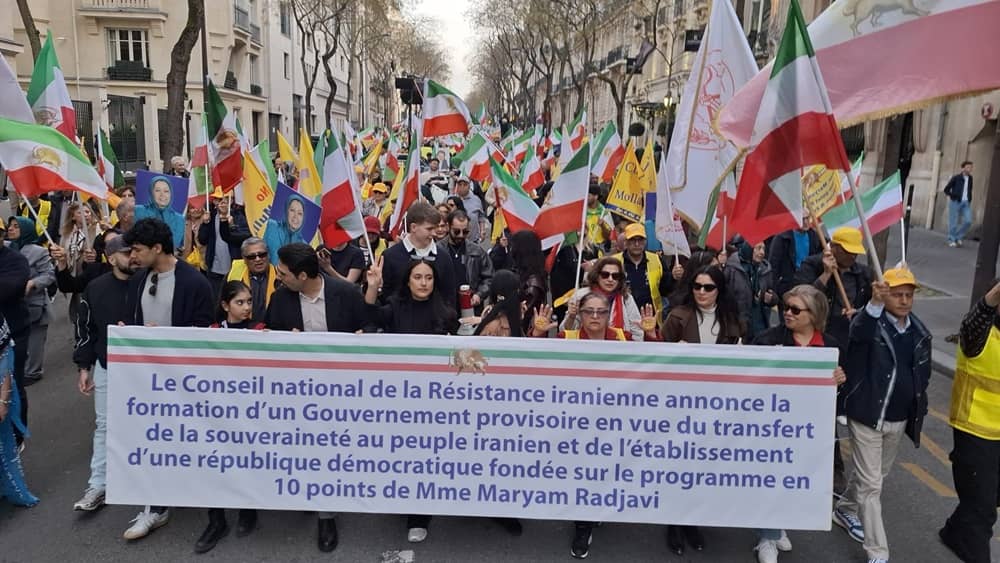
On 7 March 2026, thousands of Iranian Americans and members of ethnic minorities, including Kurds and other Iranian communities, gathered in Washington, D.C., for a massive rally supporting Mrs. Maryam Rajavi, President-elect of the National Council of Resistance of Iran (NCRI), and her announcement of a provisional government. The demonstrators endorsed her Ten-Point Plan for a free, democratic republic, calling for the transfer of sovereignty to the elected representatives of the Iranian people after the fall of the current regime.
Paris Rally: Thousands of Iranians Support NCRI Provisional Government and a Democratic Republic in Iran

On 7 March 2026, thousands of Iranians gathered at Trocadéro Square in Paris to show their support for the National Council of Resistance of Iran (NCRI) and the provisional government announced by Mrs. Maryam Rajavi, President-elect of the NCRI. The demonstrators endorsed her Ten-Point Plan for a free, democratic, secular, and non-nuclear Iran, emphasizing that sovereignty belongs to the people, not to the regime or to monarchs.
Mojtaba Khamenei Named New Supreme Leader of Iran’s as Regional Attacks Escalate on 10th Day of War
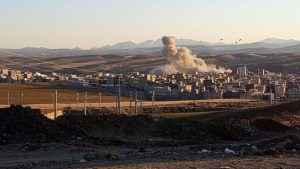
March 9, 2026, marked the tenth day of the escalating military conflict between the Iranian regime, the United States, and Israel. The war follows immense devastation on the ninth day, when massive airstrikes targeted fuel storage and distribution sites across Tehran and Alborz provinces, causing “black rain” to pour over the capital.
While the regime continued its drone and missile assaults on neighboring Gulf nations, the regime’s Assembly of Experts officially named Mojtaba Khamenei as the successor to the regime supreme leader Ali Khamenei, who was killed on the first day of the conflict. Meanwhile, the regime’s internet blackout enters its tenth day and oil prices have soared amid a deliberate strategy by Tehran to target regional energy facilities.
A Democratic Future for Iran: Why the British Parliament’s Support for a Transitional Government Matters

On March 4, 2026, the historic halls of the British Parliament hosted a conference that may well mark a turning point in the modern struggle for freedom in Iran. The event—titled “Iran: Toward a Democratic Republic – Supporting the Transitional Government”—brought together prominent members of both the House of Commons and the House of Lords. At a time when Iran is facing one of the most critical moments in its contemporary history, the conference reflected a growing awareness among Western lawmakers: the question is no longer whether change will come to Iran, but whether the international community will responsibly support a democratic transition.
Reza Pahlavi Declares Himself Leader of Iran’s “Transition” — Without a Transition, a Mandate, or Followers
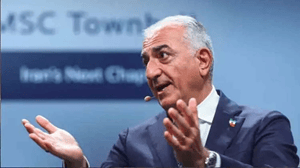
Reza Pahlavi, the son of Iran’s last Shah, has recently announced that he has “accepted” the role of leader of Iran’s future transitional period. The declaration has triggered widespread debate among Iranian political observers and opposition circles—largely because the role he claims to have accepted was never formally offered to him, nor has it been endorsed by any credible political coalition.
In essence, the announcement resembles a political paradox: accepting a position that no one proposed and that no political force has agreed to create.
Pahlavi’s remarks have once again drawn attention to the persistent attempts by monarchist networks to portray him as a central political figure for Iran’s future, despite the absence of any institutional mechanism, political consensus, or democratic mandate supporting such a role.
Washington Rally Supports Iranian Transitional Government

A large group of supporters of the Iranian resistance movement held a demonstration on Saturday, March 7, in front of the United States Congress, calling on the international community to support the people of Iran and to recognize the transitional government announced by the National Council of Resistance of Iran (NCRI). Participants in the gathering chanted the slogan “Neither Shah nor mullahs,” emphasizing the establishment of a democratic republic in Iran based on the separation of religion and state.
At the demonstration, several American political figures, human rights activists, representatives of Iranian organizations in the United States, and members of the National Council of Resistance of Iran delivered speeches. The central theme of their remarks was support for the ten-point plan proposed by Maryam Rajavi, the president-elect of the NCRI, for the future of Iran and an emphasis on the role of the Iranian people and organized resistance in determining the country’s destiny.
Iran War Crisis and Rising Oil Prices; Release of Strategic Emergency Oil Reserves

Amid continuing concerns about the future of the global energy market, Reuters reported, citing a source in the French government, that member countries of the Group of Seven (G7) plan to review a proposal for the coordinated release of strategic emergency oil reserves.
A meeting of finance ministers from the G7 countries— the United States, the United Kingdom, Canada, Japan, France, Italy, and Germany— is scheduled to take place on Monday, March 9.
Reuters wrote that following production cuts by major oil producers and the introduction of Mojtaba Khamenei as the new leader of the Iranian regime—seen as a sign of the continued dominance of hardliners in power—oil prices have experienced an unprecedented surge.
Prisons in the Shadow of War in Iran
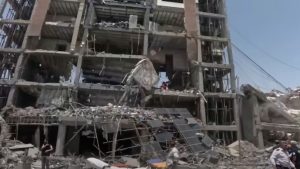
With the escalation of military confrontations and the expansion of wartime conditions in Iran, concerns about the safety and lives of prisoners across the country’s prisons have significantly increased. Prisoners that were already struggling with severe overcrowding, limited medical facilities, and restricted communication between prisoners and their families and lawyers are now facing circumstances in which the risks associated with war may dramatically intensify the vulnerability of detainees.
At present, prisoners in Iran face two simultaneous threats. On the one hand are the direct or indirect consequences of military operations and the proximity of some prisons to sensitive facilities. On the other hand, are the policies and actions of the ruling regime in Iran, including restrictions on prisoners’ contact with their families, disruptions in access to food and medical services, locked prison wards, and forced transfers between detention facilities.
Human Rights Violations in Iran Under the Leadership of Ali Khamenei (1989–2026) – Part 2
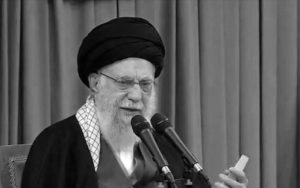
During the leadership of Ali Khamenei, Iran has consistently ranked among the countries with the highest execution rates per capita worldwide. Executions have not been limited to murder cases; they have also been carried out for drug-related offenses, security-related charges, political activities, and in some cases against individuals who were under 18 at the time of the alleged offense. Annual reports by international human rights organizations indicate that since 2021, the pace of executions has accelerated. In 2023 and 2024, hundreds of executions were recorded, and in 2025, independent sources reported the highest annual execution figures in decades. A significant portion of these executions has not been officially announced and has been documented through non-official sources or family accounts.
Within Iran’s judicial structure, the Head of the Judiciary is directly appointed by the Supreme Leader. The Chief Justice of the Supreme Court, the Prosecutor General, and provincial judicial heads operate within the same chain of appointment. This centralized system consolidates structural responsibility for overarching penal policies at the highest level.